
A Hiker's Guide to Trail Architecture
In this article, stewardship expert and Mountaineers Books author Bob Birkby highlights the key elements of a hiking trail's anatomy. He outlines what trail architects take into consideration for the design and restoration process in a short summary for hikers' reference.
Location: Why does the trail go where it goes? Designers explore an area in search of control points – over a pass, below a rock outcropping, along the edge of a meadow – places a trail must go in order to travel from a trailhead to a destination. Connecting those points at a reasonable grade becomes the route.
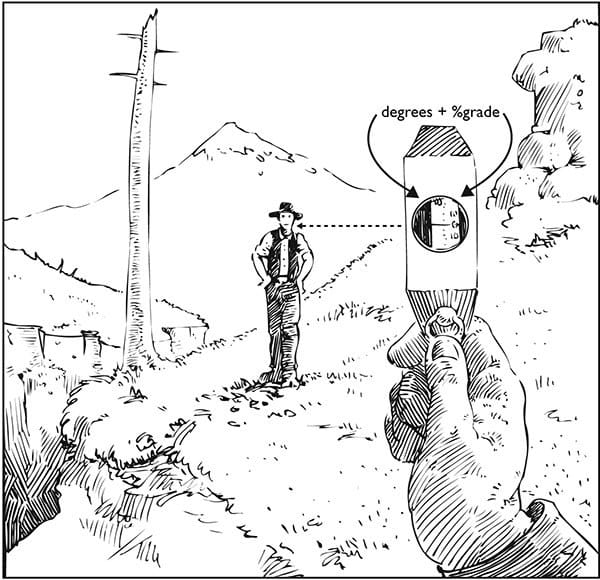
Grade: The steepness of a trail is measured with a tool called a clinometer and read out as “percent of grade.” For hikers, 8%-15% is comfortable grade. Steeper than that and going up becomes more challenging, and water coming down has a better chance of causing erosion. Trails that switchback up a steep ascent can maintain a reasonable grade.
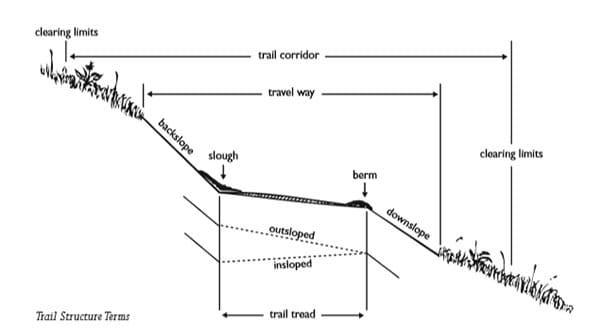
Tread: The walking surface of a trail. Ideally, it is slightly out sloped - tipped so that rainwater and snowmelt drain off quickly rather than flowing down the trail and causing erosion. Tread maintenance often involves removing buildup of soil and forest debris from the outside edge (where it is called berm) and the inside edge (slough). A travel corridor cleared of brush on either side and above the tread provides clearance for travelers.
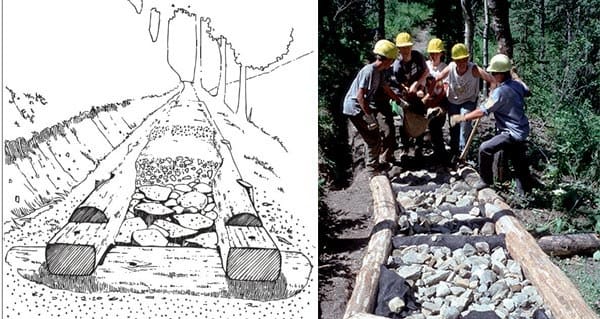
Turnpike: Turnpikes raise the tread to get the walking surface above a boggy area. Logs or rocks installed on either side hold layers of rock and gravel in place.
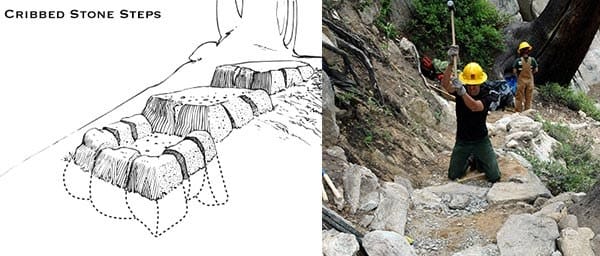
Staircases: Stairs can be ideal solutions for getting hikers up short, steep ascents. With rock bars and coordination, a crew can leverage rocks of several hundred pounds into position and lock them together for durability and use. Cribs of natural or milled timber can be set in a slope and then filled with gravel to form walking surfaces.
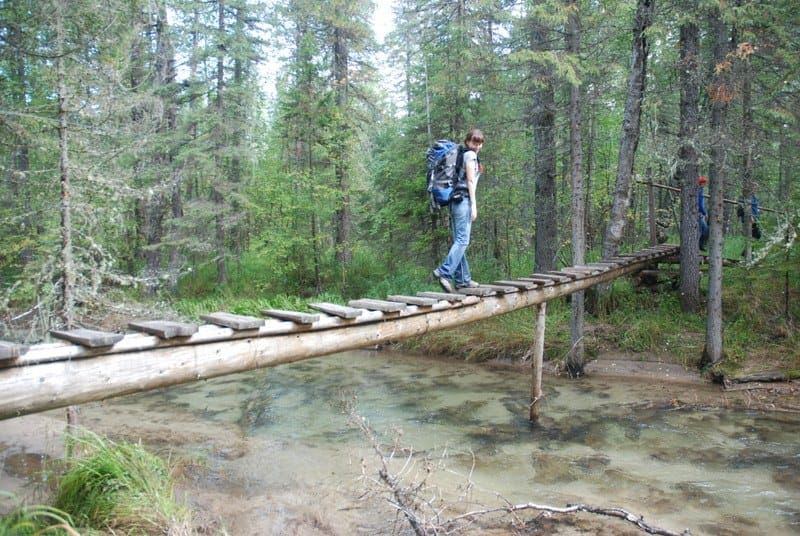
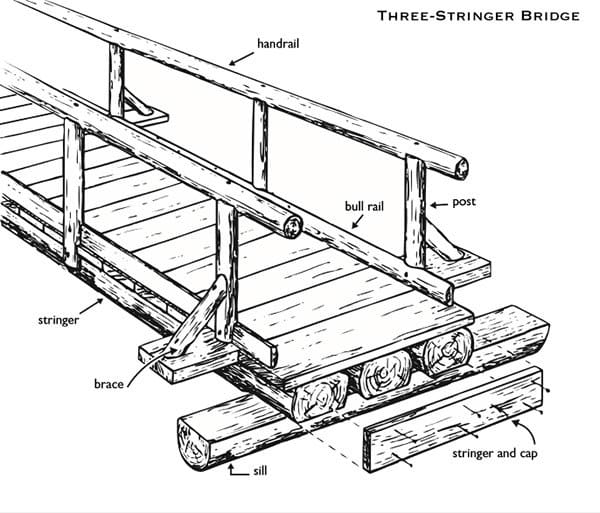
Bridges: Consider where a rustic bridge is placed – usually a narrow point in a stream, ideally with rock outcroppings as immovable foundations. Look underneath and you’ll probably find sill logs parallel to the stream. The stringer logs that cross the water rest on the sills. Bull rails on either side of the decking prevent the feet of hikers and horses from slipping off the edges.
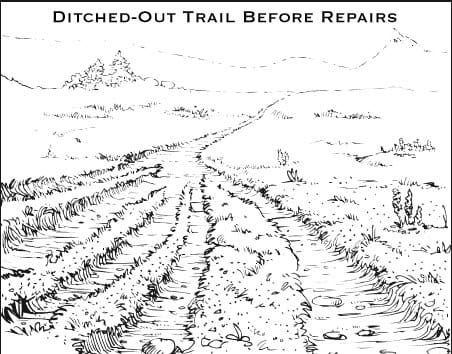
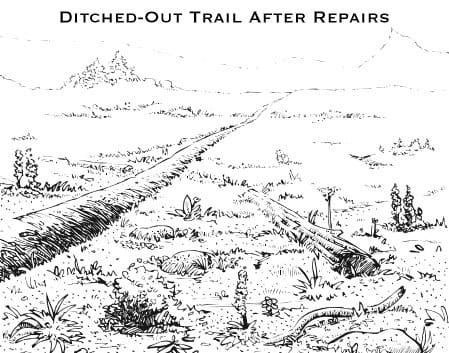
Site Restoration: When the restoration of a damaged campsite or trail is completed, you’re unlikely to notice it at all. Repairing a beaten-down campsite or abandoned trail often begins by loosening the soil so that new vegetation can take root. You might see an area covered with mulch matting that protects and nourishes new growth. Crews sometimes install rocks, stumps, and other natural items to blend repaired locations into the background and deter future use.
Review
Upon visiting Alum Creek State Park and speaking with Mark Allen, Trail Administrator at the Ohio Department of Natural Resources's Division of Parks & Watercraft, it became clear that I underestimated the design effort that comes with the construction of hiking and biking trails. This article outlines several structures and strategies that are key in building a good trail, but in simpler terms for the casual hiker to understand (which I appreciated since my brain couldn't keep up with the rate at which Mark shared his vast knowledge of trail architecture). There is a heavy emphasis on user experience that I had not previously considered, and trails are designed around the specific conditions and natural formations of the environment in which they are built–but in ways that are as non-invasive as possible. That's sustainable design! The careful consideration of the community's needs in which a trail is being made, based on existing trails in the area, their visitation rates, and user testimonies, is incredibly relevant to the user-centered approach to design.
References
Birkby, B. (2019, September 28). A Hiker’s Guide to Trail Architecture. The Mountaineers. https://www.mountaineers.org/blog/a-hikers-guide-to-trail-architecture