A Sneak-peak at Honda's Software-Defined Future
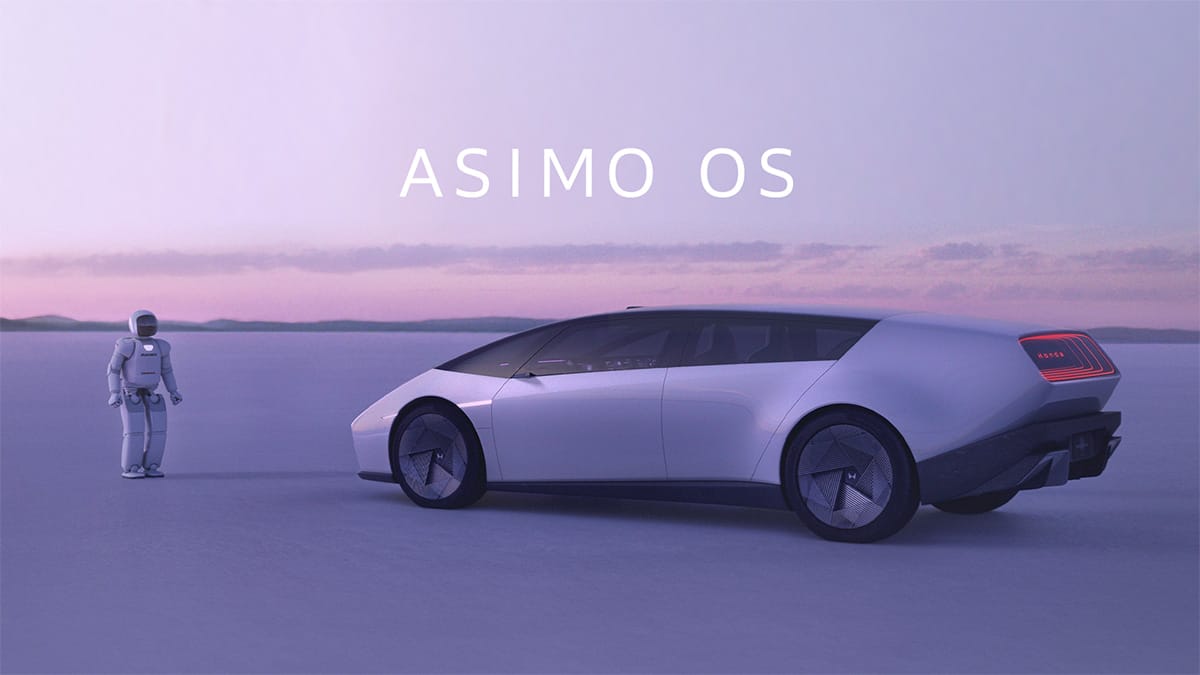
SDVs (Software-defined vehicles) are all the rage in the automotive industry. Despite this, Honda, usually a late adopter of novel technology recently announced that it will be focused on creating SDVs. The company added the creation its own OS and AI integration into the timeline for its newest generation of vehicles for 2026. The design opportunities afforded by this change include the ability to engage in other activities in the car and increased vehicle personalization.
With the goal of enabling everyone to enjoy driving safely and with peace of mind, Honda SDVs will seamlessly link various control devices and realize integrated control of vehicle dynamics that offer the joy of driving. In addition to dynamics control technologies Honda has refined to date, such as Vehicle Stability Assist (VSA) and an Adaptive Damper System, Honda SDVs will utilize highly-sophisticated 3D gyro sensor-based, vehicle posture estimation and stabilization control technologies. Honda has amassed these technologies through the development of its original robotics technologies, applying integrated control of s steer-by-wire system, controlled suspensions, and other by-wire devices such as the e-Axle, a drive module. Moreover, by coordinating the drive torque control by the e-Axle and the brake control by the VSA, driving force of all four wheels is independently and precisely controlled, ensuring smooth acceleration even on slippery road surfaces. By applying these integrated controls and stabilizing the vehicle in various driving situations, Honda SDVs will realize vehicle behaviors at the will of the driver and offer the joy of driving with great peace of mind.
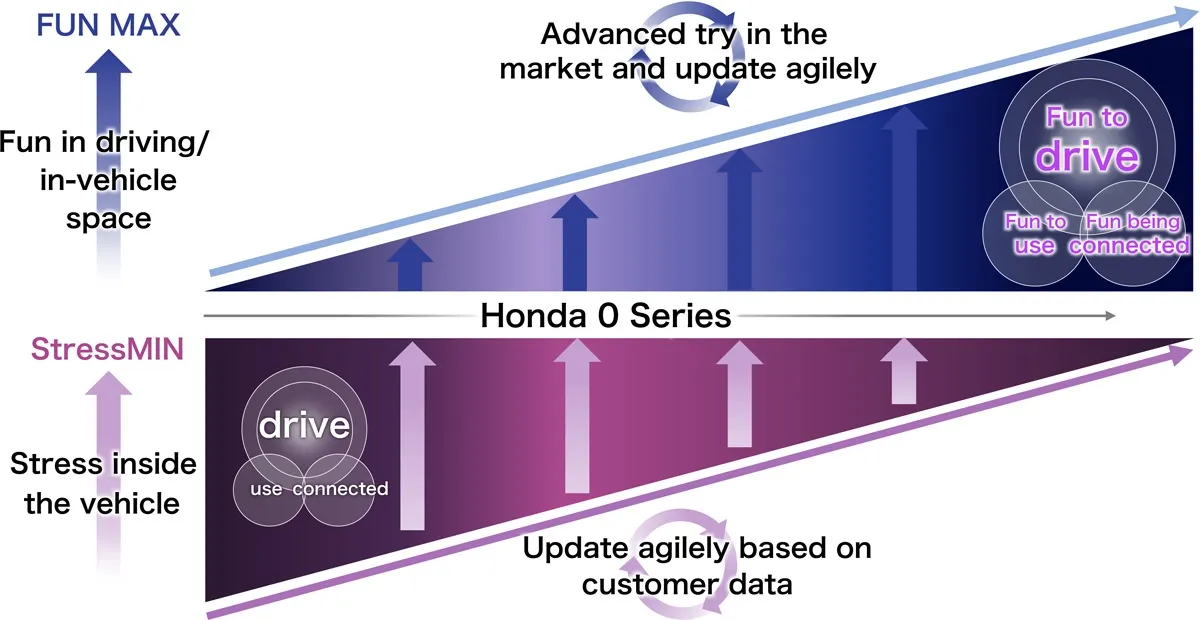
Another value that Honda is striving to offer with its SDVs is the creation of an attractive “space” for people’s mobility. In addition to minimizing various stresses related to the use of a car, such as driving and getting in and out of the vehicle, Honda SDVs will offer new value that maximizes the fun of using a car. To this end, Honda will further advance existing connected vehicle technologies and incorporate multimodal generation AI to utilize a variety of data obtained from cameras and other sensors inside and outside the vehicle to offer in-vehicle experiences that reflect the emotions and intentions of the occupants. Honda SDVs will proactively make suggestions that they deem most appropriate at the time. For example, when the user is taking a long drive with their pet, the vehicle will find pet-friendly cafes and restaurants and suggest the users to take a break; when the vehicle detects a crying child in the cabin, it will suggest to play music that would be fun for children; and the vehicle will suggest switching to a mode that prioritizes riding comfort in coordination with the integrated dynamics control technology.
According to Honda, the switch to SDVs will enable electronically assisted driving. This reduction in needed interfacing while driving could open up the driver to engaging in other activities within their cars. This could mean that direct interaction with the backseat passengers could be less dangerous. In terms of relevance for my project, this could open up the possibility of driver-passenger activities as a solution to distress and boredom.
Additionally, the use of advanced data collection and AI analysis could assist in alerting the driver of discomfort in the back. This is especially useful with children, a demographic that make have trouble with expressing feelings of discomfort in a precise manner.
References
"Honda Vision for Software-Defined Vehicles (SDV)". 2025. Honda Motor Company. https://global.honda/en/tech/Honda_SDV_ASIMO_OS/
All original works in this article were done without the assistance of AI tools.