A Study on the Influences of the Billboard Advertisement on Customers

I began to think about advertisements as a businesses tactic companies use to influence behaviors and how that can affect experiences. I found an article that related to the influences advertisements in the media have on children. This relates to my capstone projects because of the signage and advertisements kids are exposed to on the road.
"Advertising is a pervasive influence on children and adolescents. Young people view more than 40,000 ads per year on television alone and increasingly are being exposed to advertising on the Internet, in magazines, and in schools. This exposure may contribute significantly to childhood and adolescent obesity, poor nutrition, and cigarette and alcohol use.
Several European countries forbid or severely curtail advertising to children. The average young person views more than 3000 ads per day on television (TV), on the Internet, on billboards, and in magazines. Increasingly, advertisers are targeting younger and younger children in an effort to establish “brand-name preference” at as early an age as possible. Increasingly, advertisers are seeking to find new and creative ways of targeting young consumers via the Internet, in schools, and even in bathroom stalls.
Research has shown that young children—younger than 8 years—are cognitively and psychologically defenseless against advertising. They do not understand the notion of intent to sell and frequently accept advertising claims at face value (American Academy, 2006)."
This shows how influenced children can be to what they see in the media. Some companies target children specifically, which can influence their health, behavior and wellbeing.
"A 2000 FTC investigation found that violent movies, music, and video games have been intentionally marketed to children and adolescents.
Advertisers have traditionally used techniques to which children and adolescents are more susceptible, such as product placements in movies and TV shows, and celebrity endorsements.
Interactive games and promotions on digital TV will have the ability to lure children away from regular programming, encouraging them to spend a long time in an environment that lacks clear separation between content and advertising. Interactive technology may also allow advertisers to collect vast amounts of information about children’s viewing habits and preferences and target them on the basis of that information.
Exposure to tobacco advertising may be a bigger risk factor than having family members and peers who smoke and can even undermine the effect of strong parenting practices.
Research has found that adolescent drinkers are more likely to have been exposed to alcohol advertising. Drug companies now spend more than twice as much on marketing as they do on research and development.
On TV, of the estimated 40 000 ads per year that young people see, half are for food, especially sugared cereals and high-calorie snacks. Healthy foods are advertised less than 3% of the time; children rarely see a food advertisement for broccoli. Increasingly, fast food conglomerates are using toy tie-ins with major children’s motion pictures to try to attract young people. In 1 study, the amount of TV viewed per week correlated with requests for specific foods and with caloric intake. At the same time, advertising healthy foods has been shown to increase wholesome eating in children as young as 3 to 6 years of age.
Curricula have been developed that teach young people to become critical viewers of media in all of its forms, including advertising. Media education seems to be protective in mitigating harmful effects of media, including the effects of cigarette, alcohol, and food advertising (American Academy, 2006)."
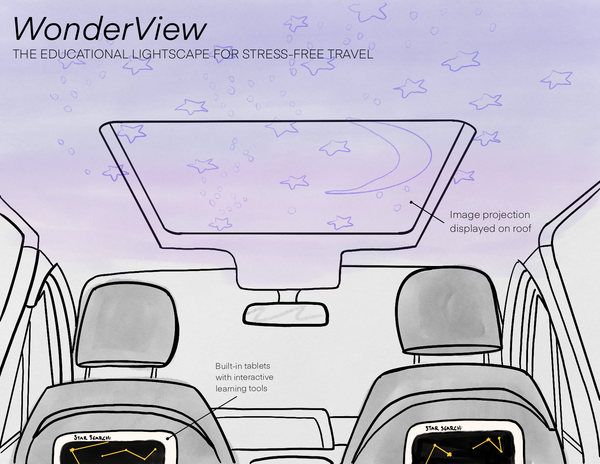
I was particularly interested in exploring how external advertisements such as bill boards can affect passengers. This article showcased the effects advertisements in the media can have on adolescence, which could have implications on their health and wellbeing. This is particularly related to my capstone project because kids observe many signs and billboards while in the car. These billboards can be showcase a wide range of things like unhealthy food, intense opinions, companies or sometimes inappropriate imagery. These ads have a potential to manipulate kids behaviors and affect their health in the future. This made me think a lot about design ethics and how designers have the capability to influence behavior just like a companies marketing. How might design adjust advertisements to better the lives of children and promote their health and wellbeing?
References:
American Academy of Pediatrics (2006) Committee on Communication. Children, Adolescents, and Advertising. https://publications.aap.org/pediatrics/article/118/6/2563/69735/Children-Adolescents-and-Advertising Accessed September 25, 2025.
This reflection draws (~40%) from American Academy of Pediatrics. “A Study on the Influences of the Billboard Advertisement on Customers (2006), (~40%) from the author’s own framing of the capstone context and design intentions, and (~20%) from AI assistance (summarizing article content, editing for clarity, and creating citation format). All interpretations and final perspectives remain the responsibility of the author.