A tour that will put you to sleep in a good way
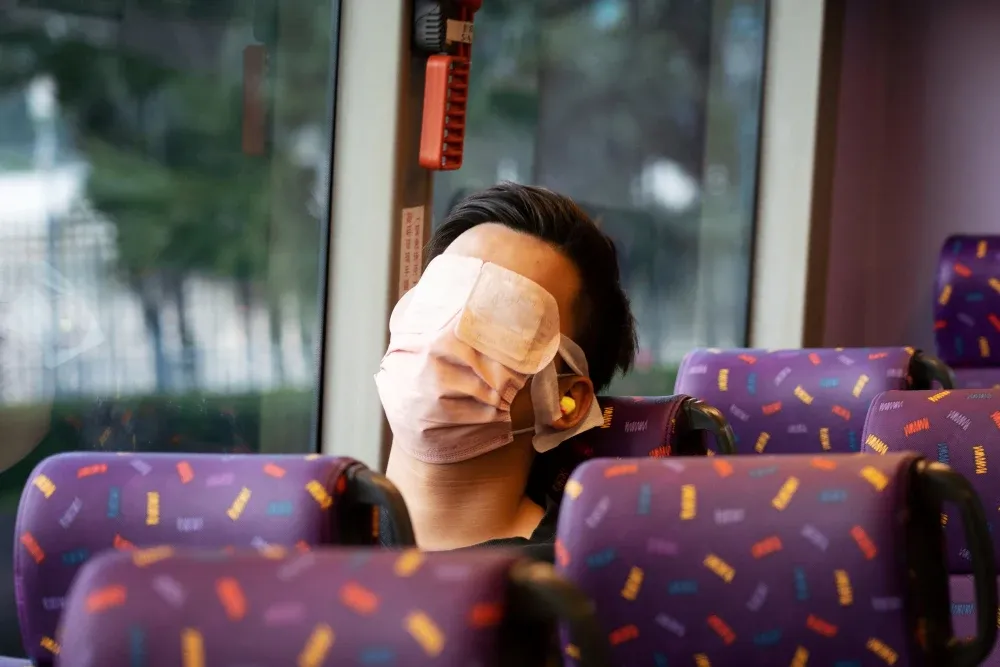
Have you ever fallen asleep in the backseat of a car? Well, this phenomenon is so common in Hong Kong that an innovative tour company was able to charge people to catch sleep on a 5 hour bus ride.
Almost two years into the coronavirus pandemic, Charles and Jenny Chung long for a getaway from their home in Hong Kong. But with overseas travel stymied by the Chinese territory’s strict quarantine requirements, the couple found a different way to relax and recharge: five hours on a public bus.
The “Bus Sleeping Tour,” organized by a local company, Ulu Travel, is billed as the longest bus route in Hong Kong at 83 kilometers (51 miles). Narrated by a guide in Cantonese, it includes stops at a number of Instagram-friendly spots far from the skyscrapers of downtown. But passengers can also use it to get the shut-eye that can be so elusive in Hong Kong.
Nearly 70 percent of Hong Kong residents have trouble sleeping, according to a telephone survey conducted last year by the Chinese University of Hong Kong. Wing Yun-kwok, a professor and director of the university’s Sleep Assessment Unit, said Hong Kong’s population is among the most sleep-deprived in the world.
“Hong Kongers tend to sleep very late, mostly after 12 a.m. or 1 a.m., but wake up very early in the morning,” he said. “That’s why Hong Kongers have a relatively short sleep duration compared to people from other parts of Asia.” The city’s achievement-oriented culture downplays the importance of sleep, Wing said, adding that light pollution and late-night dining may also contribute to local sleep deprivation. As in other cities, Hong Kong’s public transportation is often filled with dozing commuters as a result.
“Everyone in Hong Kong has done it at least once,” Charles Chung said. “I nap on the bus for 15 minutes and feel refreshed, and I probably sleep better on the bus than at home.”On a Sunday in November, the Chungs and about 40 other passengers gathered at a restaurant in Hong Kong’s New Territories, where they were first served a “food coma” lunch. As they boarded the double-decker bus — all wearing masks in line with local pandemic rules — each was provided with earplugs and a sleep mask. The bus then set off along a highway that winds along the coast, looking out on the South China Sea.
The highway is well known for its soporific effects, Charles Chung said: “When I drive the car through this road, all my friends fall asleep.”
Although this article focuses mainly on the soothing effects of being a passenger on adults, there may be some applications that are relevant to soothing children. The rocking motion of a cradle and the starting and stopping of a car are somewhat similar. The noise of nearby cars and tires rolling over pavement could function similarly to ambient noise videos for children. Additionally, the lack of pressure compared to the work-oriented and hustle culture of Hong Kong is what causes the sleep-inducing effects of the bus for adults. What could the equivalent for children be? What causes the most stress in children and how can a vehicle become the opposite of that? Sleep and relaxation at large are important for childhood development at large. The use of incidental real-world observations are not only useful for the creation of a business but for finding inspiration for innovative designs.
References
Chan, Anne & Arita, Natsuki. 2022. NBC News. "This bus won't get you out of Hong Kong, but it might get you to sleep". https://www.nbcnews.com/news/world/bus-wont-get-hong-kong-might-get-sleep-rcna6419
Wang, Bertha. AFP via Getty Images. N.D. Sourced from NBC News. https://www.nbcnews.com/news/world/bus-wont-get-hong-kong-might-get-sleep-rcna6419
All original works in this article were done without the assistance of AI tools.