A World Reshaped by A.I. Needs Museums More Than Ever
AI is all the rage these days, so I was wondering how it’s affecting the art and museum business. I was surprised to learn about museum sustainability, how politics affect exhibitions, and the evolution taking shape.
From Christopher Hawthorne at The New York Times:
"In recent months a combination of job cuts, slashed funding and mounting political pressure — with the Trump administration demanding that the Smithsonian 'remove improper ideology' from its displays — has left museums in the United States reeling. Arts leaders are also continuing to wrestle with whether to de-accession material long ago looted or, on the other end of that negotiation, how best to exhibit significant objects once they’re repatriated. Even some architects find themselves asking why so many museums continue to chase the sugar high of carbon-heavy new construction rather than reimagining the buildings they already have" (Hawthorne, 2025).
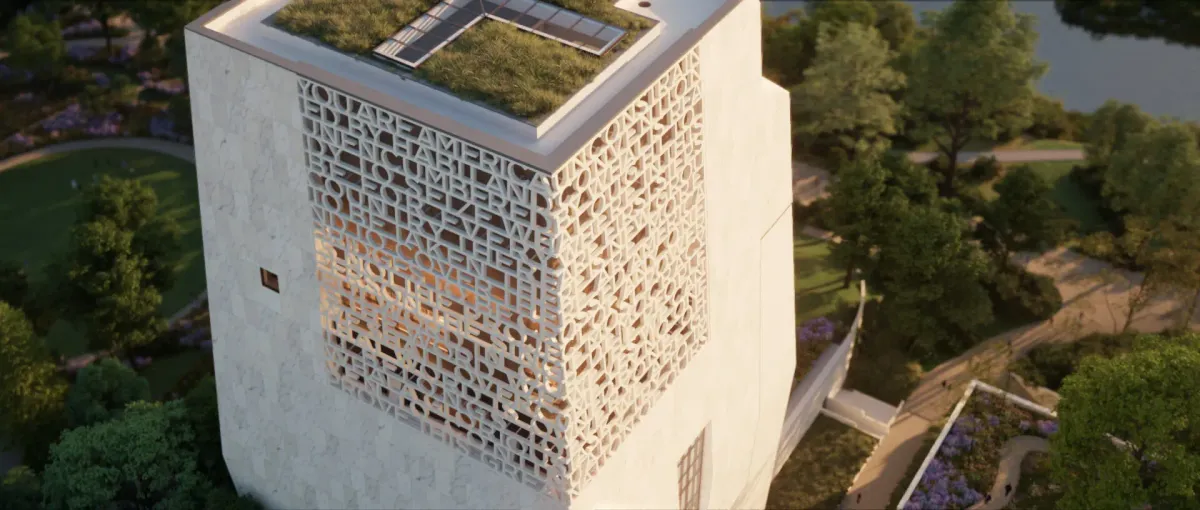
The article mostly talks about the plethora of new museums as well as additions to existing museums currently under construction or in planning for 2026. If AI is negatively affecting the museum business, the calendar certainly doesn’t show it. However, the three most anticipated projects of the year are shadowed by the lead architect’s sexual assault allegations. Perhaps the biggest threat to museums isn’t AI but rather ethics, publicity, and sustainability. The article goes on to detail each of the buildings in their giant scale and extravaganza.
"Each project is an assertion, in its way, that the in-person communion enabled by the physical museum is more crucial than ever in a world being reshaped by digital technology and artificial intelligence" (Hawthorne, 2025).
While some museums are leaning into bigger and better, others are evolving into a “museumrary.”
"Other institutions are looking to prominent architects to help them reimagine the museum typology to one degree or another. In the Texas Hill Country, the San Antonio firm Lake Flato is combining galleries and office space with the familiar idiom of the small-town Main Street storefront in Marble Falls, population roughly 10,000" (Hawthorne, 2025).
All in all, the article really doesn’t mention much about AI. Rather, it shows with many great examples how the museum business is still rapidly growing. New buildings are being built, and others are rebranding through mergers with existing architecture. Perhaps in the era of Chat-GPT, most people think that AI is just going to render the art and museum industry obsolete. Yet the opposite seem true. While digital tools and online archives do exist, this article proves that AI has not replaced the need for physical and communal spaces. However, these bigger and better buildings aren’t doing the environment any favors. We all understand the novelty of shiny, new toys (such as generative AI), but we have to consider the long-term ecological impact of our choices.
No generative artificial intelligence (AI) was used in the writing of this work.
References
Hawthorne, C. (2025, September 2). A World Reshaped by A.I. Needs Museums More Than Ever . The New York Times. https://www.nytimes.com/2025/09/02/arts/design/architecture-museums-obama-center.html