Ambient Drive Control
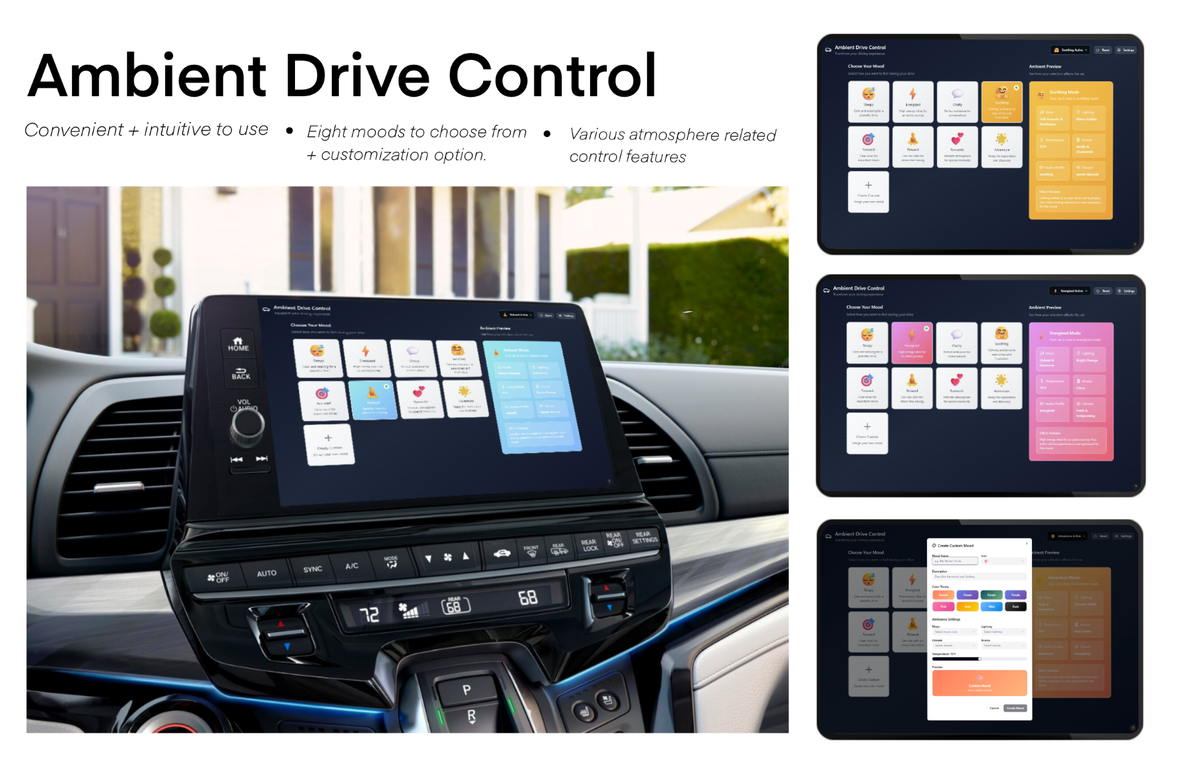
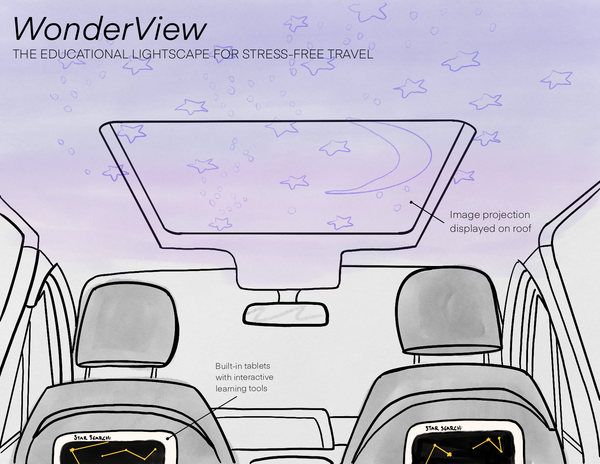
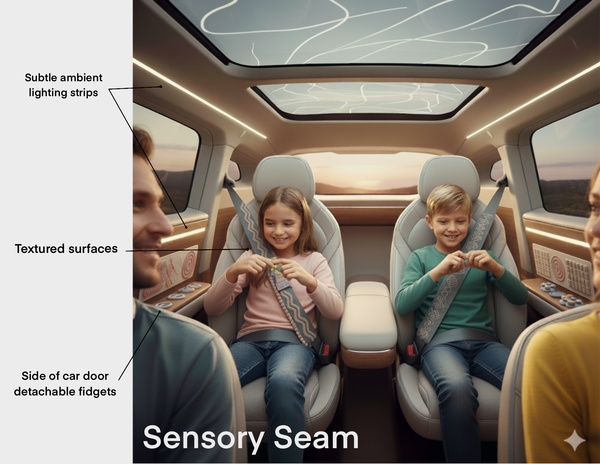
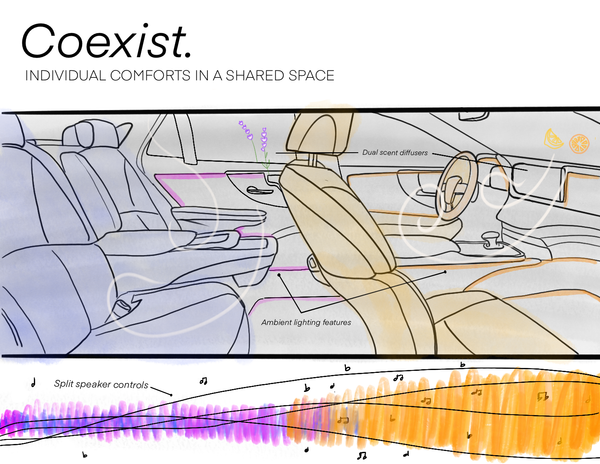
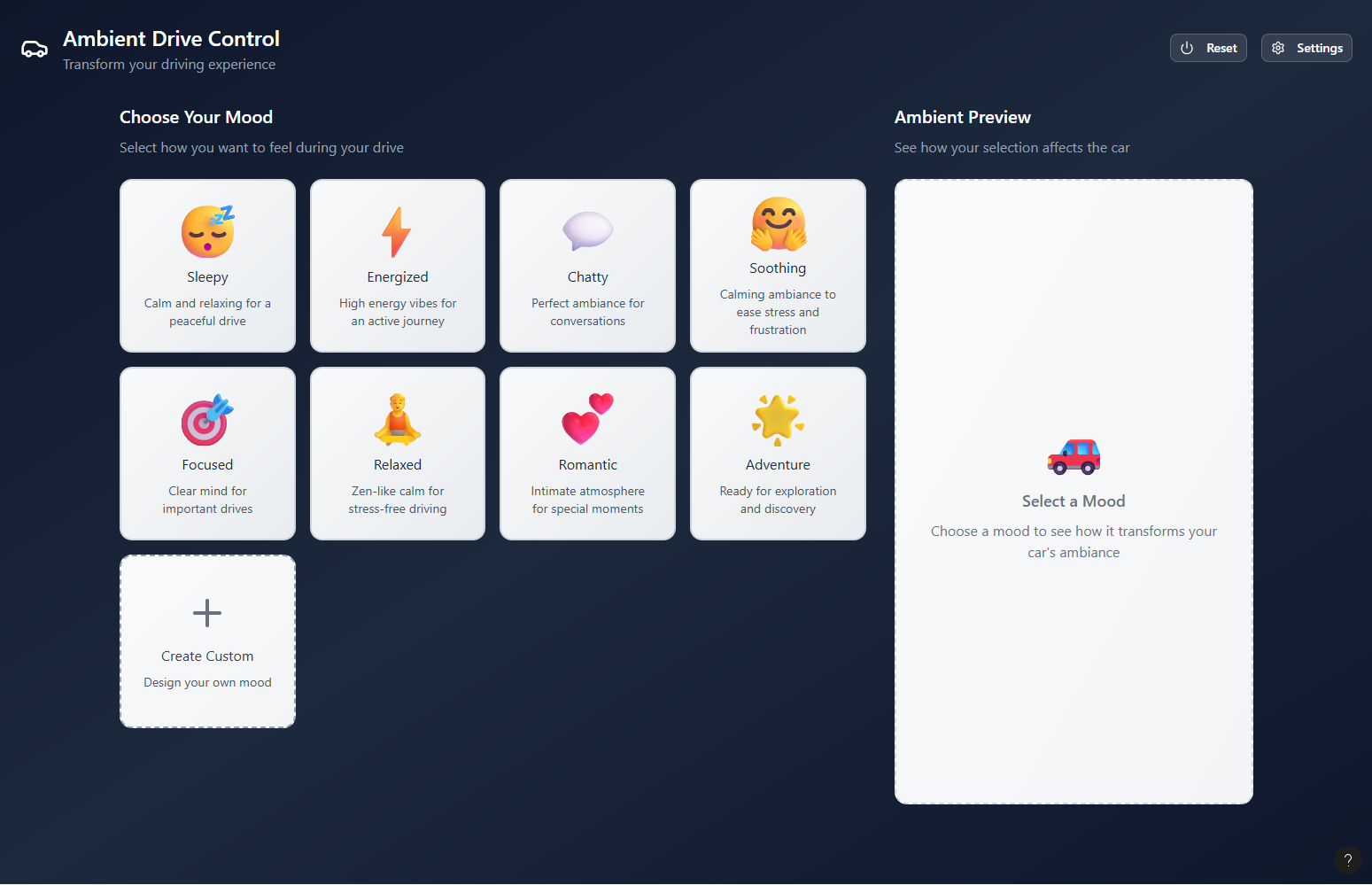
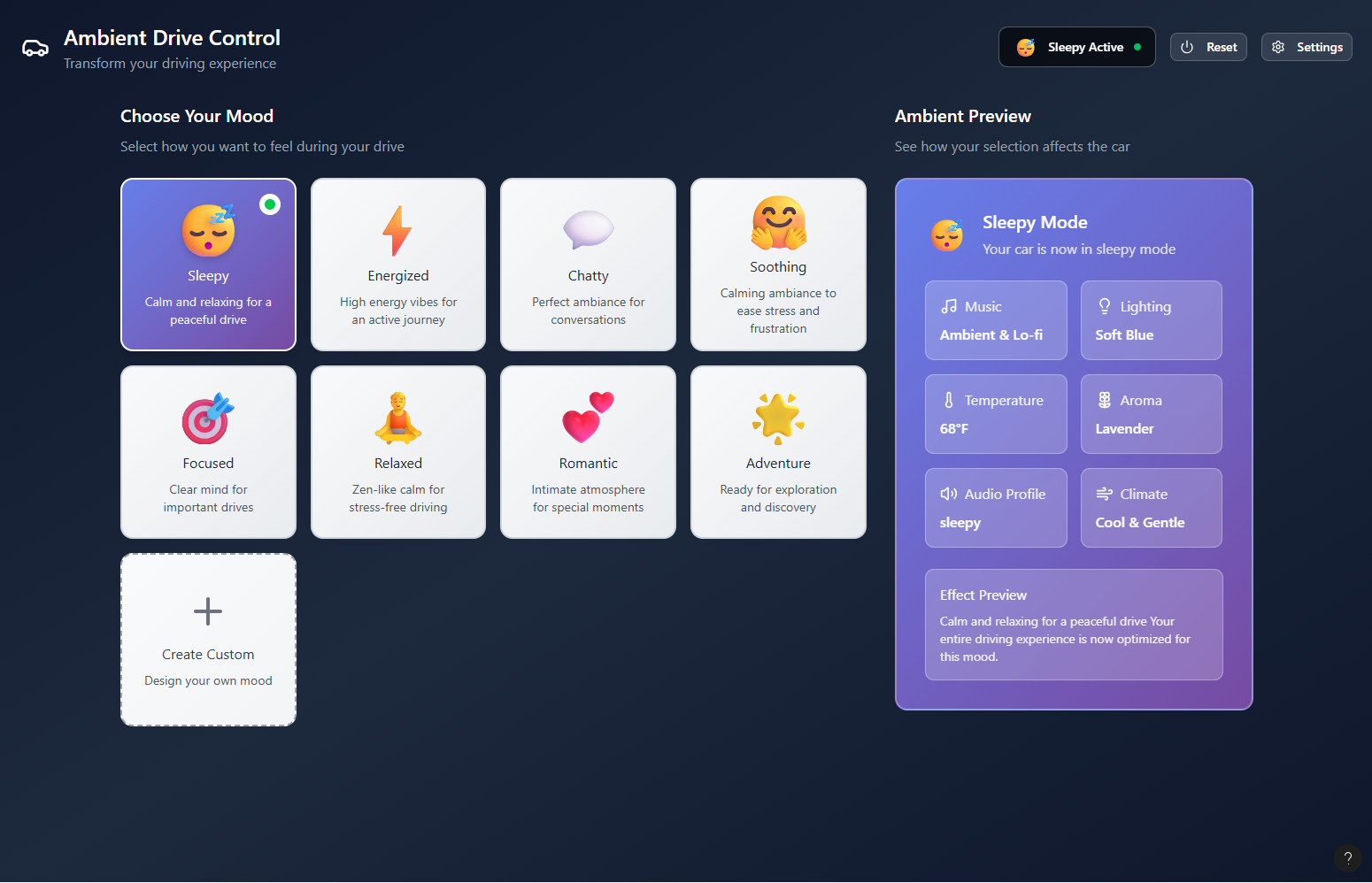
Ambient Drive Control is a family-friendly feature designed to enhance every car ride by shaping the atmosphere around passengers’ needs. Inspired by research into how lighting, color, acoustics, textures, and subtle scents can profoundly influence human experience, this feature allows users to select from curated moods, including: Sleepy, Energized, Chatty, Soothing, Focused, Relaxed, Romantic, and Adventure, or create a personalized option. Each mood adjusts elements of the in-car environment, including music, lighting, temperature, aroma, and audio profile, to align with sensory cues that support comfort and wellbeing.
Whether designing for a wedding, a conference room, or a healthcare center, it is good practice to ensure individuals in those spaces are comfortable. Research shows that color, materiality, and sensory engagement influence emotions, social behaviors, and even physical health (The Park Place Venue, 2023). For example; just as hospitals must carefully design environments to reduce stress and put patients at ease, cars too can be designed with human emotional and physical impact in mind (Grave, M., & Baker, J., n.d.). The goal is to create an atmosphere that minimizes stress, fosters connection, and regrounds parents and children, alike. Ambient Drive Control translates these principles into the driving experience, turning each trip into a tailored space for balance, comfort, and ease.
However, while this system draws on research showing how sensory design can influence emotions and behaviors, potential limitations include the risk of driver distraction, overstimulation from too many sensory changes, higher costs, and challenges in maintaining universal appeal across diverse passengers. These considerations highlight the need to balance personalization with safety, simplicity, and practicality.
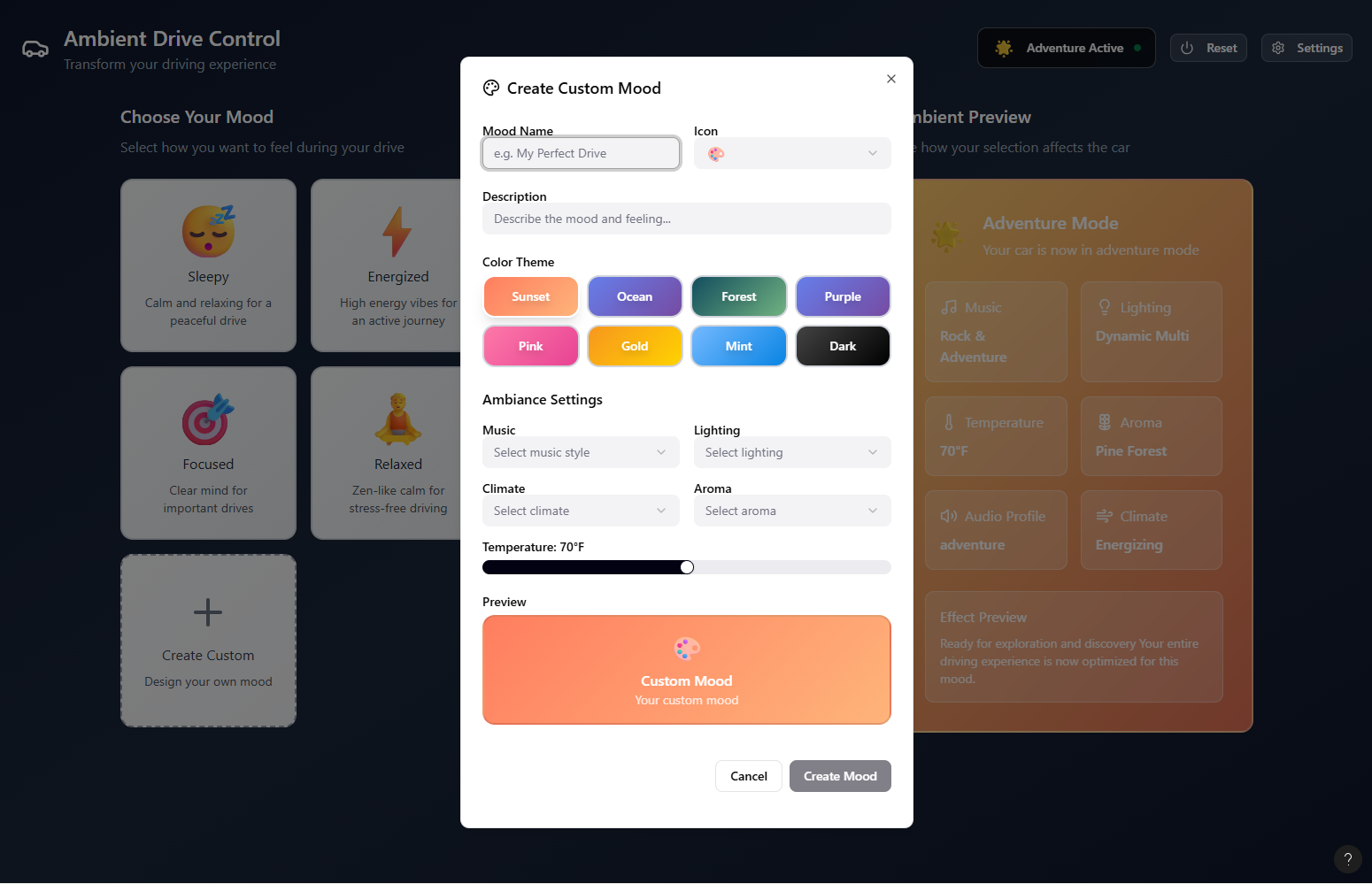
Note: This design concept was created using Figma, with assistance from its built-in AI features to generate layout suggestions and color variations.
References.
Figma. (n.d.). Figma [Computer software]. Figma. https://www.figma.com
Grammarly. (n.d.). https://app.grammarly.com/
Grave, M., & Baker, J. (n.d.). Sight, sound, scent, taste and touch: The power of sensory design in Healthcare. COX. https://www.coxarchitecture.com.au/perspective/sight-sound-scent-taste-and-touch-the-power-of-sensory-design-in-healthcare/
The Park Place Venue. (2023, December 28). The science of good vibes: How space and atmosphere change how we feel. The Park Place Venue. https://theparkplacevenue.com/post/the-science-of-good-vibes-how-space-and-atmosphere-change-how-we-feel
This passage was developed from primary and secondary research data I originally collected (~40%), my synthesis and framing of key stressors and themes (~40%), and AI support (~20%) in editing for clarity, structure, and academic tone. All interpretations and conclusions remain the responsibility of the author.