An Etch in History
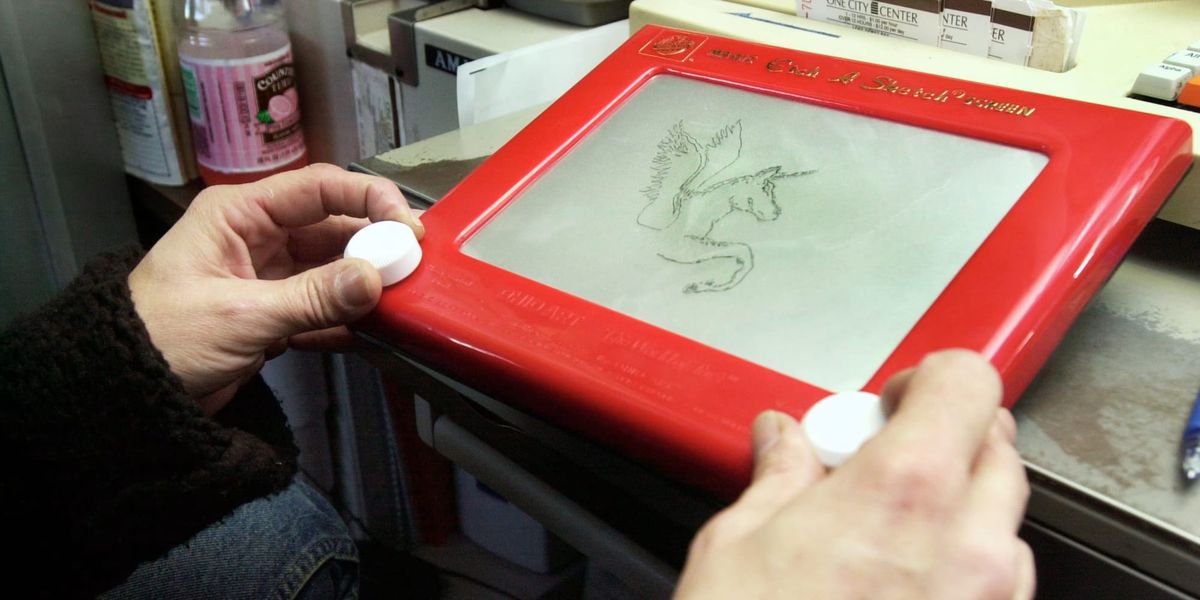
The Etch-a-Sketch, one of the most iconic toys in history, turned 65 years old this year. Its harnessing of new at the time technology such as plastic molding could serve as inspiration for modern toy innovation.
The Etch A Sketch helped kick-start a “golden age of toy creativity,” says Edwin Sobey, who founded the National Toy Hall of Fame. Fueled by postwar optimism, the growing baby boom and an explosion of new technologies—in particular, affordable new plastics—that golden age spawned iconic toys including the Hula-Hoop, Lego, Mr. Potato Head and Frisbee.
Etch A Sketch stood out with parents because it allowed children to be artistic without creating a mess, explains Chris Bensch, vice president for collections at The Strong National Museum of Play. “It was a challenging yet approachable form of creativity that was all entirely contained on screen and didn’t require batteries.”
The Etch A Sketch saw a resurgence in popularity after appearing in the 1995 blockbuster film Toy Story and its subsequent sequels. In 2012, a comment by presidential candidate Mitt Romney prompted the Ohio Art Company to release a blue version of the toy, giving voters a chance to choose one that matched their political affiliation. “There have been licensed versions with Frozen and “Simpsons” characters, heart-shaped ones for Valentine’s Day, [even] Christmas tree-shaped Etch A Sketches,” notes Bensch.
Etch A Sketch artists have become so creative that in 2015 the Ohio Art Company hosted Sketch Madness, an eight-person competition won by Jane Labowitch, known on Tik Tok as Princess Etch. Scanning the internet reveals an abundance of elaborate Etch A Sketch creations ranging from the Taj Mahal to famous paintings to sporting icons, among other images. The toy even has its own holiday: Etch A Sketch Day falls every year on July 12.
The etch-a-sketch was unique for its time due to its ability to facilitate creative playtime in a way that didn't create messes. Additionally, it had a striking resemblance to a TV screen, a rising icon of entertainment at the time. A modern analog to the Etch-a-Sketch would have to do the same thing; eliminate a core problem with creative activities for kids while being familiar enough that its adoption is seamless.
Another relevant aspect of the Etch-a-Sketch is its unique mode of interaction: the two white knobs that control the cursor. This was a method of sketching that was completely new at the time, indicating that children are able to adapt to novel modes of interaction. This opens up justification for art tool design to come in novel forms.
There are multiple aspects of the Etch-a-Sketch that are comparable to modern day tablets such as the ones being introduced built-in to cars. They both parrot popular forms of entertainment, have a large central screen, and have dials that control user interaction. Tablets are a new development in children's entertainment. By using the lessons learned by comparable toy inventions, we can find inspiration and justification for turning the dial.
References
Wakeman, Gregory. 2025. History.com. "How Etch a Sketch Became One of the Most Popular Toys of All Time". https://www.history.com/articles/etch-a-sketch-toy-history
Ewing, John. N.D. Portland Press Herald via Getty Images. https://www.history.com/articles/etch-a-sketch-toy-history
All original works in this article were done without the assistance of AI tools.