Beyond Profit: Designing Business for Wellbeing
This article frames how sustainability is not just an extra component, but a business model in itself. Shifting the conversation about sustainability away from this notion of “costly” or “optional”, and instead shows how it can drive innovation and growth.
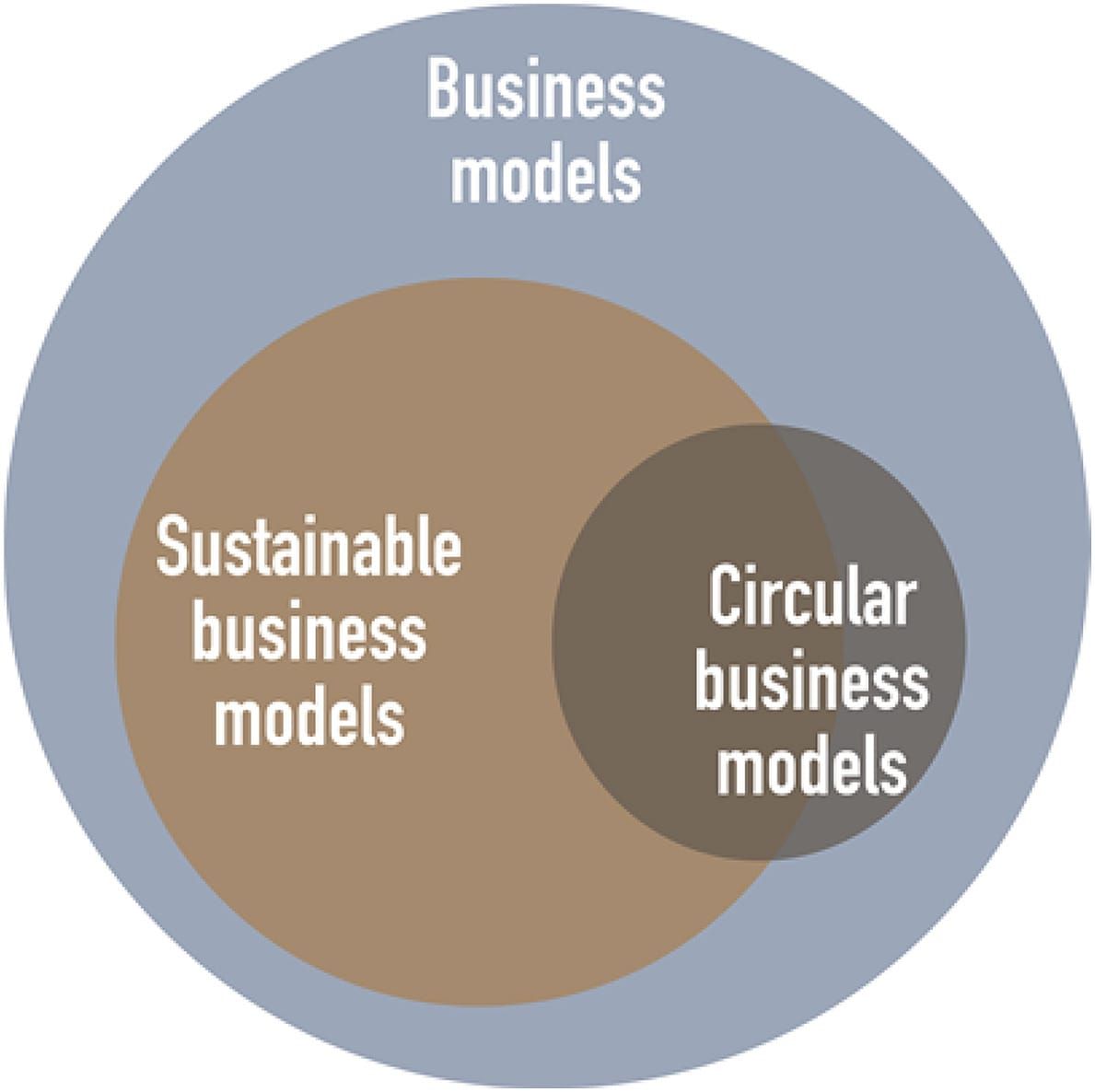
During the past two decades of the e-commerce growth the concept of business model has become increasingly popular. More recently, the research on this realm has grown rapidly with a diverse research activity covering a wide range of application areas. Considering the sustainable development goals the innovative business models have brought a competitive advantage to improve the sustainability performance of organizations. The concept of the sustainable business model describes the rationale of how an organization creates, delivers, and captures value, in economic, social, cultural or other contexts in a sustainable way. The process of sustainable business model construction forms an innovative part of business strategy. Different industries and businesses have utilized sustainable business models’ concept to satisfy their economic, environmental and social goals simultaneously. However, the success, popularity, and the progress of sustainable business models in different application domains are not clear. (Geissdoerfer, M, 2019)
Much research has been conducted on the common fields of innovation and which mainly strive to propose models, frameworks, or guidelines to elaborate how to innovate a sustainable business model or how to shift a traditional business model to a sustainable business model. Evans et al. [15] provide five paradigms for such transformation toward a sustainable business model.
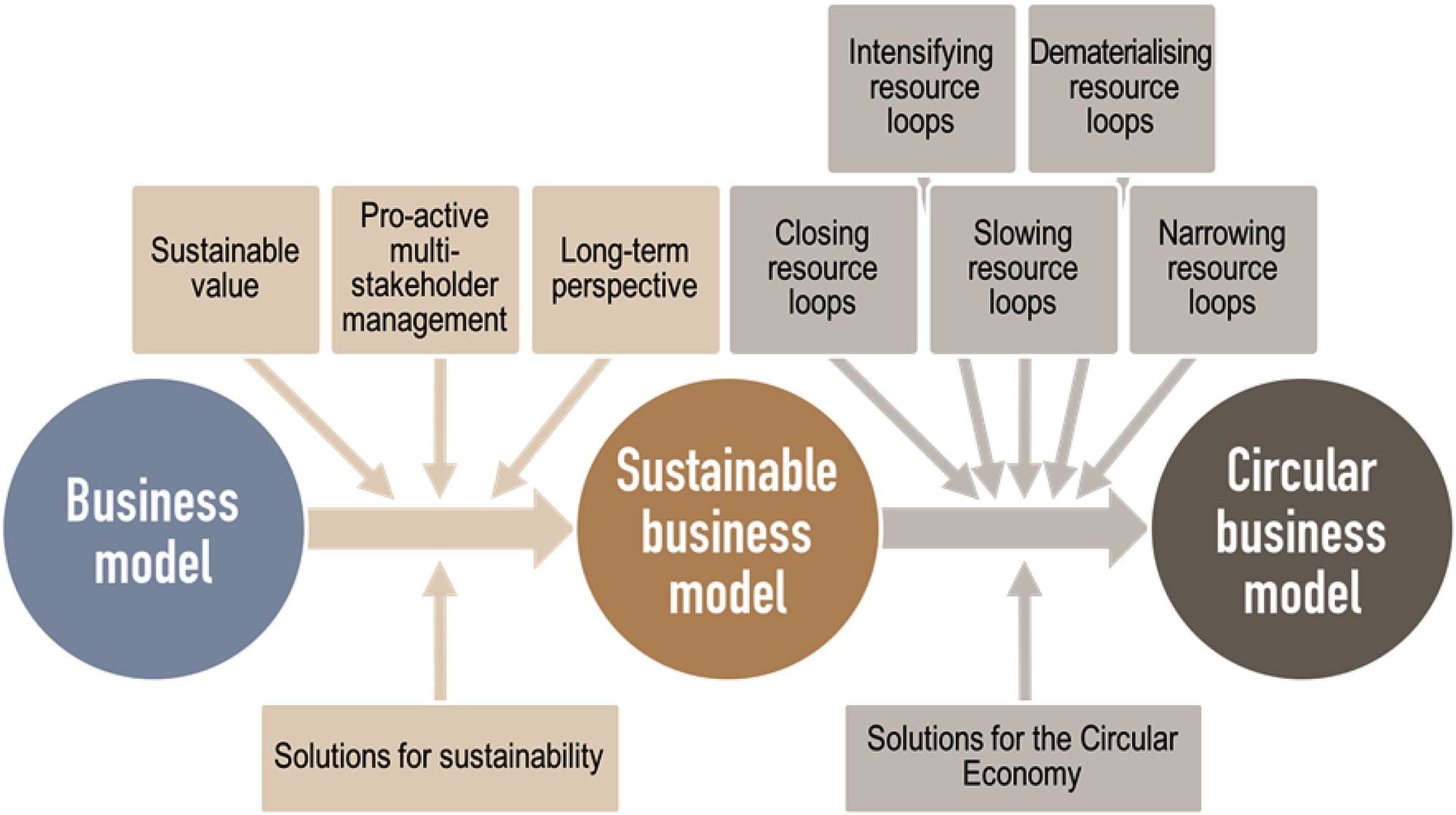
Evans et al. [15] articulate that the first step to designing a sustainable business model is to design sustainable value that incorporates economic, social and environmental benefits conceptualized as value forms. According to Evans et al. [15], the second step to design a sustainable business model is to create a system of sustainable value flows among multiple stakeholders, including the natural environment and society as primary stakeholders. Generating a value network with a new purpose, design, and governance is the third step toward a sustainable business model. The fourth step to have a sustainable business model is to consider systemically the stakeholder interests and responsibilities for mutual value creation. Finally, internalizing externalities through Product Service System also enables innovation towards sustainable business models.
Geissdoerfer, Bocken and Hultink [26], inspired by design thinking, developed the concept of ‘Value Ideation’ comprising value ideation, value opportunity selection, and value proposition prototyping. Based on the first principle of Evans et al. [15] model, the approach of Geissdoerfer et al. [26] to design a sustainable business model is to design a sustainable value proposition in which additional forms of value are created by identifying formerly underserved stakeholders (including society and environment) in the value proposition. (Nosratabadi, 2019)
What stood out to me most was the focus on innovation, how businesses can completely rethink the way they create value. When I read about the circular economy and sharing platforms, I couldn’t help but connect them to the lifestyle shifts I see around me toward wellbeing and more intentional living. People today want businesses that respect their values and offer products or experiences that feel both responsible and restorative. At the same time, I relate to the challenge the article raises: how do you measure something as intangible as impact on wellbeing or ambiance? For my project, this reflection encourages me to think about how relaxation and atmosphere could be integrated into a sustainable business model, not just as an add-on but as a key value.
Reference.
Geissdoerfer, M., Vladimirova, D., & Evans, S. (2018). Sustainable business models: A review. Journal of Cleaner Production, 198, 401–416. https://doi.org/10.1016/j.jclepro.2018.06.240
Nosratabadi, S., Mosavi, A., Shamshirband, S., Zavadskas, E. K., Rakotonirainy, A., & Chau, K. W. (2019, July 23). Sustainable business models: A Review. arXiv.org. https://arxiv.org/abs/1907.10052
This reflection draws ~40% from Science Direct article “Sustainable business model innovation: A review” (2018), ~50% from the author’s own framing of the capstone context and design intentions, and ~10% from AI assistance (synthesizing article content, editing for clarity, and expanding argumentation). All interpretations and final perspectives remain the responsibility of the author.