Biodegradable Bioplastic Designed to Tackle Deep Sea Plastic Pollution
This article introduces the idea of a circular bioeconomy. It is driven by biodegradable materials that return to nature to be recycled into organic matter. Instead of remaining in the hands of humans to be repurposed, products in the bioeconomy are designed to integrate seamlessly into the environment the way plants and animals are.
Quotes taken from Beadle (2025) referencing Ishii et al. (2025):
"Researchers in Japan have developed a lactate-based bioplastic that can biodegrade in deep-ocean environments, losing over 80% of its mass after 13 months underwater" (Beadle, 2025).
"Their research, published in Polymer Degradation and Stability, highlights the potential of poly(D-lactate-co-3-hydroxybutyrate) (LAHB) as an alternative to conventional plastics such as polylactide (PLA), which remain intact under deep sea conditions" (Beadle, 2025).
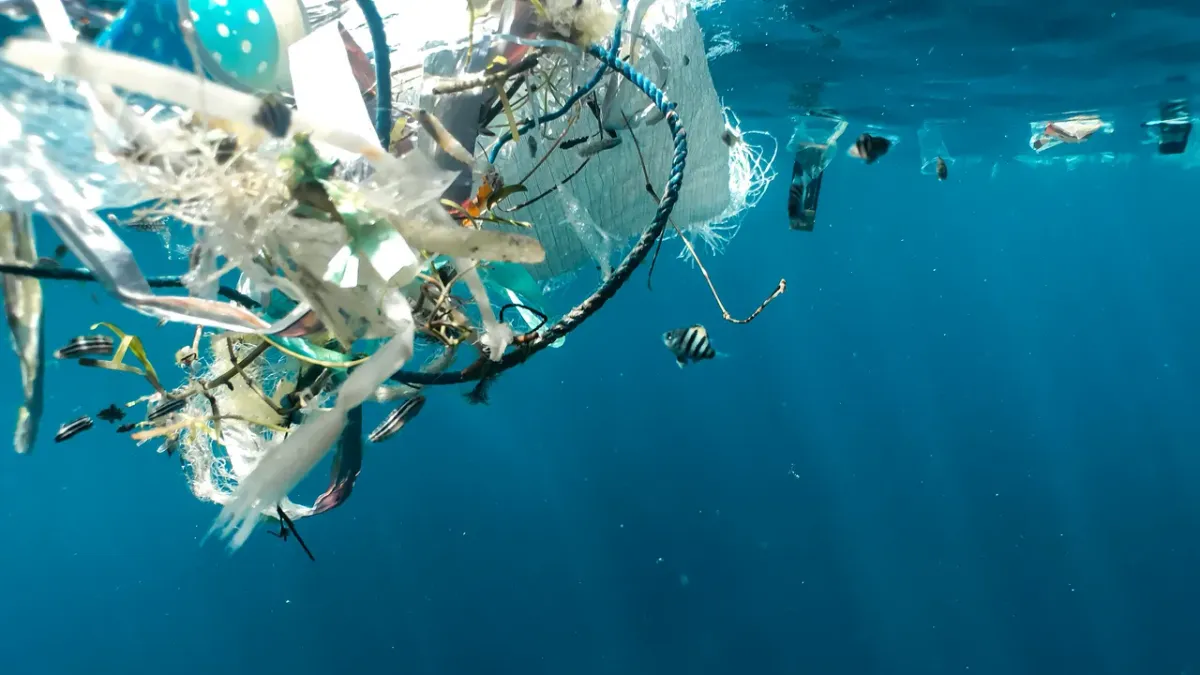
"Marine plastic waste continues to accumulate in aquatic ecosystems. The Organisation for Economic Co-operation and Development (OECD) reports that around 353 million metric tons of plastic waste were produced globally in 2019, with nearly 1.7 million metric tons flowing directly into aquatic ecosystems. Some of this debris is trapped in large circulating ocean currents, or gyres, forming persistent floating waste patches" (Beadle, 2025).
"To tackle the issue of plastics in marine environments, research teams around the globe are looking to develop bioplastic alternatives to PLA and other conventional plastics which will breakdown more readily to prevent the build-up of plastic debris" (Beadle, 2025).
"To test the biodegradability of LAHB in real-world conditions, the researchers submerged plastic samples near Hatsushima Island, Japan, at a depth of 855 meters. The site features low temperatures (3.6 °C), high salinity, limited oxygen and minimal nutrients, all of which slow microbial activity" (Beadle, 2025).
"The study is the first to confirm that LAHB can degrade under high-pressure, low-temperature marine conditions where conventional biodegradable plastics typically fail. The findings provide a data-driven basis for exploring LAHB as a safer material in efforts to reduce marine plastic waste" (Beadle, 2025).
“'This research addresses one of the most critical limitations of current bioplastics—their lack of biodegradability in marine environments. By showing that LAHB can decompose and mineralize even in deep-sea conditions, the study provides a pathway for safer alternatives to conventional plastics and supports the transition to a circular bioeconomy, said Taguchi'" (Beadle, 2025).
To be honest, I like the idea of a circular bioeconomy more than just a regular economy. When we go into parks, we are encouraged to “leave no trace,” right? I believe that should be our goal wherever we go, not just parks. Nothing we throw away should last forever. Unfortunately, that’s not the reality in which we live. If tomorrow, all new PLA was replaced with LAHB, we would still have a climate crisis. Our oceans would still be full of plastic. Plastic alternatives can’t come soon enough but we still have to address the problem of what is already out there. How can we clean it up? And how can we integrate them back into a circular economy?
No generative artificial intelligence (AI) was used in the writing of this work.
References
Beadle, A. (2025, July 22). Biodegradable bioplastic designed to tackle deep sea plastic pollution. Applied Sciences from Technology Networks. https://www.technologynetworks.com/applied-sciences/news/biodegradable-bioplastic-designed-to-tackle-deep-sea-plastic-pollution-402599
Ishii, S., Koh, S., Suzuki, M., Kasuya, K., & Taguchi, S. (2025). Unveiling deep-sea biodegradation of microbially produced lactate-based polyester (LAHB) via plastisphere metagenomics and metatranscriptomics. Polymer Degradation and Stability, 240, 111527. https://doi.org/10.1016/j.polymdegradstab.2025.111527