Cleveland Museum of Art Introduces ARTLENS Gallery, a Touchscreen-Free Approach to Integrating Art, Interpretation and Technology
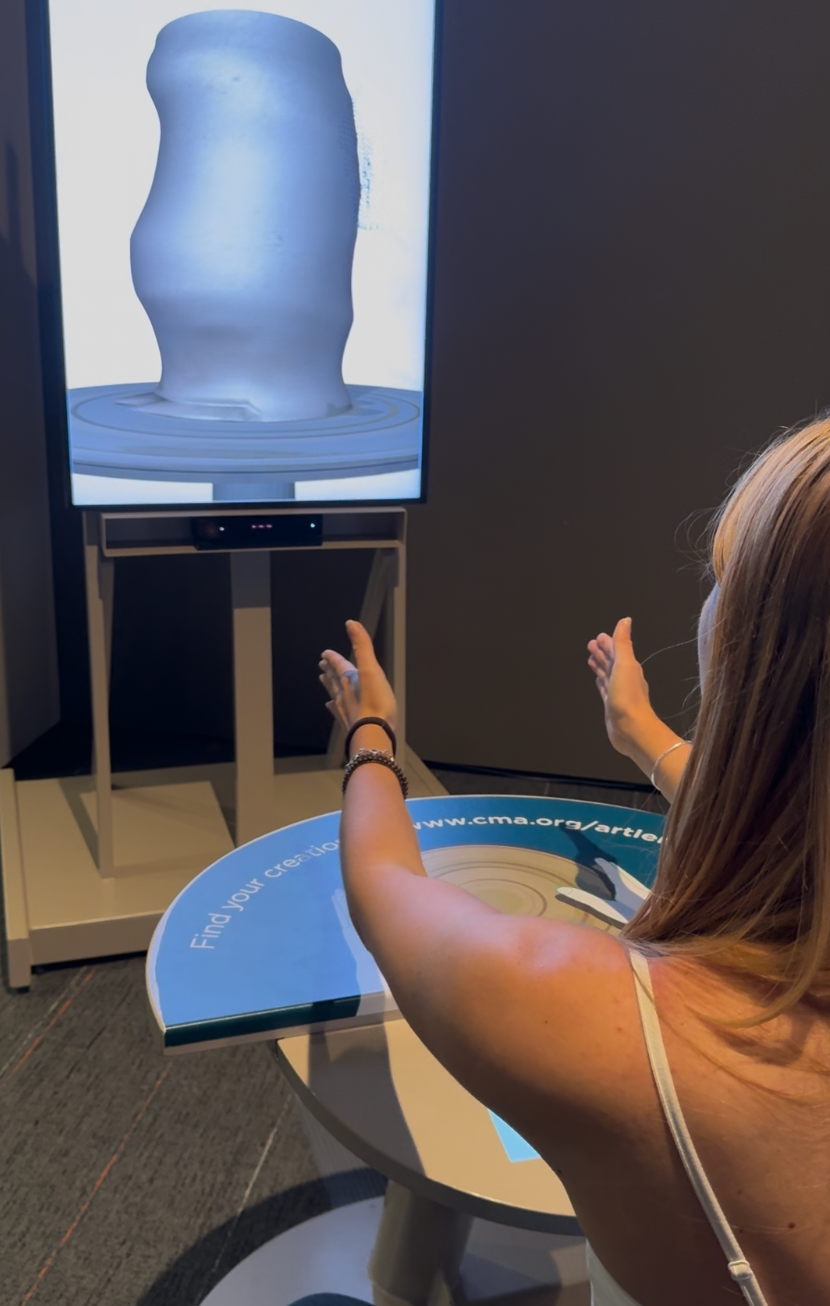
The Cleveland Museum of Art holds an interactive exhibit that utilizes some really unique technology. The exhibit promotes touch-free interaction with the audience to explore art. The attractions use movement and face recognition as a tool to create your own forms of digital art. These technologies offer a unique potential integration to the car.
"In addition, the Beacon, a monumental screen at the entrance of ARTLENS Gallery, displays visitor-generated content, including tours, collages, portraits, and poses in real time.
Transitioning away from the touchscreen technology featured in Gallery One, ARTLENS Exhibition interactives respond seamlessly to body movement and immerse the user in the experience. The new technology is designed to focus the visitor on the artwork in an unobtrusive way, and strengthen the visitor’s understanding of art through pedagogically rigorous but fun games. Featured works in the exhibition space will be rotated every 18 months and include both celebrated masterworks from the collection and objects that the public may not know about, in the hope that return visitors will recognize these “hidden gems” on future trips to the museum
The Cleveland Museum of Art is committed to using the potential of cutting-edge technology to enhance our visitor’s experience. Gallery One was an unqualified success from the day it opened in 2013,” said William M. Griswold, museum director. “It won multiple awards, and articles about it appeared in many major national publications. It also helped drive a 31% increase in individual attendance and a 29% increase in the attendance of families during that period (Cleveland Museum, 2017). "
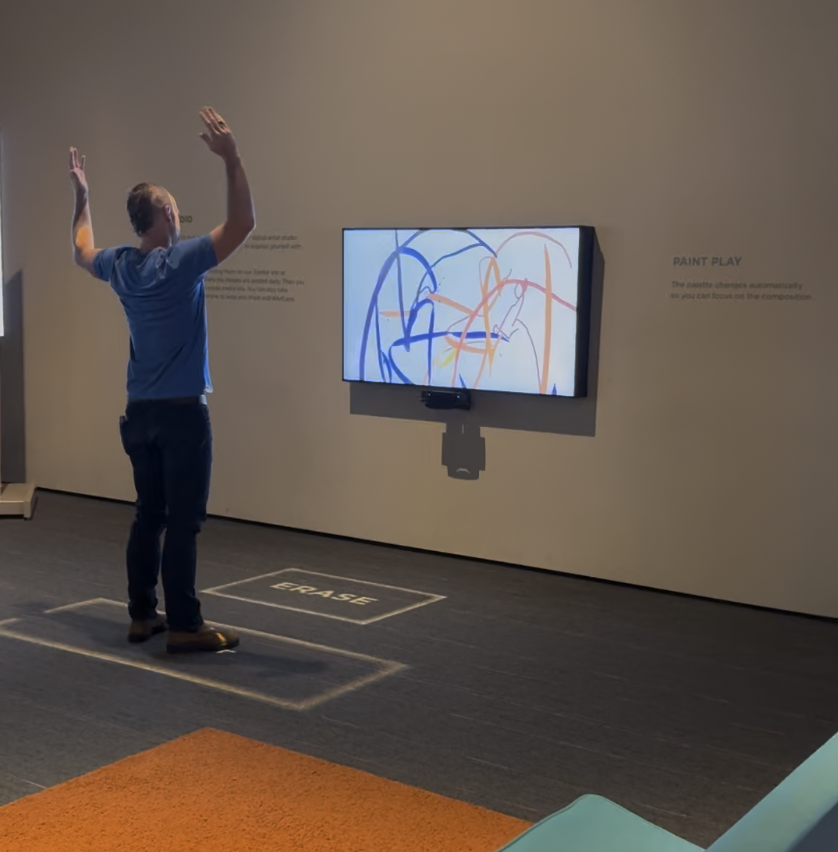
"ARTLENS Exhibition puts the art in the foreground, using barrier-free and motion-activated interactive projections to create an immersive experience that facilitates engagement with the art on a personal, emotional level. Visitors approach and engage with the art, and then activate the interactive games. These games augment visual literacy skills, providing an experience in which visitors can learn more about concepts such as composition, gesture and emotion, purpose, and symbols, inspiring them to look at artworks again with a new understanding.
Two of the 16 new games in ArtLens Exhibition, Gaze Tracker and Express Yourself, use innovative eye-tracking and facial-recognition technology, transforming the way museums understand how visitors look at art and how visitors understand their own gaze.
What's most exciting to me, is that in ARTLENS Exhibition, people use their natural tools — their eyes and their hands — to look more closely at art— and that experience might change how they look at art for the rest of their life (Cleveland, 2017).”
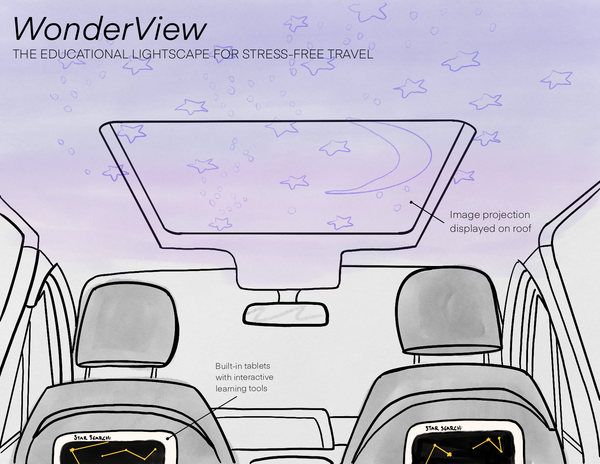
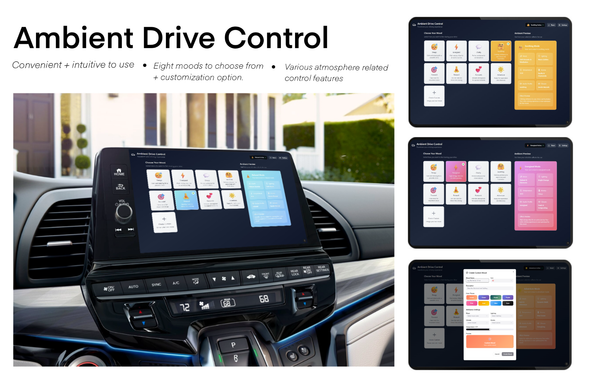
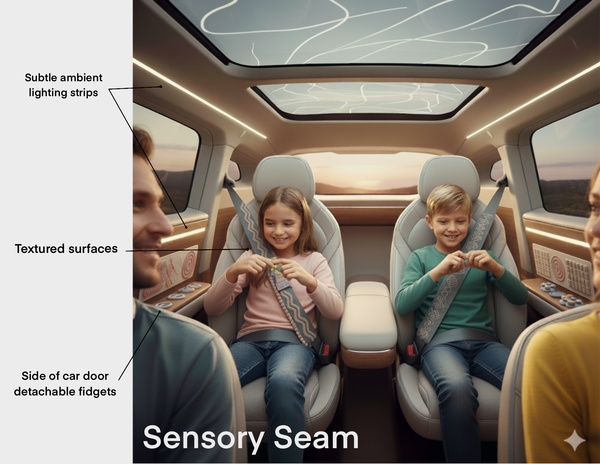
This space uses a variety of technology to engage the audience and create interaction between people and art. I was amazed with the activities in this room and had so much fun playing around with these technologies. There were a variety of ages playing with the technologies, both adults and children. I was able to witness the audience engagement and curiosity when exploring the exhibit. This is relevant for my capstone project because I was able to observe new interactive technology that was could be done with small movement. This is an important perspective when thinking about designing for a seated journey. I think these similar technologies could be implemented in the backseat, when children are limited with movement. I want to explore semi-stationary practices that use small movements as a tool of exploration.
References:
Cleveland Museum of Art. (2017, June 21). ARTLENS Gallery: A touchscreen-free approach to integrating art, interpretation and technology [Press release]. Cleveland Museum of Art. https://www.clevelandart.org/about/press/cleveland-museum-art-introduces-artlens-gallery-touchscreen-free-approach-integrating