Co-Design Brainstorm Activity
Introduction
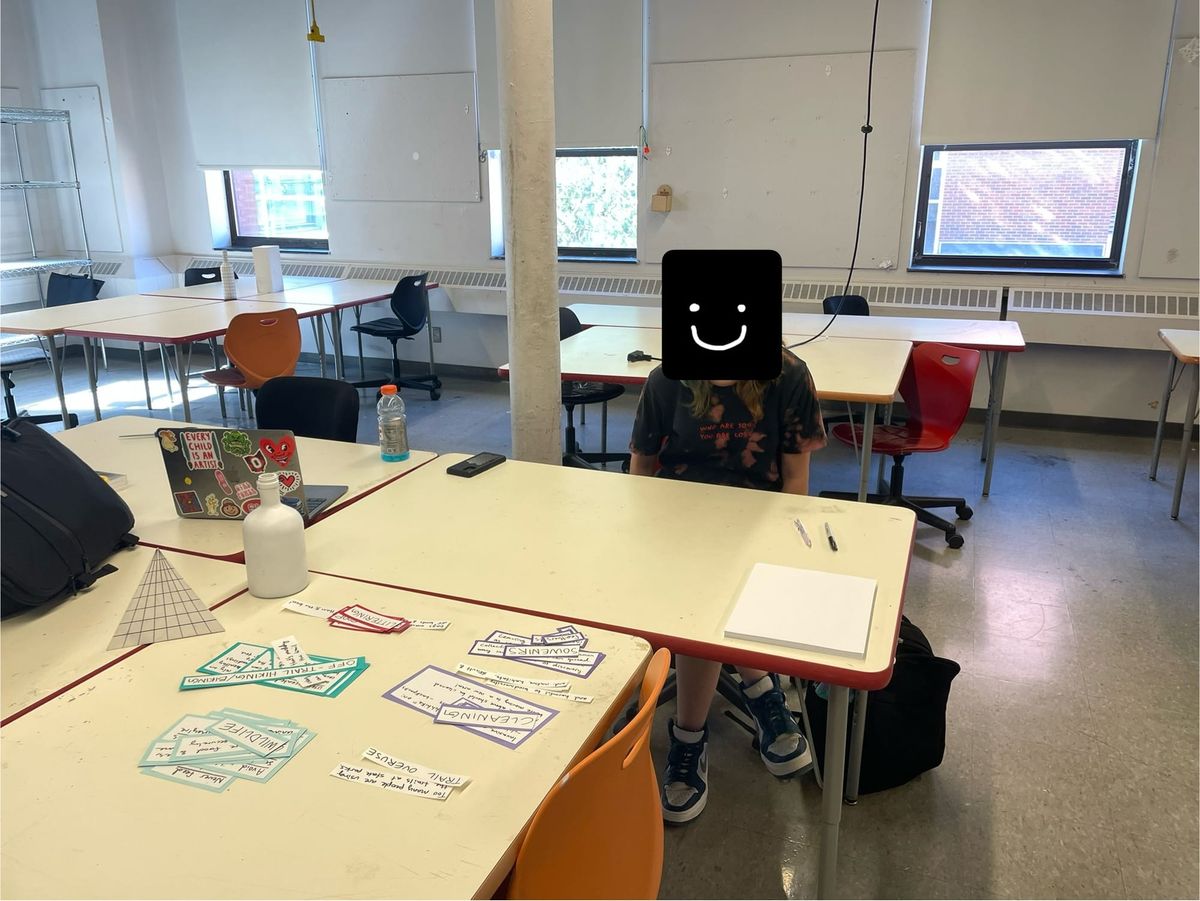
As a test of a co-design research activity, I gave a set of instructions and topics (with supporting information) to my sister, a Design Foundations student at The Ohio State University. The plan was to have her pilot test it, and move on to other participants. However, I realized during the test that it would be ethically difficult to give to other people; the problem being the ownership of ideas produced during the activity. My sister consented afterwards to the use of her ideas in the course of my project, but I wouldn't feel comfortable conducting this activity moving forward.
That being said, the insights I gained during the pilot test were still valuable, so I will go through the activity and what I learned.
Method
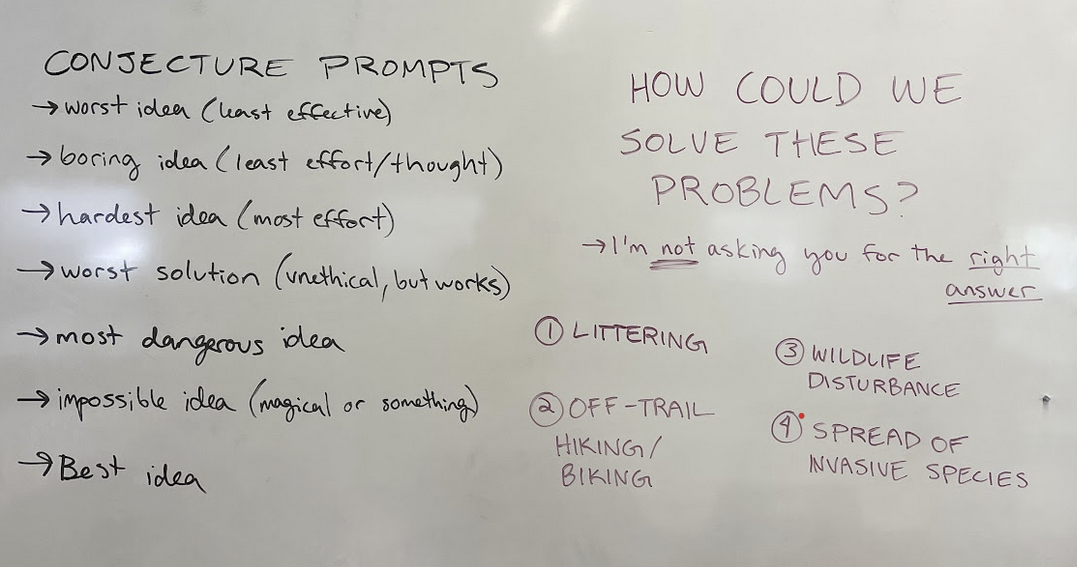
To begin, I verbally explained that the Ohio state parks are experiencing high amounts of impact from visitor recreation, and are looking to reduce that impact. I wrote down the main issues on a whiteboard (below), as well as prompts for thinking of ideas if the participant got stuck mentally.
I told the participant I was looking for them to come up with solutions, but not necessarily the "right answer." Solutions could be absurd, impossible, or unethical: they just needed to exist.
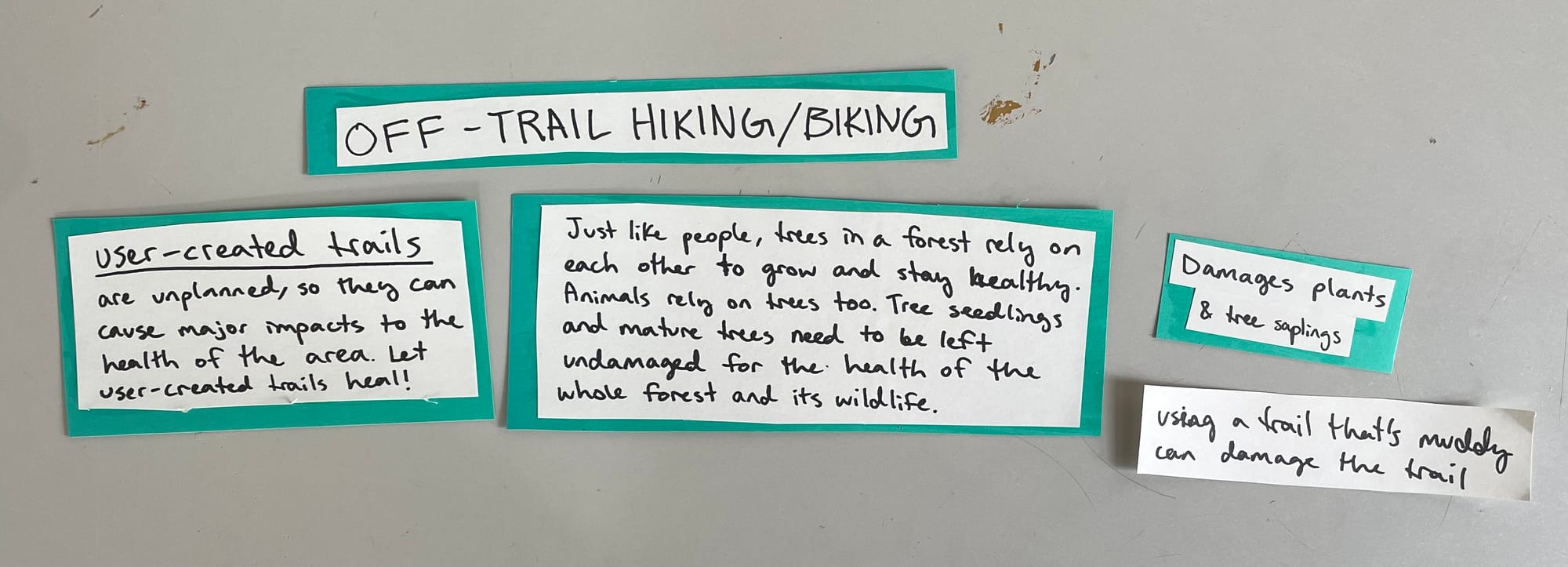
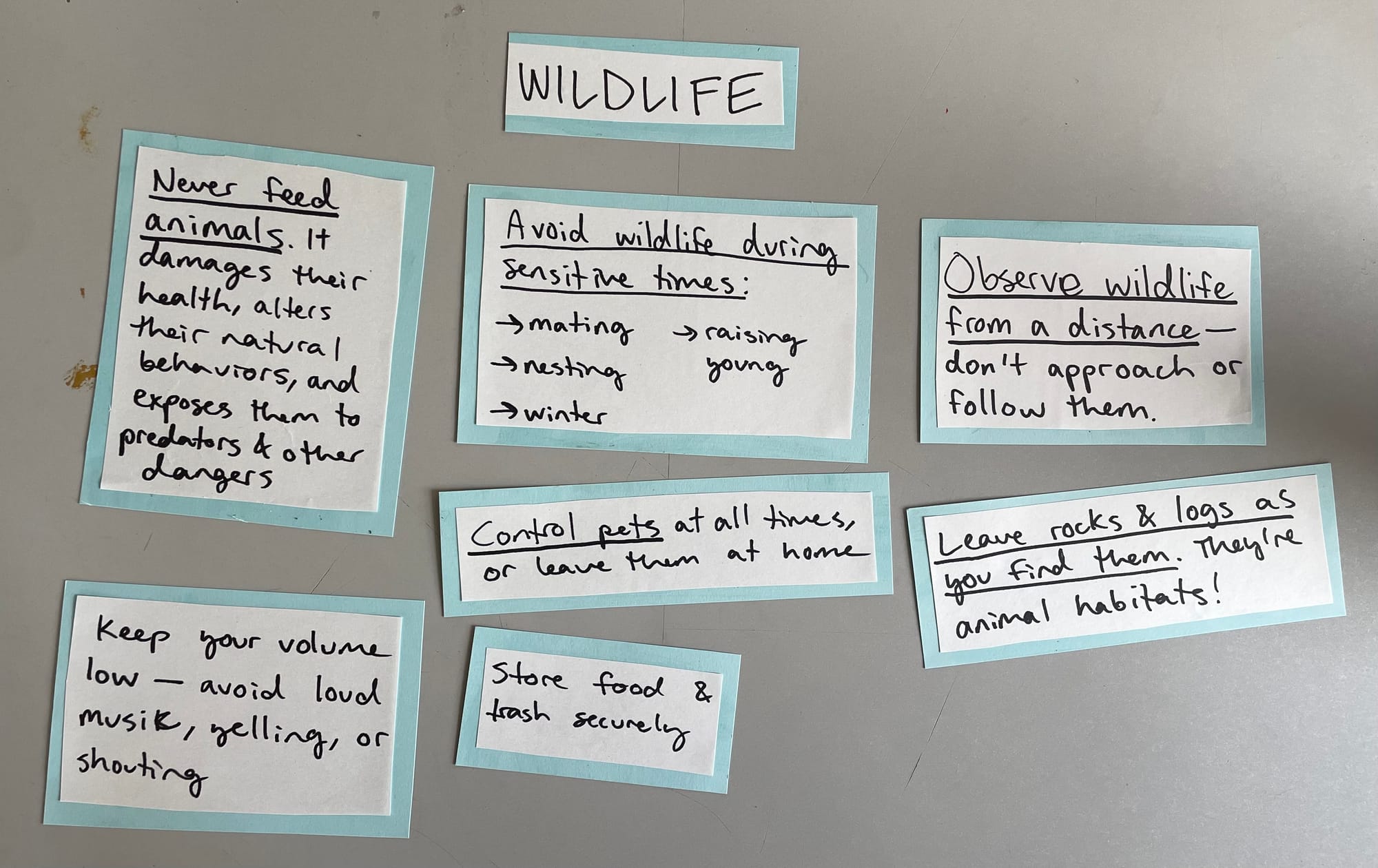
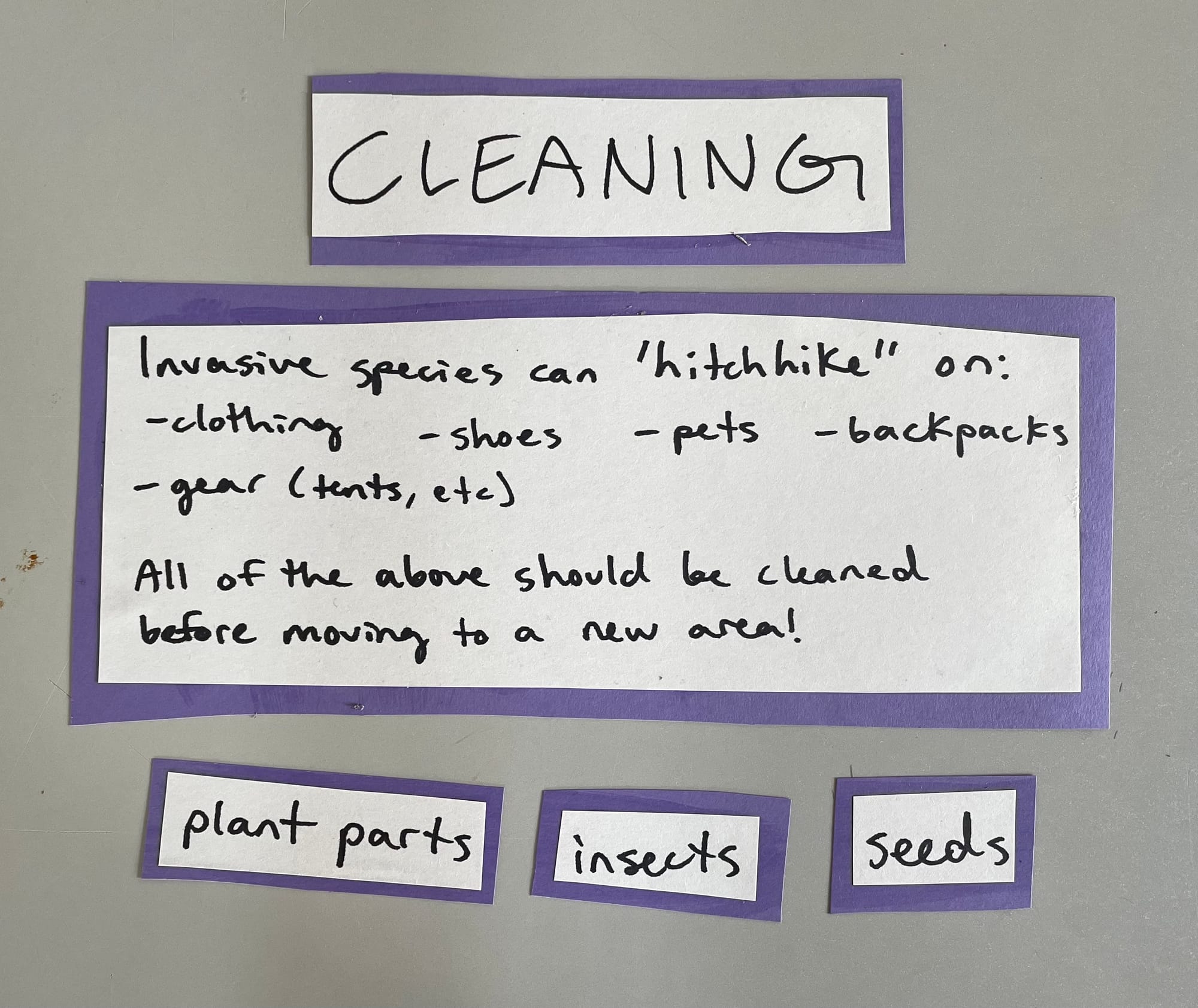
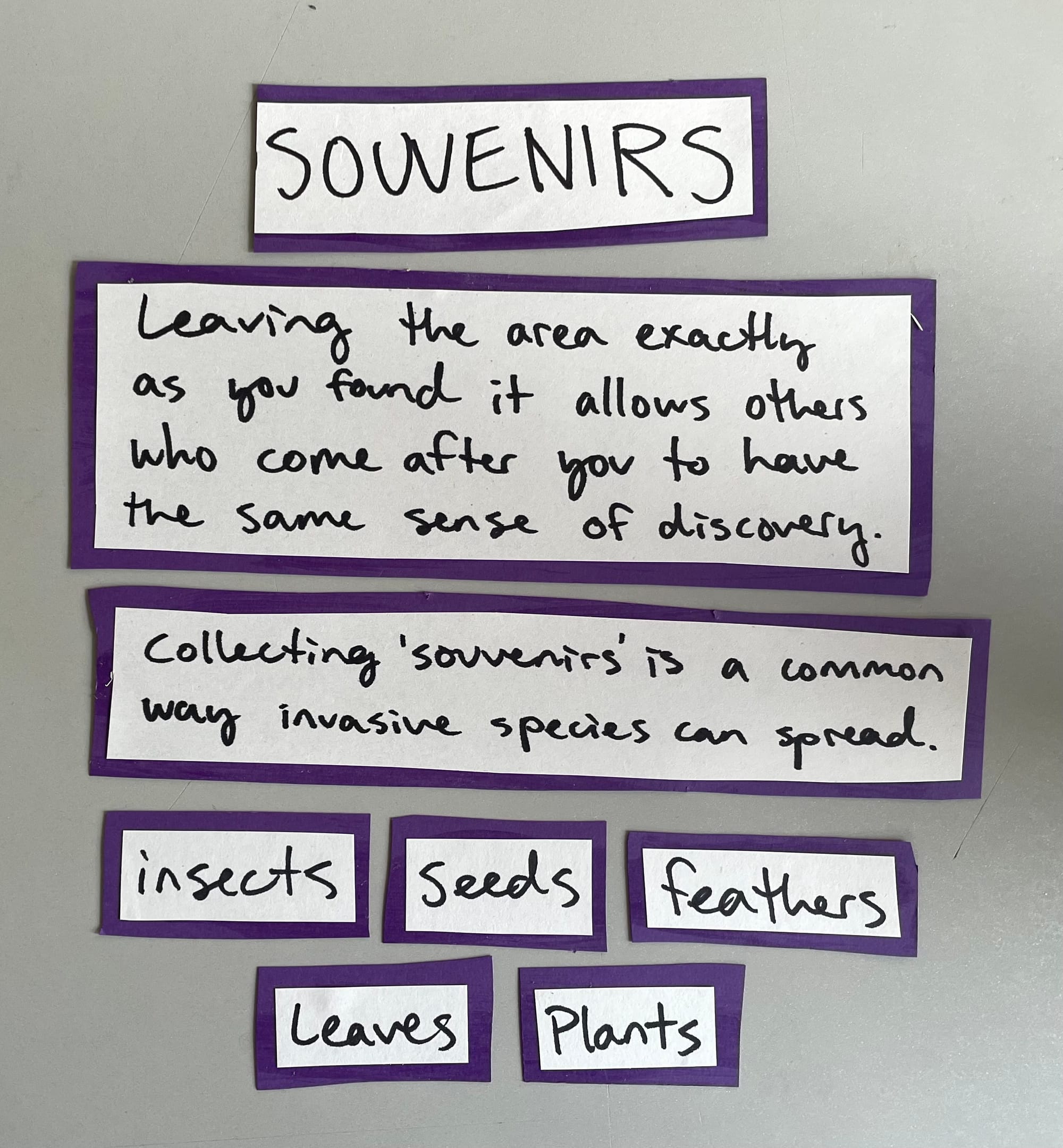
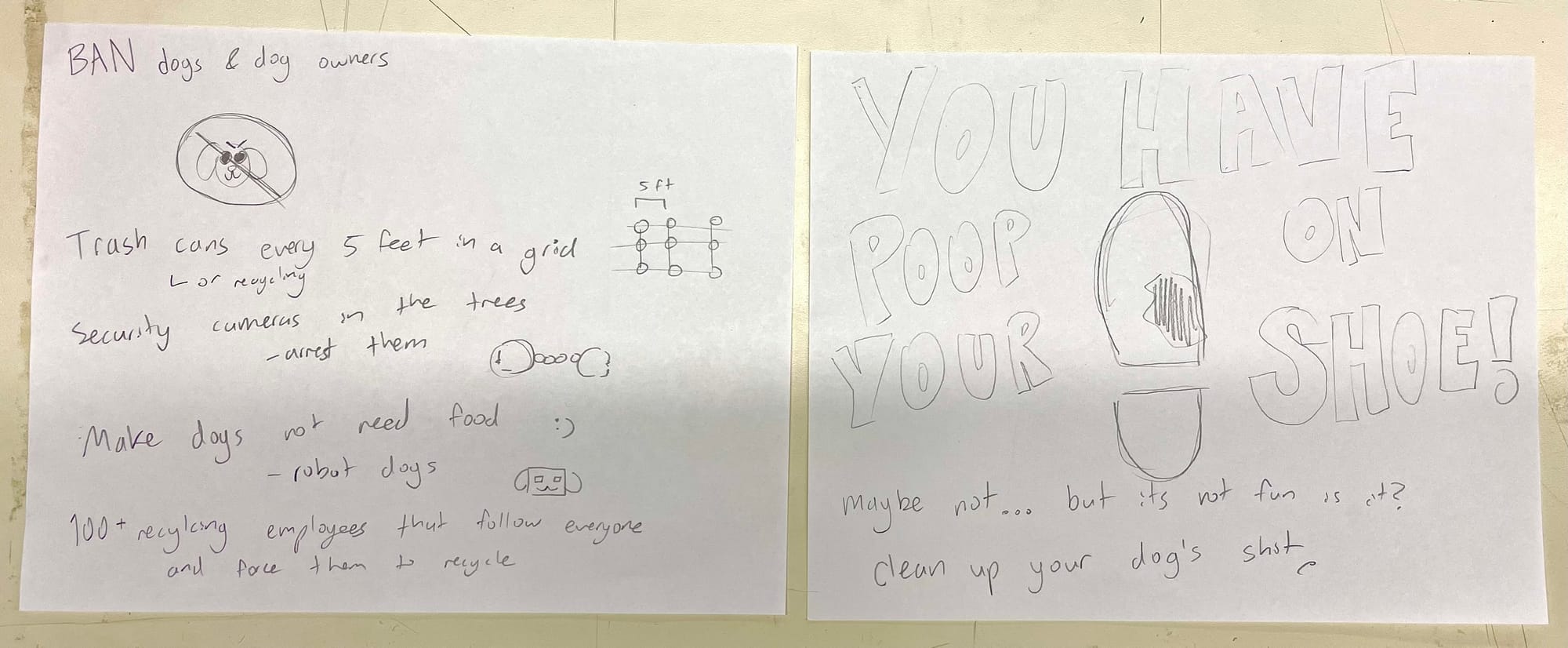
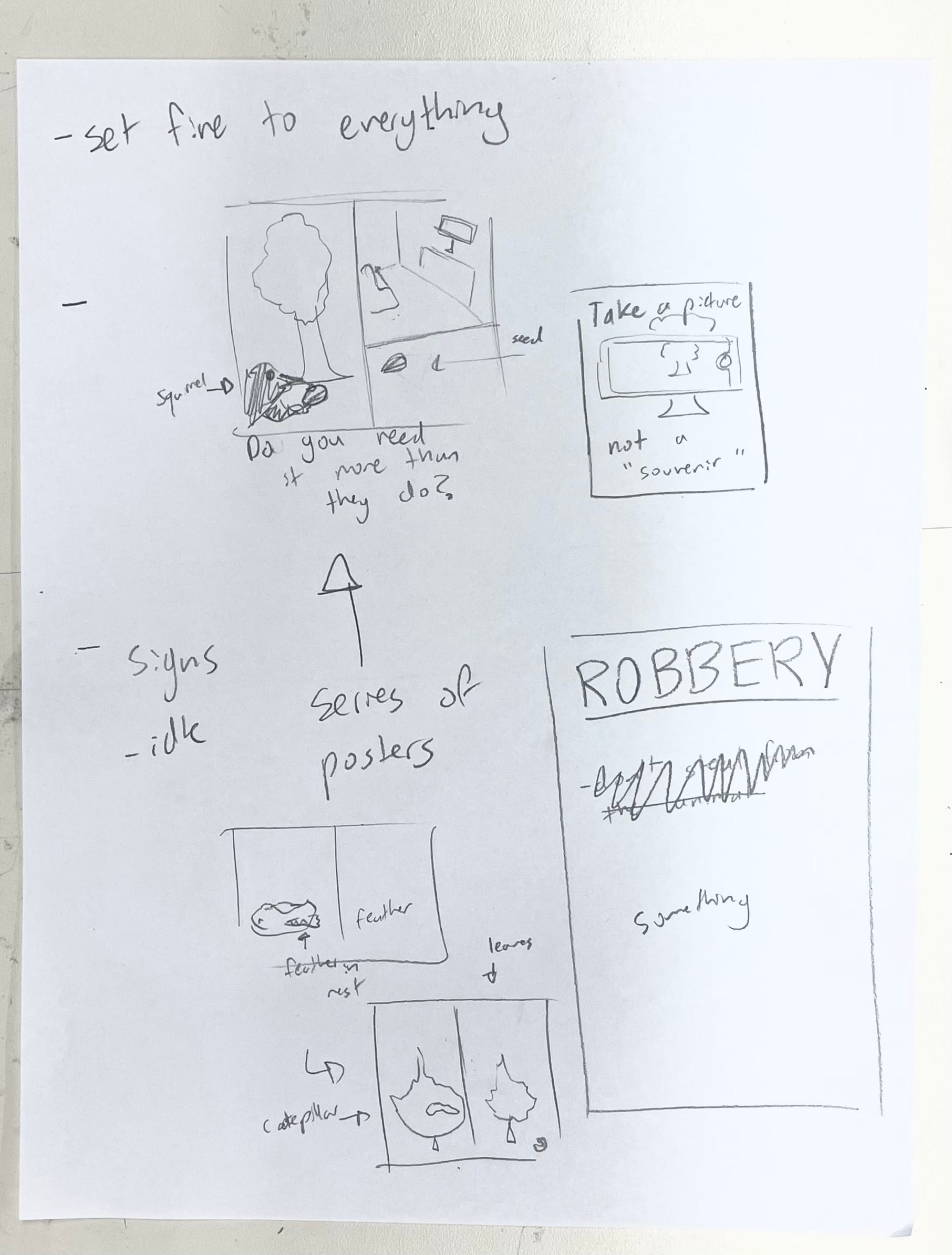
I then introduced the first topic (littering), giving the small written cards below to act as references, and gave the participant 5 minutes to sketch/write ideas, and then 5 minutes to design a poster or posters that would address the issue. The materials given were blank printer paper and pencils.
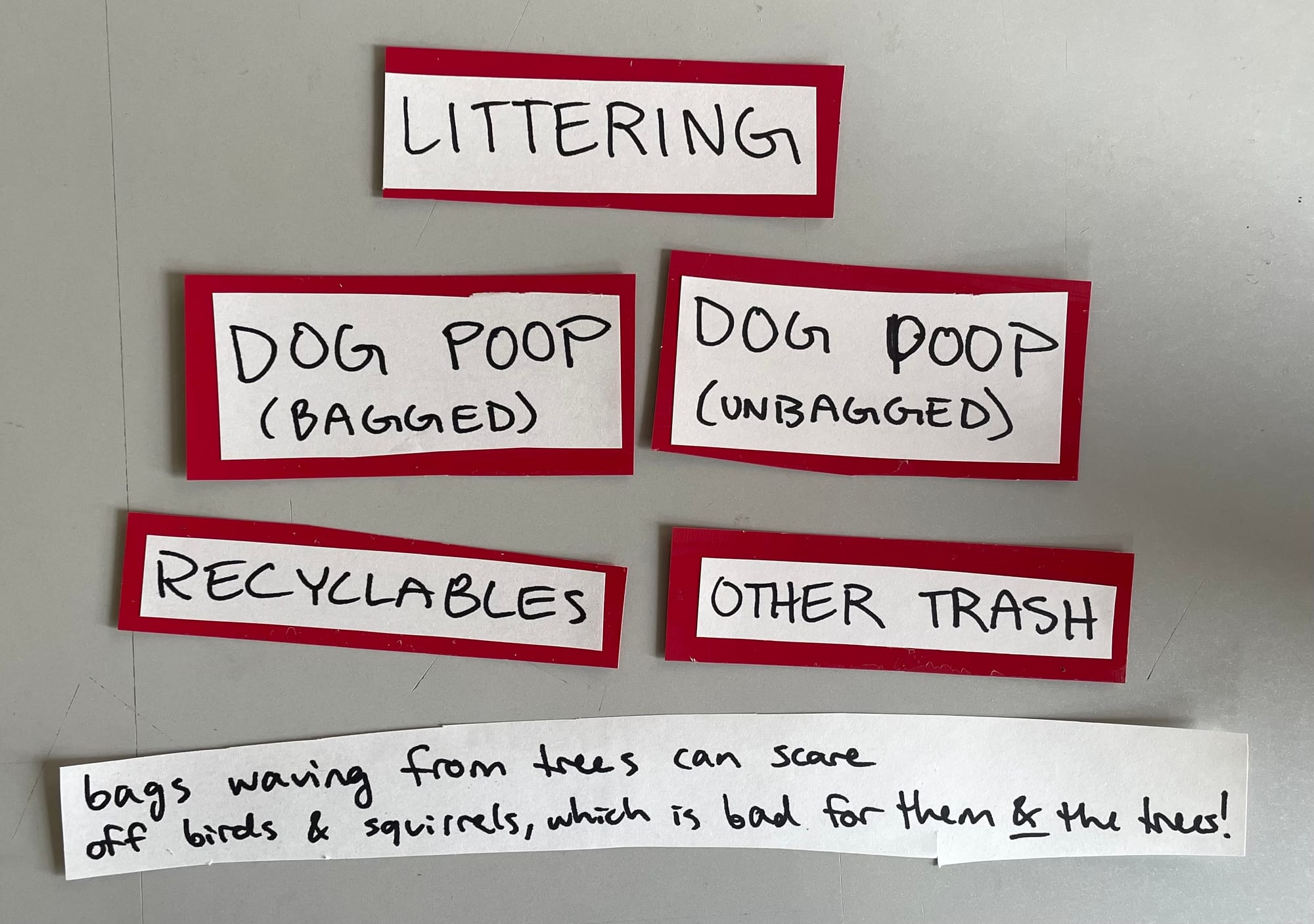
I repeated the process for the next few topics. I asked the participant to talk through and explain her work as she went. The following cards reference an article by the York County Conservation District (2021).
Results
Littering
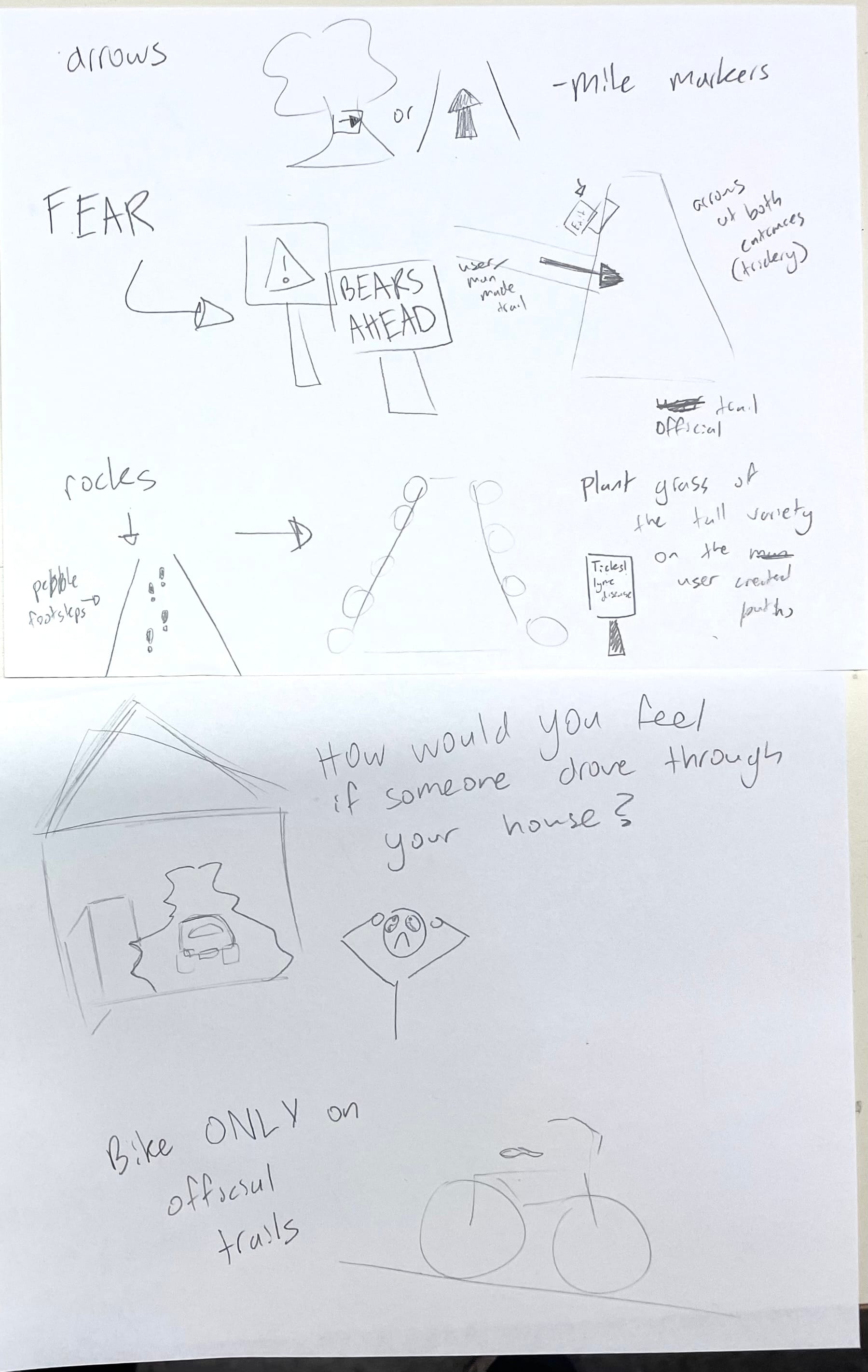
Off-trail Hiking/Biking
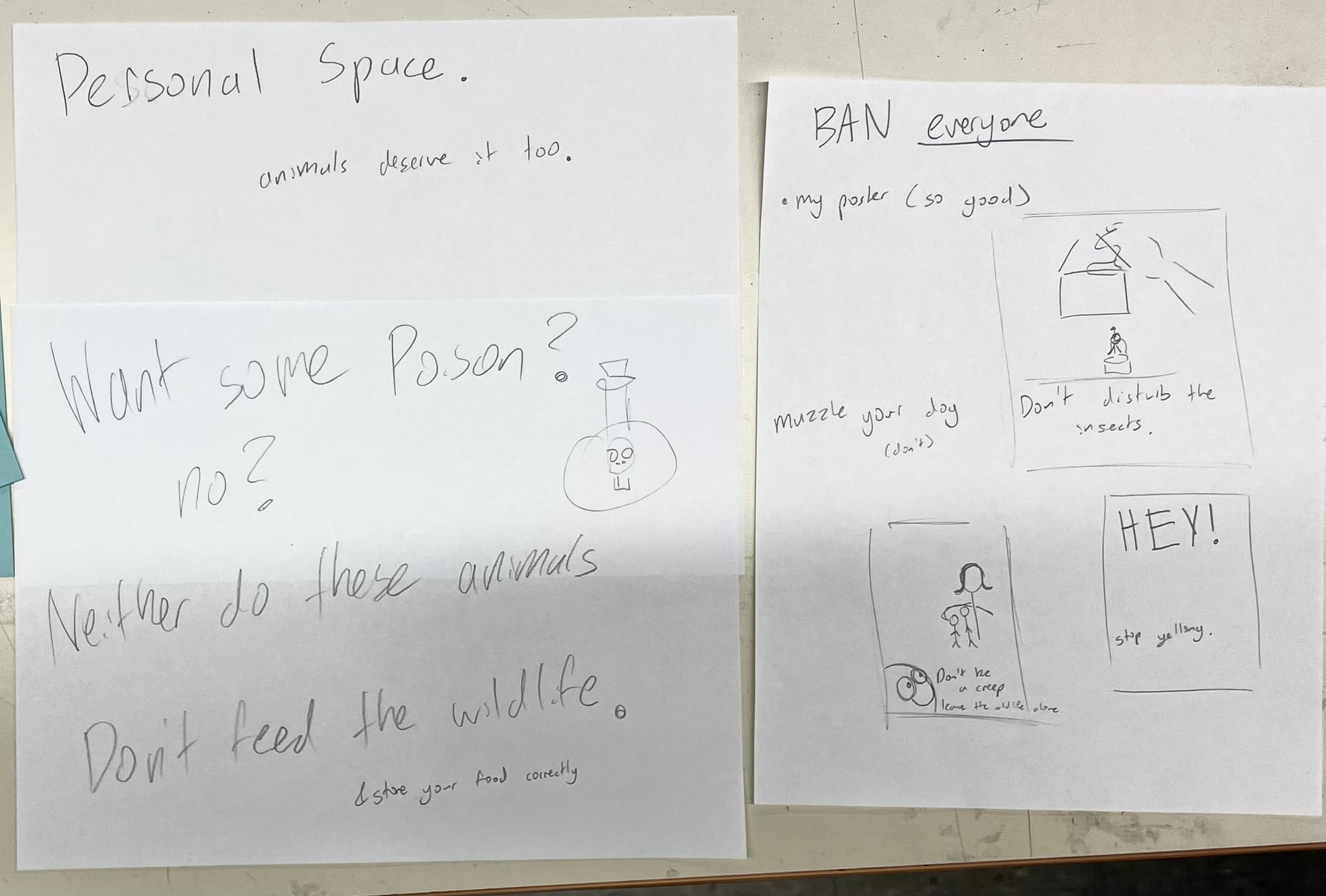
Wildlife
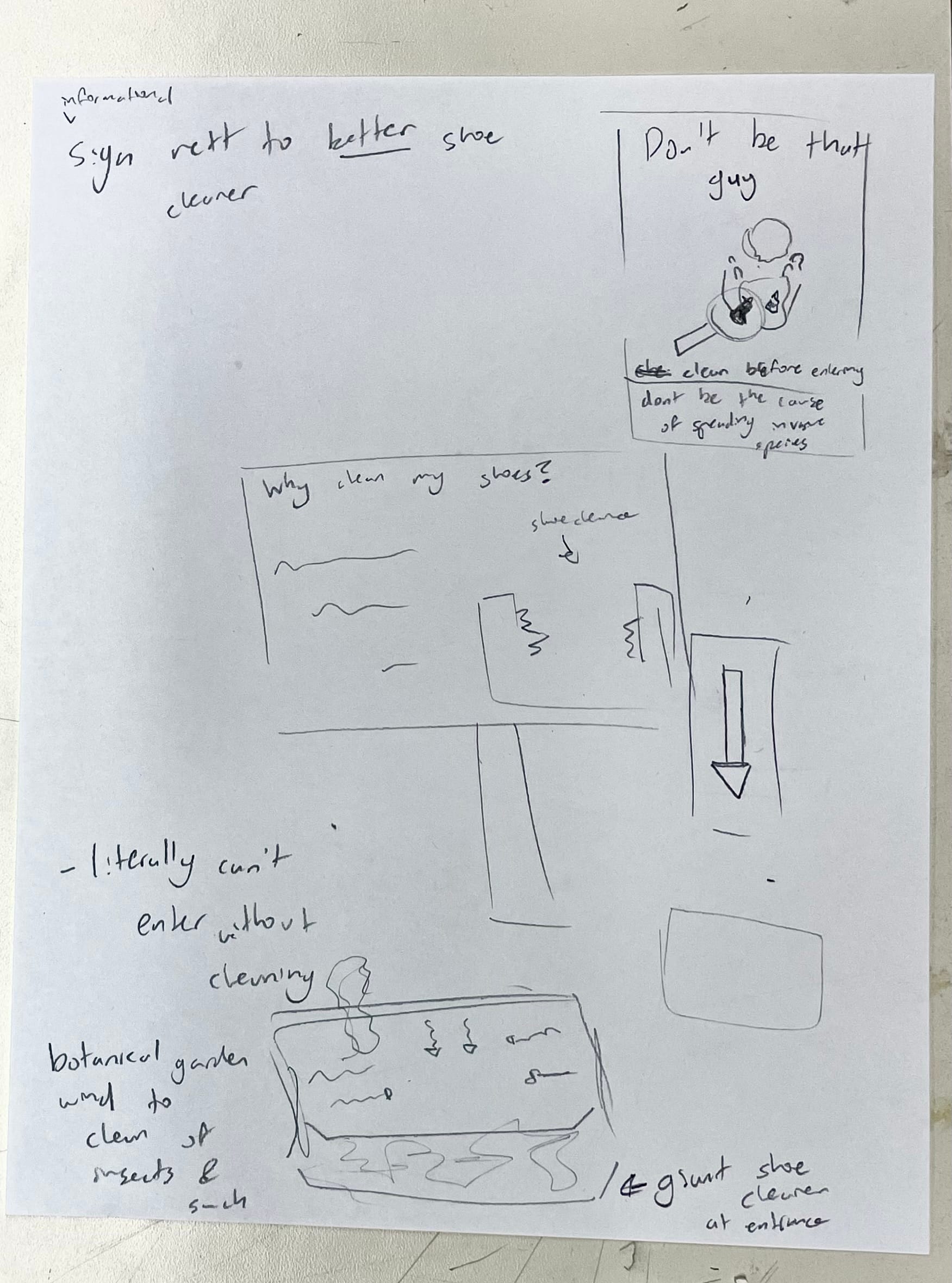
Cleaning
Souvenirs
Reflection
The day after the activity, I asked the participant to reflect on her work. I asked what techniques she used, what guided her ideas, and why she used the techniques she did.
Many of the participant's ideas were, themselves, posters or signs. And, many of them addressed the viewer directly, sometimes as a confrontation and often using emotion. Many of the signs reframe impactful human acts within the park in a way that would get the viewer understand them differently, more personally (this was her main technique/guiding principle). For example, forcing the viewer to imagine what it would feel like if they were a victim of the impactful acts. When asked why she believed that would be effective, she responded that "people don't really realize what they're doing until they realize how it would affect them."
Some ideas involved "trickery" in order to change the behavior of people that the participant imagined wouldn't care enough to be responsive to other methods.
To get an idea of the participant's own moral alignment, I asked her what guides her choices, and how she decides what's good or bad. She responded that "if something harms someone else or something else," it's not good and she won't do it. She elaborated, "I think having empathy for anything living is a good thing. Like, even if you need to find the equivalent in your life. Like, how would you feel if blah, blah, blah?"
I then asked her whether she was designing for someone with the same moral alignment as her, or someone whose morals differ. She said that she thinks her posters would work on people that have her same morals, but that she designed more for an audience that isn't motivated the same way. Which is why, according to her, she aimed to confront the viewer and make them "feel a little bad." She brought up the poster that asks "How would you feel if someone drove through your house?" and the one that says "You have poop on your shoe / maybe not... but it's not fun, is it? Clean up your dog's shit."
Resources.
York County Conservation District. (2021). Low impact recreation: protecting our forests. York County Conservation District. https://www.yorkccd.org/wp-content/uploads/2021/11/Low-Impact-Recreation.pdf
No generative AI was used in the creation of this post or its content.