Coexist
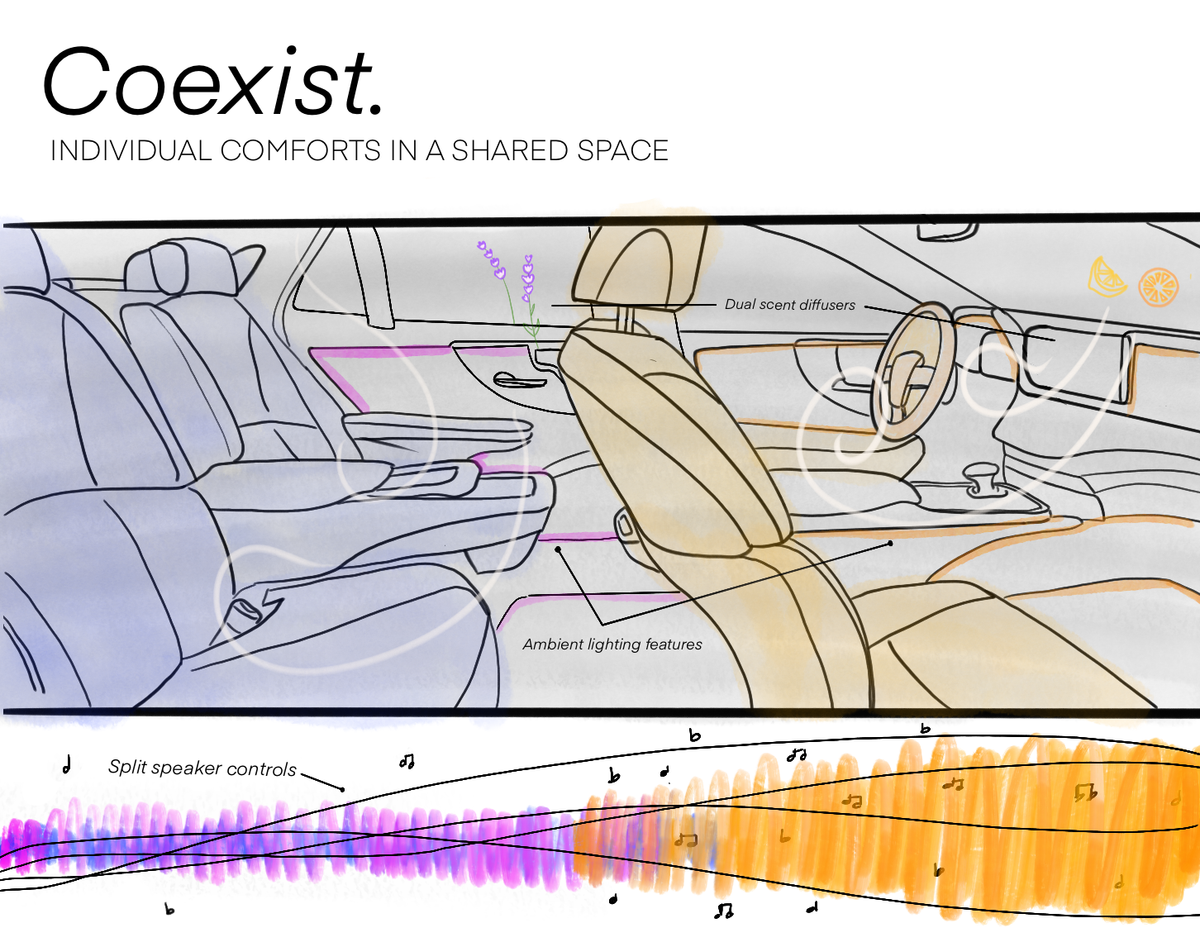
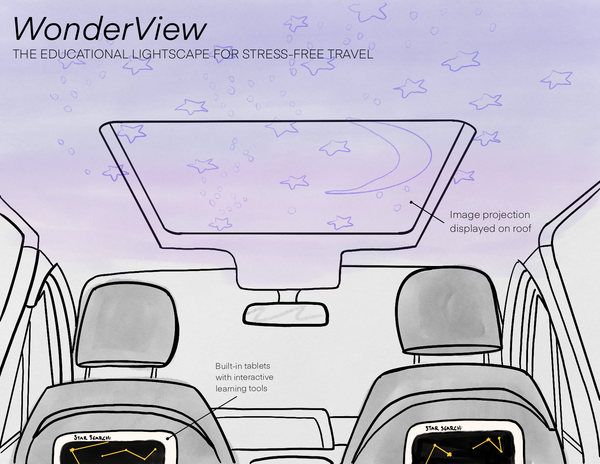
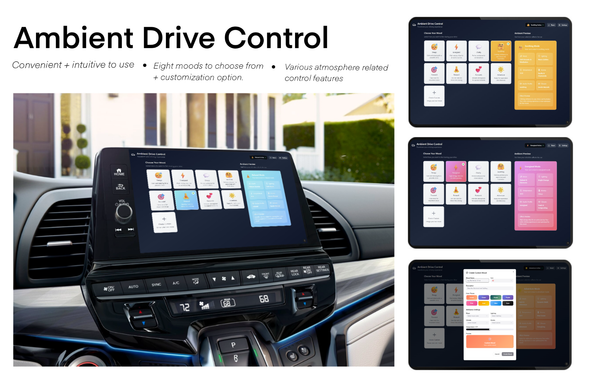
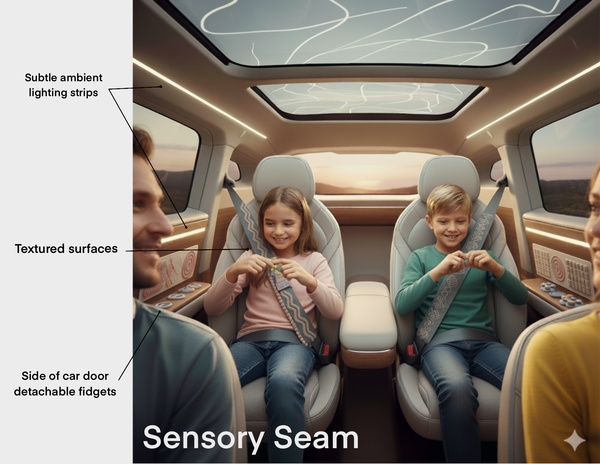
Coexist represents the future of keeping families happy in the car by offering individualized comfort settings for all. Every row of the vehicle can customize accent lighting colors, music choice and volume, temperature, climate controls, and even aroma. These preferences can be adjusted through the central console or a connected mobile app. The goal is to allow each passenger to shape their own environment.
As we know, comfort is not universal, and generational traits can often shape different expectations. A successful company must design experiences that appeal across age groups (Francis, 2018). For Honda, this means developing systems that keep children calm and engaged while supporting parents’ need for focus, ensuring both safety and peace of mind on every trip.
This, in turn, calls for distinctly tailored in-car environments. My concept draws inspiration from the business model outlined in Creating a happier workplace is possible — and worth it, where companies elevated workplace atmospheres to improve employee satisfaction. Just as productivity rose by 13% when office environments were designed to support focus, cars can achieve similar outcomes; fostering connection, calm, and comfort for families on the road.
However, while this concept emphasizes comfort across different user preferences, possible limitations include system complexity, cost, driver distraction, and the challenge of meeting diverse preferences simultaneously. These factors underscore the importance of balancing personalization with usability, safety, and long-term practicality.
References.
Francis, T., & Hoefel, F. (2018, November 12). “true gen”: Generation Z and its implications for companies. McKinsey & Company. https://www.mckinsey.com/industries/consumer-packaged-goods/our-insights/true-gen-generation-z-and-its-implications-for-companies
Grammarly. (n.d.). https://app.grammarly.com/
Moss, J. (2023, October 20). Creating a happier workplace is possible — and worth it. Harvard Business Review.
This passage was developed from primary and secondary research data I originally collected (~40%), my synthesis and framing of key stressors and themes (~40%), and AI support (~20%) in editing for clarity, structure, and academic tone. All interpretations and conclusions remain the responsibility of the author.