Conjecture: Hungry, Hungry... Trash Bins
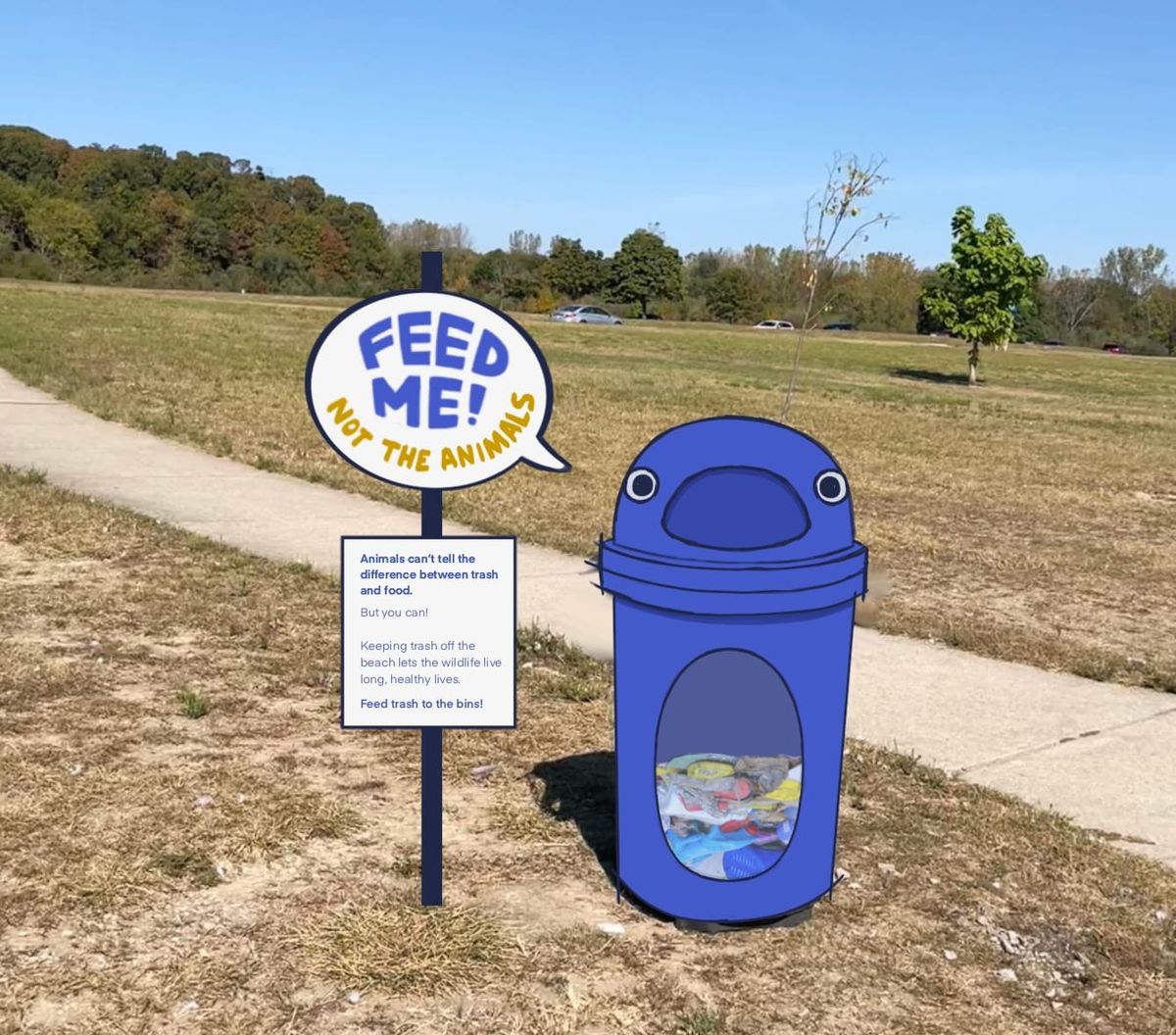
This conjecture was inspired by the un-motivating and lacking in appeal Bigbelly trash bins (Rinde, 2023), and the fact that animals (shorebirds in particular) will mistake trash for food (National Geographic Education, 2016).
The Hungry, Hungry Trash Bins are meant to encourage people to throw away their trash by making an emotional connection (littering as equivalent to feeding animals trash), and being fun and motivating/rewarding (giving a task: feed the bins, and see the progress you've made).
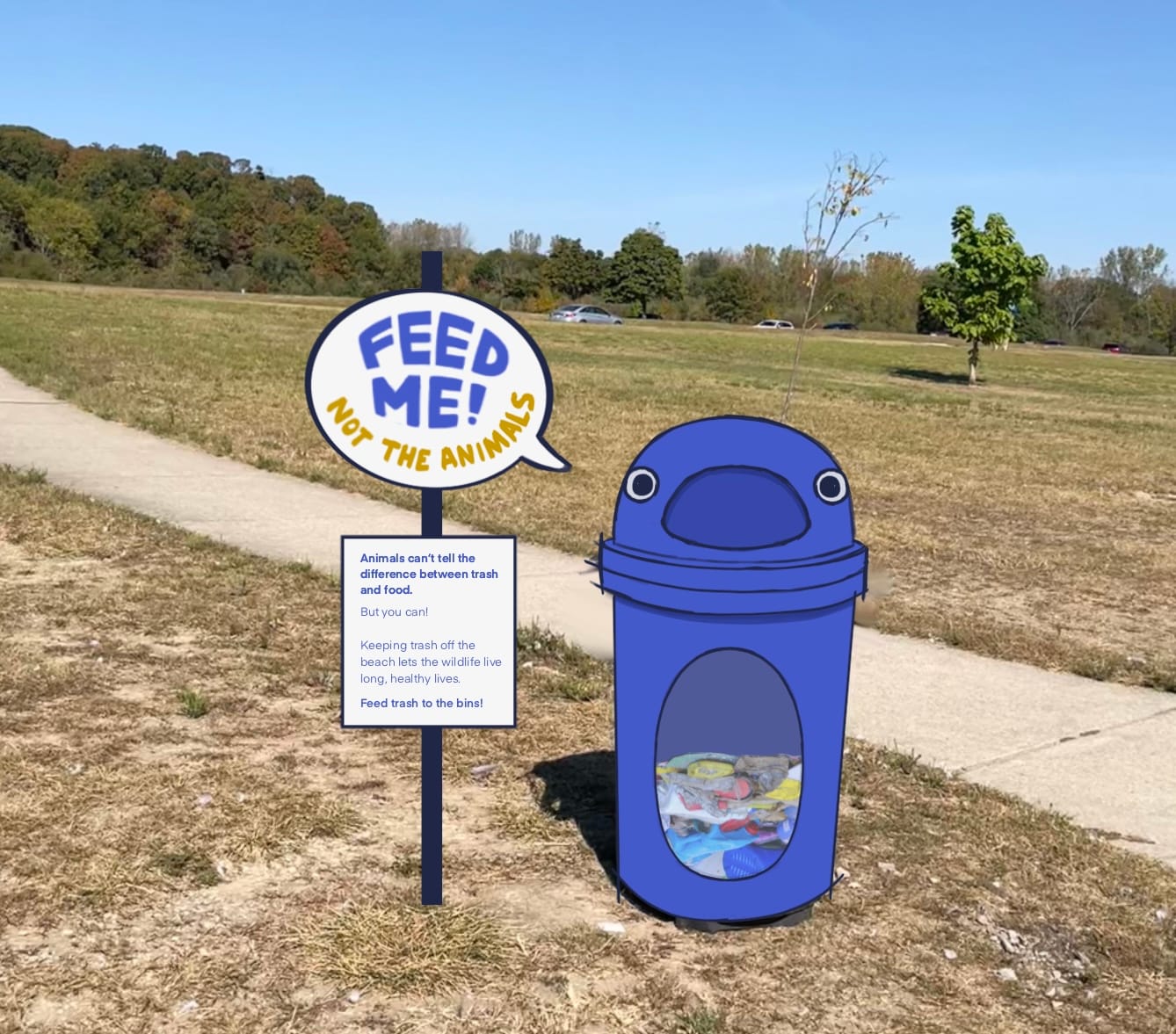
Reflection and Feedback
Problems
There remains the issue of bins being difficult or cumbersome for staff to empty.
Aesthetic Components
Giving it teeth and/or a tongue would make it more fun and encouraging.
Functional Components
It could have arms holding dog poop bags, trash picking up utensils, or hand sanitizer. Or, it could be holding the informational signs.
To incorporate recycling-specific bins, the trash bin and recycling bin could be hugging or holding hands.
Ways to 'reward' people for throwing away trash
Putting something fun on the inside that you reveal when you open it to throw something away. If the opening is pull-out, there could be a tongue that reveals itself. (Maybe with a sound like those toy tubes...)
Maybe the trash could go through some kind of Rube Goldberg-like journey on its way down.
Resources.
National Geographic Education. (2016, November 9). Animals Eat Plastic Because It Smells Like Food. https://education.nationalgeographic.org/resource/animals-eat-plastic-because-it-smells-food/
Rinde, M. (2023, August 24). The problem with North Philly’s new BigBelly trash cans. BillyPenn at WHYY. https://billypenn.com/2023/08/24/philadelphia-new-bigbelly-trash-cans-foot-pedals/
No AI was used in the creation of this post or its content.