Currency as Design: Form, Function, and Cultural Meaning
The Ashmolean article “Exploring Money Through Art” reveals how money itself is a designed object shaped by artistic techniques, cultural values, and technological innovations. It’s fascinating that something so functional (coins and banknote) originates from the creativity of artists translating power, wealth, and identity into tangible forms. From early sculptural influences on the 19th-century Janvier reducing machine, money exists at the intersection of aesthetics, precision, and social meaning.
“Art and money have much in common. Both influence who and what we think of as valuable. It can be surprising to think of money, so functional in form, starting its life as drawing or sculpture." (Bhandare, S.).
"The visual aspects of money that people recognise and value are a gift to the artists who design and participate in its production, a relationship that continues to the present day. In most instances, we are unaware that we carry their artwork in our pockets." (Bhandare, S.).
"A wide range of creative skills and techniques left their mark on mass-produced coins and notes, from the end of the 16th century onwards. Money was inspired by artworks immortalising people and figure-heads, artistic movements and moments in time." (Bhandare, S.).
"In the 19th century, advances in technology such as steam-driven machinery, changed how art was transformed into money. The Janvier reducing machine or ‘pantograph’ enabled accurate reduction of an artwork to fit on punches and dies used to strike coins, thereby creating a mechanical bridge between creativity of the artists and functionality of the tools." (Bhandare, S.).
"Artists have always highlighted and reflected on wealth, power and money. But the contrasting way in which money is depicted and treated in Eastern and Western traditions of art is interesting in itself." (Bhandare, S.).
"Perhaps owing to the bad press money gets in the Bible and the Christian world view, money is often depicted in negative ways in Western Art. Greedy usurers and tax collectors, miserly men, conniving and hoarding women are often the subjects associated with money. The ‘crookedness’ of money is also physiognomic: these subjects are often shown with grotesque features, unkempt appearances and unsavoury expressions.” (Bhandare, S.).
From a design perspective, I find money fascinating because it shows how form and function can work together to communicate more than just usability. It tells a deeper story about value, authority, and trust. Looking at how wealth and power have been depicted (whether glorified or critiqued) reminds me that design is never neutral, it always carries cultural weight. The shift from hand-crafted coins to mechanically precise production also feels like a reminder that design evolves alongside technology yet still has room for symbolism and meaning. For me, the history of currency design highlights how objects we take for granted can shape perception and even guide behavior. It reinforces the idea that impactful design isn’t just about solving practical needs, but about embedding context, intention, and narrative in ways that last.
References.
Bhandare, S. (n.d.). Exploring money through art. Ashmolean Museum. https://www.ashmolean.org/article/exploring-money-through-art?utm
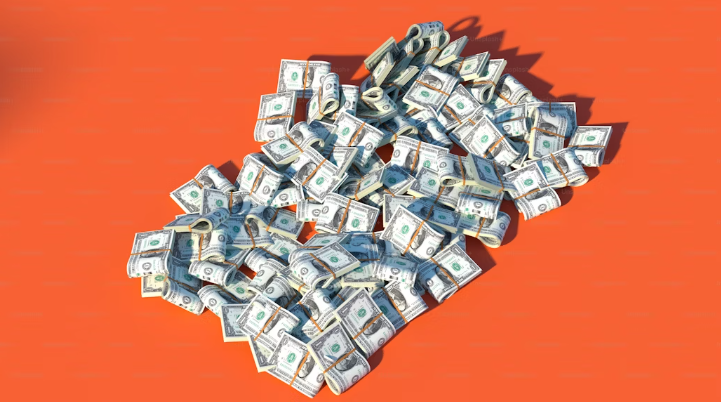
Mils, A. (2023, March 23). A pile of money sitting on top of an orange surface [Digital Rendering]. Unsplashed. https://unsplash.com/photos/a-pile-of-money-sitting-on-top-of-an-orange-surface-l-vlZBmb0e8
This reflection draws on the Ashmolean article Exploring Money Through Art (2025) for historical context and examples of artistic and technological influences on currency (~40%). The author contributed interpretation and analysis connecting these insights to principles of design and the broader significance of cultural storytelling in objects (~50%). AI assisted in synthesizing, condensing, and structuring the content into a cohesive introduction and professional, design-focused review (~10%). All interpretations remain the responsibility of the author.