Debrand aims to scale textile recycling in US amid growing brand and policy demand
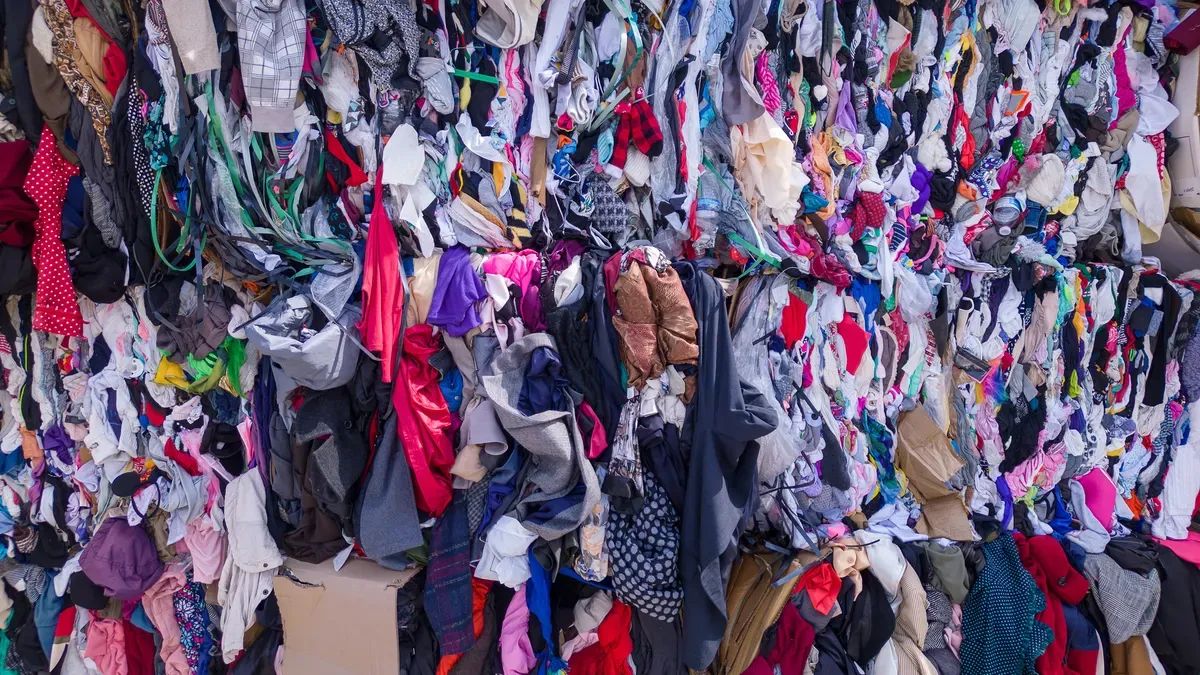
The fashion industry has a large area of opportunity when it comes to waste streams within the life cycle of a garment. This Canadian company is trying to close the loop by taking brands waste and directing it to other avenues and use cases by being a supplier of those materials.
Debrand anticipates the North American market for textile recycling and reuse to expand in the coming years. Factors such as interest from chemical recyclers and the possible implementation of state textile EPR policies could play a role. Yet the region has relatively few facilities to process textile waste (Quinn, 2024).
Debrand says it has diverted over 4.5 million pounds of textile waste from disposal in the last 18 months. The company works directly with clothing brands to manage textiles they can’t sell, such as damaged, returned or defective items. It also helps companies find buyers for the clothing on resale markets (Quinn, 2024).
It is shocking how much waste is generated in that short amount of time, but then can be directed out of the landfills and towards a second life.
Debrand already had longstanding relationships with companies like Abercrombie & Fitch, Lululemon and Victoria’s Secret, which have distribution centers in Ohio. “Having our location nearby those customers made sense from an [environmental] impact and emissions reduction standpoint,” Eleiter said in an interview (Quinn, 2024).
“As our partner, Debrand has been instrumental in advancing our end-of-life garment program,” said Meghan McLane, director of product sustainability at Victoria’s Secret, in a statement. “This facility is another step in building the infrastructure needed in North America to enable brands to move towards more circular models.” (Quinn, 2024).
The Ohio facility is still in the process of starting up, but it recently received its first load of textiles, Eleiter said. The facility will use a combination of human sorters and automated technology and equipment, including more conveyors and an artificial intelligence-powered “allocation engine.” That AI system collects data on what types of items and brands flow through the facility, what the clothing is made of, and other details to help Debrand decide how to recycle, reuse or resell an item (Quinn, 2024).
The high-tech equipment is a relatively new addition to Debrand’s process, Eleiter said. For the company’s first 15 years in operation, “there was really no need to invest in equipment to sort materials because there weren’t really a lot of places for it to go,” she said. Typically, the textiles were resold, donated, downcycled into shoddy fiber for applications such as home insulation or furniture stuffing. In some cases, the material was sent off for incineration (Quinn, 2024).
Debrand is also working on new partnerships in the chemical recycling space, most recently announcing in April that it would conduct a pilot with Eastman to recycle 5,000 pounds of textiles into a recycled fiber product using a molecular recycling process (Quinn, 2024).
Such partnerships can show both mechanical and chemical recyclers that post-consumer textiles can be a valuable feedstock for new products, Eleiter said. “A lot of chemical recyclers or even mechanical recyclers are focused right now on post-industrial materials and proving that out for their technology. Where we come in is challenging them and pushing them to keep postconsumer on their radar.” (Quinn, 2024).
The work that Debrand is doing is a valuable effort to reduce waste, while reallocating the materials to businesses and facilities that could use them. Especially in our backyard with so many big brands in the industry. The system towards creating the network that is needed for this relationship between companies is a potential opportunity for a designer to get involved. How could more companies find waste streams from other companies to turn that into their raw material supply?
Reference.
Quinn, M. (2024, July 17). Debrand aims to scale textile recycling in US amid growing brand and policy demand. Waste Dive. https://www.wastedive.com/news/debrand-expands-us-ohio-recycling-infrastructure-wm-eleiter/721608/