Beyond Utility: How the Medieval West Practiced Material Circularity


Bavuso's chapter on defining modalities shed's light on the otherwise invisible incentives people living in the middle-ages may have had to justify circular material practices. The specific cases highlighted by the author in this chapter have to do with Jewlery.
Although reuse and recycling are closely related practices, they can be separated as follows: recycling involves the return of the pre-used object to some kind of raw material status, whereas reuse involves a utilisation of the object for the purpose it was originally made for ‘or something else’... (Bavuso, 2023, p. 234).

Of course, recycling can have more than an economic reason; for example, in the modern-day jewellery industry, people inherit jewellery and gemstones and have them remodelled into a piece of jewellery that is more wearable and fashionable. This personally loaded act would, of course, be undetectable in the archaeological record but is still recycling, as the gold, and possibly also the gemstones, are returned to raw material status, while still being imbued with the personal story of the owner.
The author makes a clear distinction between recycling and reuse and then provides three modalities of reuse that help to explain why an ancient community would do this.
In this paper I will use three different case studies to illustrate three different modalities of reuse that could be at work. These modalities are functional reuse, aesthetic reuse and spiritual reuse, all reasons for reuse that are somewhat familiar in the archaeological record of early medieval England...
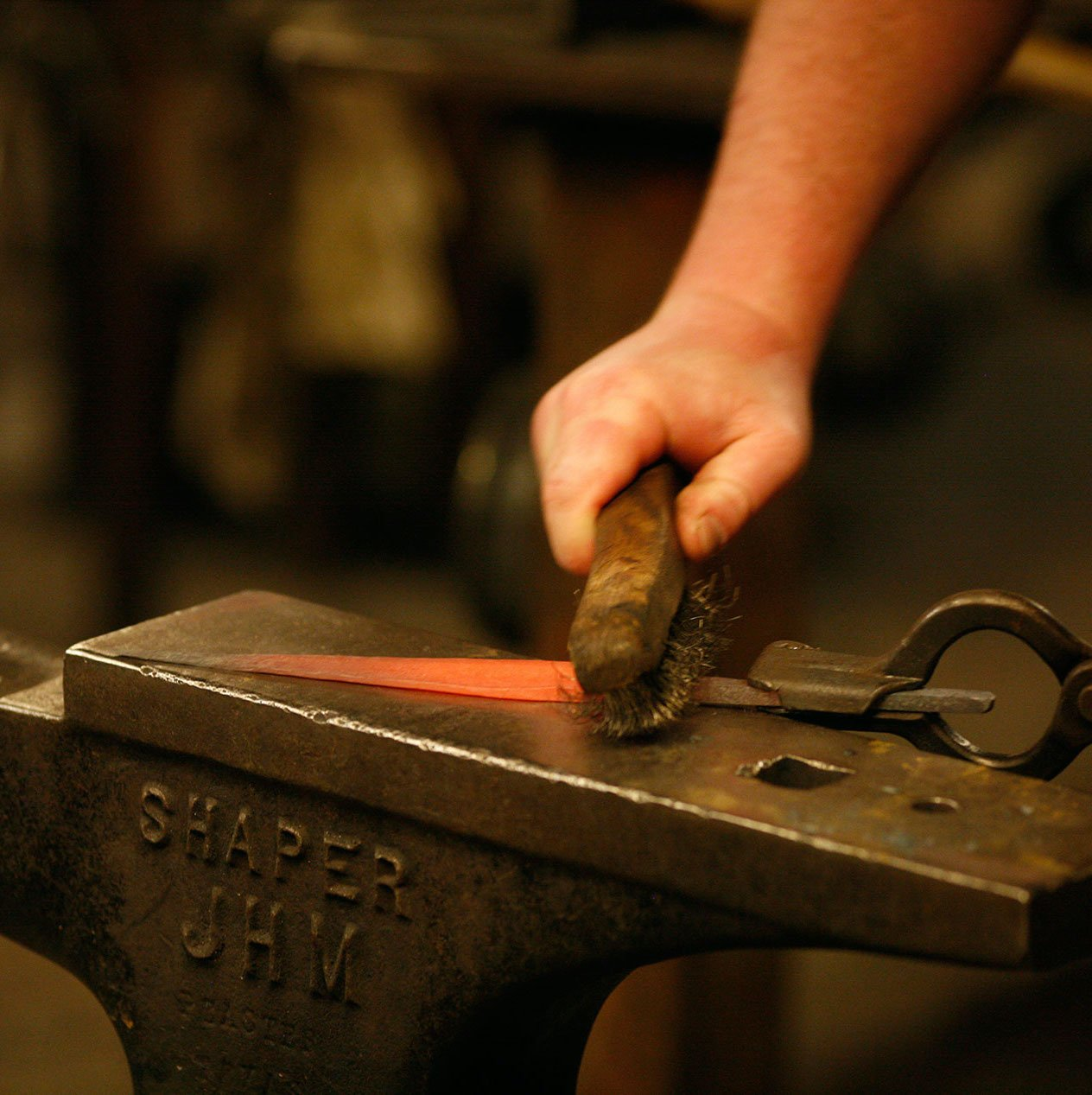
The functional modality of reuse is the one that I understand as closely connected to the traditional ideas of economically driven reuse. In this modality, the primary reason for reuse is functional.
They note that all three of these modalities of uses: functional, aesthetic, and spiritual, are not obvious in the archeological record. This raises an important question for the Local Loops team: "how might a future generation interpret our recycled plastic installments?"
An aesthetic modality of reuse occurs when a piece of material culture is reused for its aesthetic nature, beyond its function. This can manifest itself in multiple ways, but often the most archaeologically visible are objects where they are clearly designed around a piece of reused material.

The spiritual modality could encompass many things. Crucially, in this context, it involves the perception of an amuletic or apotropaic quality. In short, the object is understood to be imbued with a particular quality which motivates it to be reused. These qualities are not economic, functional or aesthetic, and could stem from multiple different physical properties of the reused piece of material culture.
Much like these three modalities, the process of co-designing is also an invisible process to archeology. Are designers justified in creating near-permanent plastic artifacts if it serves the needs of their immediate community situated in time and space, or should they be mindful of the continued presence of said artifacts far in the future, removed from their original context?
References:
Bavuso, I., Furlan, G., Intagliata, E. E., & Steding, J. (Eds.). (2023). Economic circularity in the Roman and early medieval worlds: New perspectives on invisible agents and dynamics. Oxbow Books. https://ebookcentral-proquest.com.