Designing Backseat Environments to Mitigate Sibling Rivalry
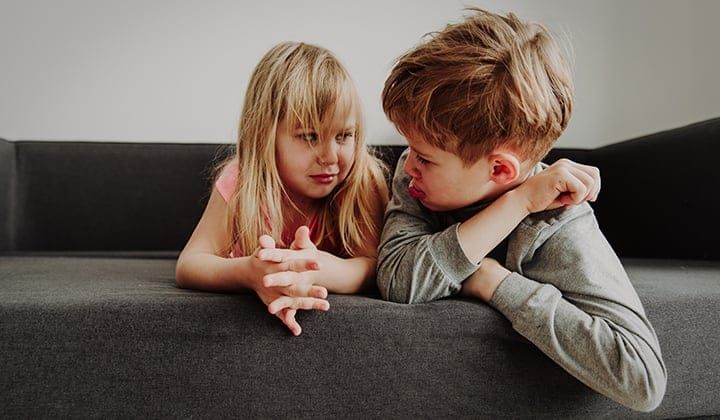
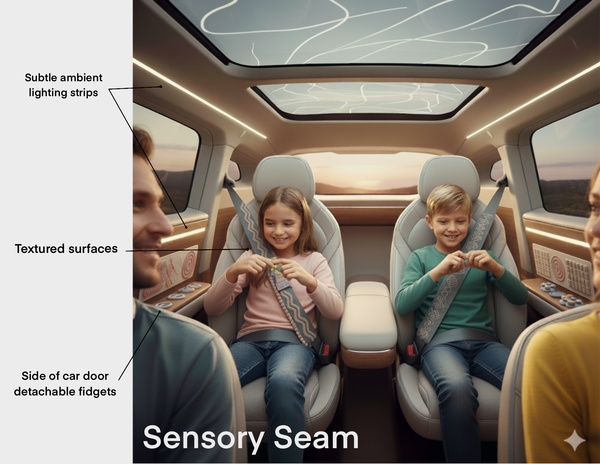
This article is useful for my research because it delves into the common causes of sibling rivalry and offers strategies for parents to manage and reduce conflicts. It emphasizes that the primary reason for sibling arguments is competition for parental attention. Children often act out to gain attention and parents can influence behavior by recognizing and praising positive actions. The article also highlights that while sibling fights can be stressful they provide opportunities for children to learn from it. It also offers practical strategies for reducing sibling fights like making sure children are not hungry before car rides and giving calm reminders during tense moments. For my design work this suggests that creating a backseat environment that minimizes stressors and promotes positive interactions could help reduce sibling conflicts during travel. Maybe I can make an environment where they aren't competing in some sort of game but maybe experiencing something together. How might I design a backseat environment that helps siblings manage conflicts and promotes positive interactions?
Why siblings fight (Harris, 2023).
The number 1 reason for sibling squabbles is competition for parental attention. Kids need attention from you, and they will do everything (good and bad) in their power to get it. You can shape a lot of behavior by what you pay attention to and how you praise your children. That’s why it is important to give adequate attention to all children, especially for positive behavior. The more positive behavior is noticed and specifically praised, the less often children will need to act out to get your attention (Harris, 2023).
How to deal with fights between kids of different ages (Harris, 2023).
It is not uncommon for older siblings to take the blame for all fights with younger siblings. It is natural for you to want to protect young ones, but you need to be mindful of not creating resentment in the older child by making them responsible for every conflict. Often, there is a dynamic to which both kids contribute (Harris, 2023).
When to use timeout versus cooldown (Harris, 2023).
Timeout is called by an adult to address fighting that can’t be resolved by kids. (Harris, 2023).
Kids and objects can be put in timeout. For example, kids can have a timeout from playing with each other if they can’t get along. If they are arguing over something like a video game, the game can be put in a timeout. (Harris, 2023).
Timeout ends as soon as a child settles down. The child should be praised for settling. Timeout is not a punishment and it shouldn’t go too long. (Harris, 2023).
Kids that have more emotional dysregulation will need more practice (e.g. more timeouts) to learn to settle themselves. (Harris, 2023).
Reference.
Harris, R. L. (2023, March 29). Why siblings fight and what to do about it. Children’s Mercy. https://www.childrensmercy.org/parent-ish/2023/03/sibling-rivalry/
This passage draws on Children’s Mercy’s “Sibling Rivalry” article (~40%) as the original source, incorporates the author’s own analysis and application to backseat design for children (~35%), and reflects AI assistance in synthesizing the article’s insights, refining phrasing, and framing potential design implications (~25%). All interpretations remain the responsibility of the author.