Soothing Home Environments into Backseat Experiences
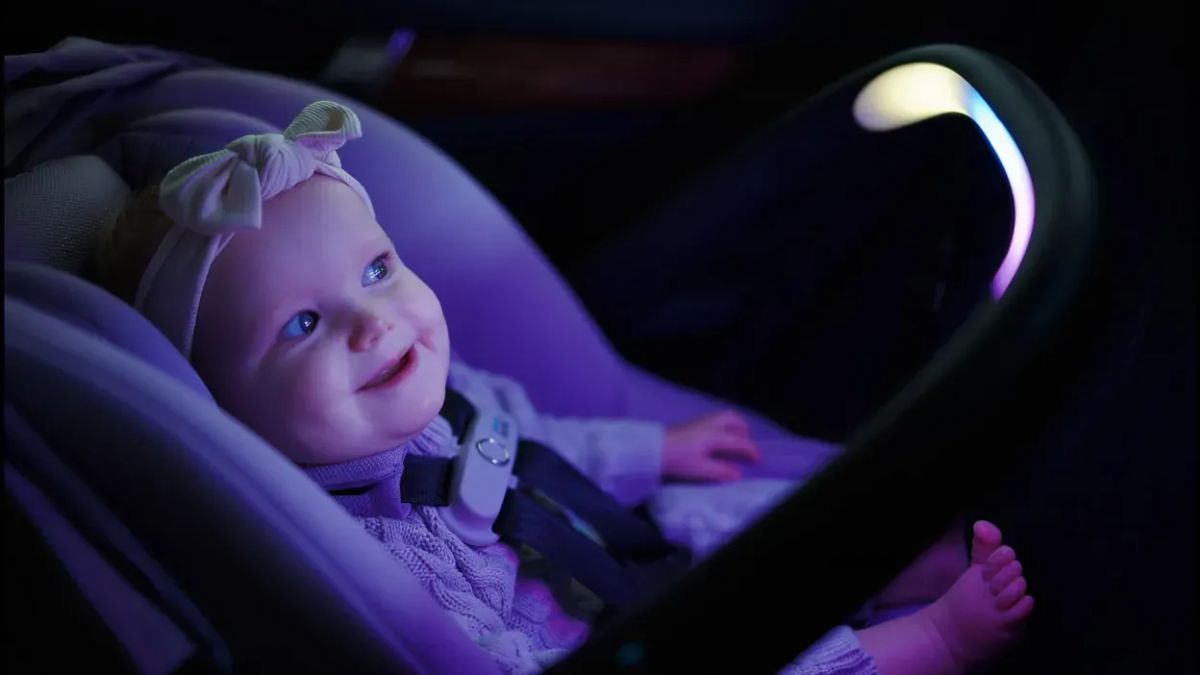
This article is useful for my research because it explains how creating calm environments supports children’s emotional well being and not just at home but in any space. It emphasizes the importance of reducing overstimulation. Some things to consider are softer lighting, natural colors, and simple textures to help kids feel secure and relaxed. I noticed that the article highlights how children’s nervous systems are especially sensitive to a lot of noise, clutter or bright lights. This can cause stress while more simple natural inspired design brings calm. For my design work, this reinforces the idea that the backseat should be more than functional but it can also be a meditative environment. Things it could feature are warm adjustable lighting, tactile calming fabrics, organized storage for all there things and all this could be put into a car interior. How might I adapt the use of natural colors and soft textures to make the backseat feel like a calm sanctuary for children during travel?
The state of our children’s nervous system (Fledge & Thread, 2023).
A child’s home is their first, and perhaps most influential and formative environment. The environments in which our babies and children live, learn and dwell in, have a direct influence on their mood, behaviour, health and wellbeing, shaping not only their emotional and cognitive development, but also their sense of self and their unique sensitivities. By creating a calming and nurturing home environment, parents can lay the foundation for their children’s physical and psychological wellbeing, their sense of self and feelings of safety, and their experience of being and belonging in this world (Fledge & Thread, 2023).
Environments that calm and nurture babies and young children begin with the elements we put into them; low stimuli muted colours inspired by the natural world, organic materials, simple designs and patterns drawn from nature, soft but imaginative visual forms, gentle sounds, low lighting and tactile input, are elements that are vital to our children’s physical and emotional health and wellbeing (Fledge & Thread, 2023).
These design elements create spatial environments that deeply impact the state of our children’s nervous system helping them lower their cortisol levels, improve their emotional wellbeing by reducing stress and anxiety, reduce their stress responses (nervous system workload, blood pressure, muscle tension and heart rate), and increase their parasympathetic responses of wellbeing, which has a significant impact on the trajectories of our children’s future health. Therefore, one of the greatest gifts, we as parents can give our children, is the creation of a calming and nurturing environment to live and dwell in (Fledge & Thread, 2023).
3. Sensing the environment (Fledge & Thread, 2023).
Babies, like adults, can be very sensitive to their surroundings. “Babies are very sensitive to their surroundings and can easily become overwhelmed by too much stimulation. Too much noise, light, or activity can be disruptive and stressful for your baby. That’s why it’s important to create a space that is calm and serene. When their environment is chaotic, it can be difficult for them or understand what is happening around them.”1 (Fledge & Thread, 2023).
Child Developmental Psychologist, Dr. Thomas Boyce, explains the impact of the environment on babies and young children. “We now know that during these early critical periods of great susceptibility to environmental influence, that children are enormously affected and set on developmental trajectories by their early experiences.” 2 And these development trajectories begin in the womb. “We have belief for a variety of reasons that are grounded in solid science now that children even in the womb — in prenatal life — are sensing things about the environment which they’re going to be born in, and are adjusting — moving up and down — their responsivity to various characteristics of the environment based on that anticipation.”3 (Fledge & Thread, 2023).
Resources.
Fledge & Thread. (2023, November 17). How to create a calming environment for babies and children. Fledge & Thread. https://fledgeandthread.com.au/blogs/news/how-to-create-a-calming-environment-for-babies-and-children
This passage draws on Fledge & Thread: How to Create a Calming Environment for Babies and Children (~40%) as the original source, incorporates the author’s reflections on applying these principles to vehicle backseat design (~35%), and includes AI assistance in synthesizing key insights, clarifying concepts, and refining the writing (~25%). All interpretations remain the responsibility of the author.