Designing Calm: The Role of Geometric Shapes

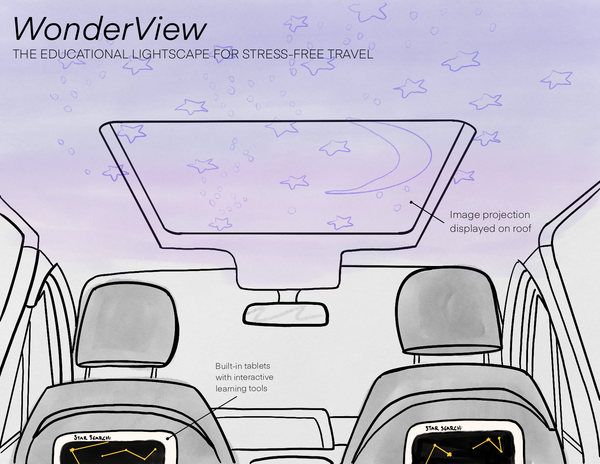
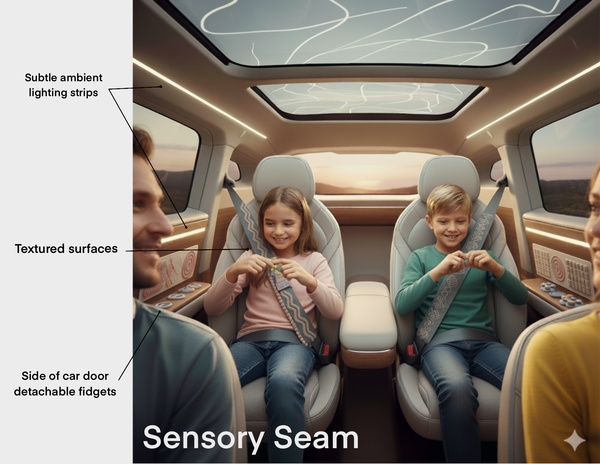
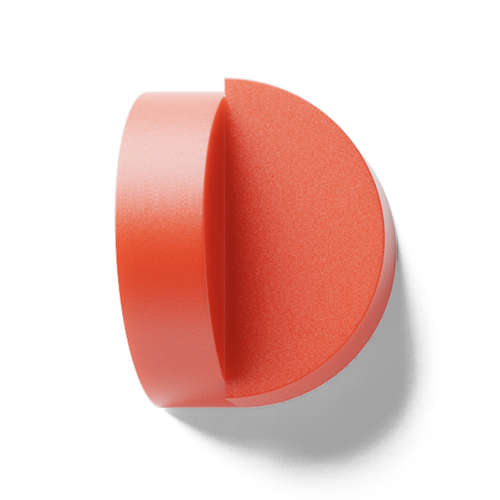
This article is useful for my research because it explores how different shapes particularly curves versus sharp angles and how they can evoke specific emotional responses. It explains that curves are often associated with feelings of safety, calmness, and comfort. On the flip side sharp angles can elicit tension or unease. The article also discusses how these emotional responses to shapes are rooted in human psychology and evolutionary biology. It suggests that our ancestors may have associated curved forms with shelter and safety. This insight can help me come up with a way to incorporate curved elements into the backseat environment. It could promote a calming atmosphere for children and could align with my goal of creating a meditative space during travel. This could be another way to create an atmosphere that naturally helps children feel calmer passively. How might I use curved shapes and forms in the backseat design to create a calming, safe, and comfortable environment for children during car rides?
The Science Behind Geometric Influence (SOGA Design Studio. 2025).
Our brains process visual information through neural pathways that evolved long before modern architecture. The psychological effects of geometry are deeply rooted in our evolutionary history, where certain shapes signaled safety while others warned of danger. This isn’t mere speculation—neuroscientific research has confirmed that different geometric patterns stimulate distinct areas of the brain, triggering specific emotional responses (SOGA Design Studio. 2025).
When we encounter soft, curved forms, the amygdala—our brain’s emotional processing center—responds differently than when confronted with sharp angles and jagged lines. This reaction happens within milliseconds, before conscious thought even begins (SOGA Design Studio. 2025).
Curves vs. Angles: The Emotional Spectrum (SOGA Design Studio. 2025).
The contrast between soothing curves vs. harsh angles represents one of the most fundamental dichotomies in emotional design. Studies have shown that curved forms generally evoke: (SOGA Design Studio. 2025).
Feelings of safety and comfort (SOGA Design Studio. 2025).
Reduced stress responses (SOGA Design Studio. 2025).
Associations with natural environments (SOGA Design Studio. 2025).
Greater aesthetic pleasure (SOGA Design Studio. 2025).
Angular shapes, by contrast, often trigger: (SOGA Design Studio. 2025).
Heightened alertness (SOGA Design Studio. 2025).
Increased focus and attention (SOGA Design Studio. 2025).
Perceptions of efficiency and precision (SOGA Design Studio. 2025).
Sometimes, subtle stress responses (SOGA Design Studio. 2025).
The Golden Ratio and Human Perception (SOGA Design Studio. 2025).
Perhaps no geometric principle has captivated designers more than the golden ratio (approximately 1:1.618). This mathematical relationship appears throughout nature and has been employed in architecture from ancient Greece to modern day. Spaces designed according to these proportions often feel inexplicably balanced and pleasing (SOGA Design Studio. 2025).
Our visual processing systems appear calibrated to recognize and appreciate these proportions. When we encounter them, whether in the Parthenon’s façade or a contemporary building, we experience a subtle sense of harmony that translates to emotional well-being (SOGA Design Studio. 2025).
Reference.
SOGA Design Studio. (2025, May 22). The geometry of emotion: Why certain shapes make you feel calm. https://sogadesignstudio.com/the-geometry-of-emotion-why-certain-shapes-make-you-feel-calm/
This passage draws on Soga Design Studio’s “The Geometry of Emotion: Why Certain Shapes Make You Feel Calm” (~40%) as the original source, incorporates the author’s own analysis and application to backseat design research (~35%), and uses AI assistance to synthesize the article’s psychological insights, clarify phrasing, and frame implications for child-focused design (~25%). All interpretations remain the responsibility of the author.