‘Driven to Distraction?’: Children’s Experiences of Car Travel
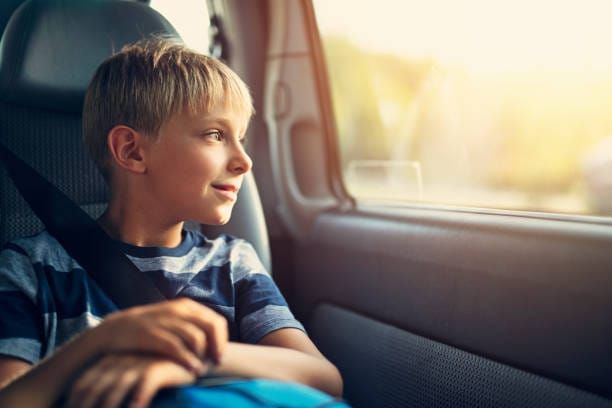
This article researches the behaviors and feelings of children while on car rides, identifying them as significant spaces for children. They also describe the different power, social, and physical components in the car. This is relevant to my capstone project because it explores backseat experiences for children by a conducted research study and interviews. This will provide me information about my specific user group.
"cars are indeed important contemporary everyday spaces of childhood, perhaps only surpassed in importance by home and school (James et al., 1998).
children's experiences of cars were not constant but were also directly influenced by the journey, purpose, length and destination (a finding also discussed by Laurier et al., 2008). For example, shorter journeys were often more enjoyable than longer journeys. Journeys to visit children’s friends, or for children to access activities were more popular than trips to visit parents’ friends or relatives.
In this case, parents regulated the spaces of cars, resolving conflicts between siblings or implementing their own wishes.
friendships and conversations are important to experiences of cars is perhaps not surprising, since friendships are key to experiences of other spaces of childhood such as school and out of school care (Alderson, 2000; Smith & Barker, 2001). However, unlike the less private spaces of schools or streets where children have a degree of freedom to meet children and make friends (Alderson, 2000), access to, and use of, cars was most often planned and controlled by parents.
Although children may enjoy specific activities in cars, these may actually represent strategic exercises of power by parents through which they pacify and control children. Many of the activities which children enjoyed in cars, such as games consoles and other toys, card games, CDs and mobile phones, involved the purchase of commodities, suggesting many children experience cars as significant sites of consumption.
Perhaps cars are becoming more children-centred spaces, as designers incorporate more features to improve children’s experiences of cars. Alternatively, this represents the dynamism of capital, constantly searching for new markets of consumption to increase profit (Harvey, 1989). Parents with children are increasingly important niche markets, as Sheller (2004) notes how cars are increasingly designed with accessories such as video consoles, cup holders and extra space for children’s luggage as a way of marketing cars towards parents who drive children. Adult designers in automobile corporations influence and structure children's experiences of cars, designing and promoting cars as spaces of consumption. However, not all activities in cars were commodified, with children identifying other activities, such as singing or word games, and playing ‘eye-spy.’ These could be seen as activities undertaken by those unable to afford to consume often expensive commodities such as game consoles.
Technology was often the site of conflict in cars, and children's access to technology was often mediated or controlled by parents: John’s Mum (Rural Hill, Bucks): The physical layout of cars, designed by adults in automobile corporations, positions drivers close to technology, such as climate control, heating and entertainment, enabling them to access and exercise power and control over these systems.
Although cars were sometimes seen as bounded spaces, children discussed how the view of external travel landscapes was often important to their experiences of cars.
One striking difference is children's preferences for play and interaction compared to adults who often prefer cars as solitary and peaceful places (Barker, 2009)."
Understanding how kids view the car is really important to my capstone project because they are my main stakeholders. This article gave me insight to how children view the car and the social, technological, and power dynamics that are exhibited on car trips with young passengers. Cars give a lot of power to the parents in control of technology, seating dynamics, and the overall destination. Thinking about how these aspects may influence the experience of children is crucial when designing an experience for a child. The article describes cars as being perceived as a space with significant consumption with the use of games, electronics, etc. I am curious to think about this idea in a modern lens, as technology has advanced significantly from this article. Children's priority of play and exploration is different from that of parents, who focus on peace while driving. This is very beneficial for my research to understand how to blend these two stakeholders and keep children engaged and the car a place for calm exploration.
References:
Barker, J. (2009). “Driven to distraction?”: Children’s experiences of car travel. Mobilities, 4(1), 59-76. https://doi.org/10.1080/17450100802657962
This reflection draws (~40%) from Barker, J. “Driven to distraction?”: Children’s experiences of car travel. (2009), (~40%) from the author’s own framing of the capstone context and design intentions, and (~20%) from AI assistance (summarizing article content, editing for clarity, and creating citation format). All interpretations and final perspectives remain the responsibility of the author.