Eric N. Mack: All the Oohs, and the Aahs
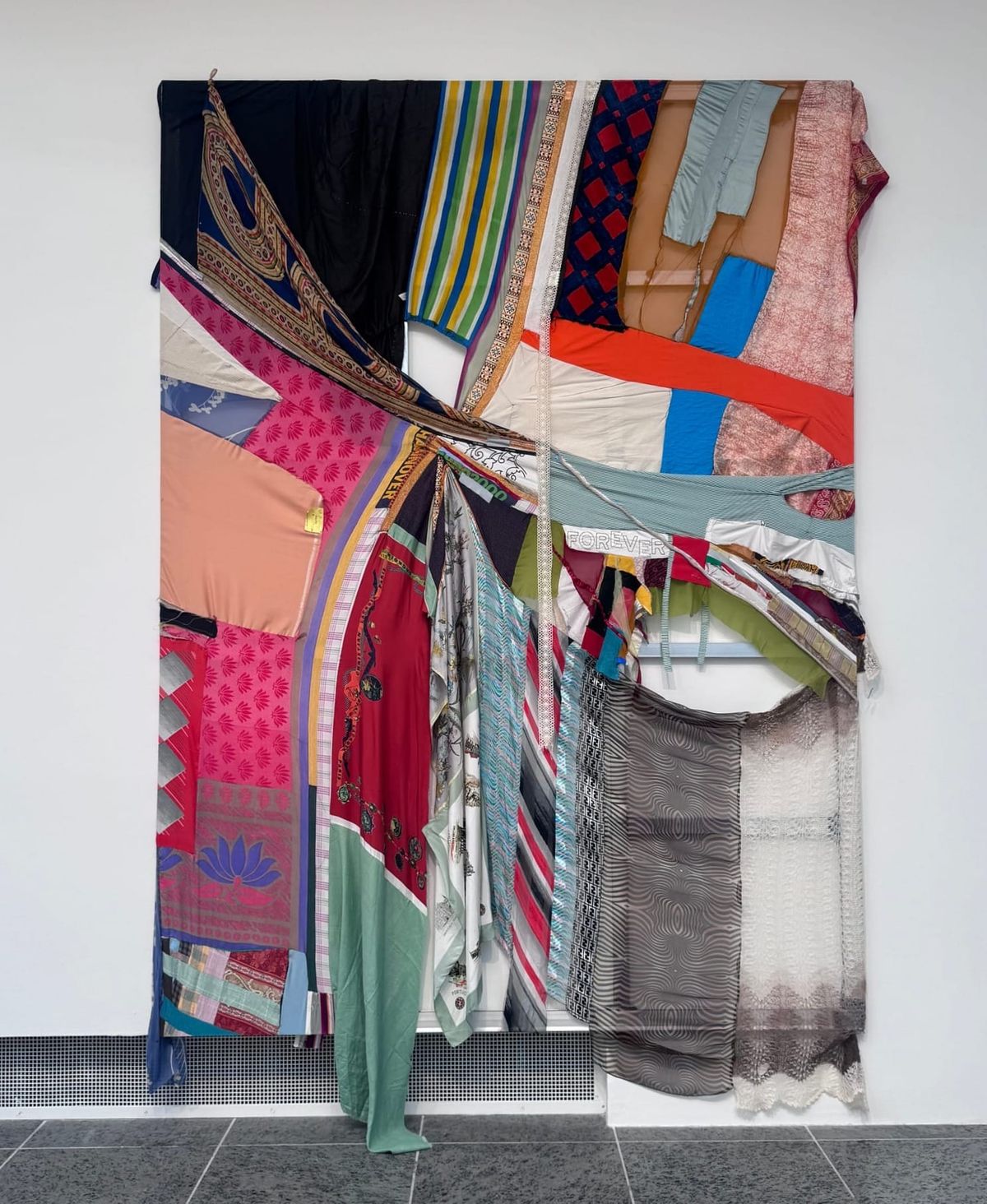
Here we look at the Wexner Center for the Arts current Exhibit from Eric N. Mack titled All the Oohs, and the Aahs (Mack, 2022). I learned about materiality, visual movement and evoking emotions through materials. This is relevant to capstone because I am interested in exploring fabrics within capstone to create a sensory experience.
The following is an excerpt from the Wex article, Eric N. Mack: All the Oohs, and the Aahs. It describes his exhibit that was on display.
"He collapses distinctions between art forms and materials—between textiles and painting, sculpture and fashion—to create a unique visual vocabulary. He explores fabric’s ability to evoke emotional responses, something that he emphasizes in the titles of his works and the title of this exhibition, All the Oohs, and the Aahs, which acknowledges the spectator’s gaze.
Mack explores the surface of his works through his use of different textiles, such as cotton, silk, and wool, which he combines with ladders, flagpoles, and rods to create works that resist categorization. Together with the compositions, the material qualities of the various textiles convey sensations of weight, depth, color, and movement. While traditional painting is confined to a flat surface, Mack utilizes fabric’s pliability and texture to create immersive, layered constructions that invite visitors to explore the physical presence of objects. These fabrics come from Mack’s archival fabric collection, gathered from different places around the world. Whether mass-produced or bespoke designer textiles, each piece is rich with meaning and becomes an archive of historical, cultural, and personal narratives.
As you move through the installations, you will experience the way that the draped textiles engage a sense of scale, making viewers aware of their bodies in relationship to architectural features of the gallery and the building (Wexner, 2025)."
Below is a quote from the artist, stating
"One of the things I wanted to see—in an experiment—[was] if the painting can exist without the traditional supports, and maybe those things can extend into physical space, maybe have a more specific use (Mack, 2025)."
This exhibit, showing works of Eric N. Mack at the Wexner Center of Art utilizes an interesting use of materials focusing on fabrics and visual movement. Mack's work utilizes large scale installations with fabric. This created visual movement and play with patterns. I thought Mack's use of various patterned fabrics wove together created really interesting visuals. I really wanted to touch a lot of his pieces. This made me think of the tactile elements in the interior of a vehicle, and how it might affect the experience for a passenger in the backseat. I am curious to explore patterns, layering and textures of textiles for capstone.
Veronica Ryan: Unruly Objects
This article explored the Wexner Center for the Arts current Exhibit from Veronica Ryan titled Unruly Objects. I learned about recycled materials and scale. This is relevant to capstone because I am interested in exploring ways to think sustainably.
"Veronica Ryan: Unruly Objects, coorganized with the Pulitzer Arts Foundation, presents over 100 sculptures, textiles, and works on paper by the Montserrat-born British artist.
She creates a network of connections that bring together personal and global histories of travel and migration as well as narratives of healing, nurturing, and belonging. The exhibition also highlights her frequent return to past works and ideas in pursuit of new conversations. Through this continuous reshaping, she asks us to consider life itself as a process of constant growth, navigation, and change (Wexner, 2025)."
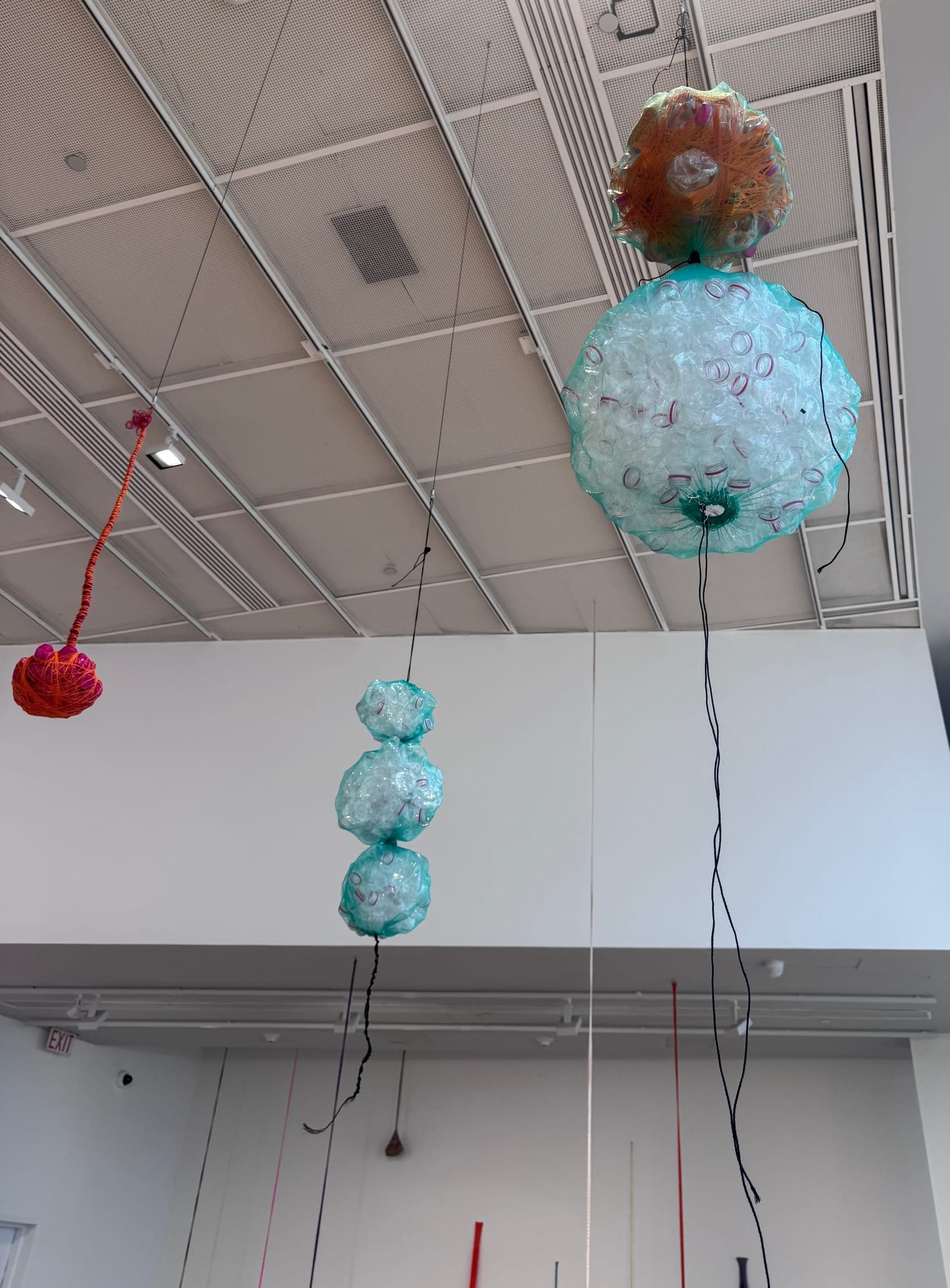
"The materials and techniques Ryan uses serve the themes and narratives that surface in her work. Her hand-embroidered pillowcases and cushions evoke dream states and interior worlds. So does her use of alluring textures and colors—some sourced from natural materials like coral, turmeric, and indigo. Visitors will encounter sculptures made from traditional art materials, including bronze and marble, but also found and everyday items, from seeds to bandages and hair ties. Ryan asks us to reconsider so-called waste, imbuing discarded material such as padded envelopes, fabric scraps, packaging, and plastic bottles with new life. Her reuse of such humble materials, remaking them into artwork, suggests environmental concerns around excess and consumption. It also demonstrates a recognition of discarded objects’ unrealized potential.
Like seeds that travel via wind and water to take root far from their origins, Ryan’s exhibition takes visitors on a journey through her personal universe and histories through the Caribbean and across the Atlantic (Wexner, 2025)."
The exhibit of Veronica Ryan, titled Unruly Objects, showcases various works that use a creative variety of materials. Ryan uses sourced objects that are recycled, natural, or found. This idea seems relevant to my capstone project because it is important to me to think about sustainability and the creative use of materials. Her exhibit utilized recycled water bottles, materials from nature such as nuts, and fabric. I am also specifically curious in museums because of their ways to invoke thought and feelings in the viewer. The idea of curation can be utilized when trying to create a sense of calm for a user, and helps to better understand how to do so visually. I think these tool of display, visual, and emotions that are used in museums are important to think about when creating a capstone for a specific user and trying to invoke similar emotions.
References.
Wexner Center for the Arts. (2025). Eric N. Mack: All the Oohs, and the Aahs. https://wexarts.org/exhibitions/eric-n-mack-all-oohs-and-aahs
Wexner Center for the Arts. (2025). Veronica Ryan: Unruly Objects. https://wexarts.org/exhibitions/veronica-ryan-unruly-objects
AI was used to check grammar in this reflection.