Extraterrestrial Habitats: Bioplastics for Life Beyond Earth
You know how in Star Trek, they have this special machine that magically creates the food from nothing? That was what I was thinking about. Besides creating food and water, the Replicator is also a recycling device. Any leftover food and cutlery could be placed back inside and turned into whatever it was before. It got me thinking, what will recycling and sustainability be like in space?
From Manning (2025):
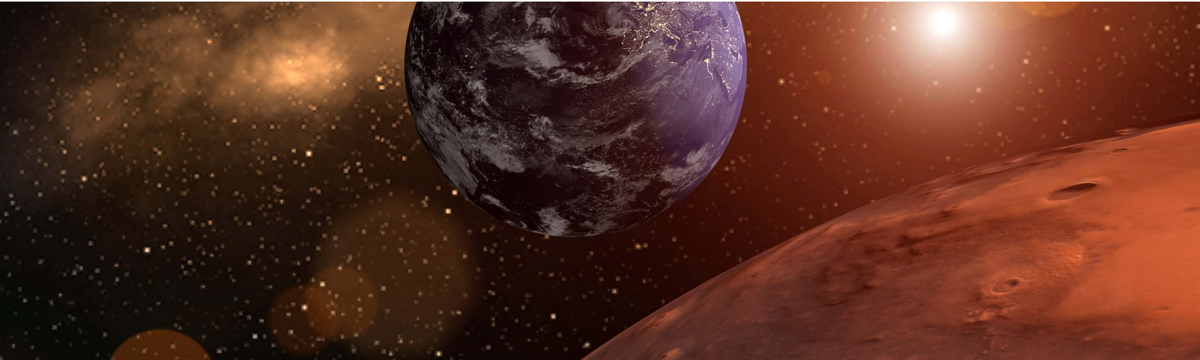
"An international team of researchers led by Robin Wordsworth, the Gordon McKay Professor of Environmental Science and Engineering and Professor of Earth and Planetary Sciences, have demonstrated that they can grow green algae inside shelters made out of bioplastics in Mars-like conditions. The experiments are a first step toward designing sustainable habitats in space that won’t require bringing materials from Earth” (Manning, 2025).
“'If you have a habitat that is composed of bioplastic, and it grows algae within it, that algae could produce more bioplastic,' explained Wordsworth. 'So you start to have a closed-loop system that can sustain itself and even grow through time'” (Manning, 2025).
"The algae thrived inside a 3D-printed growth chamber made from a bioplastic called polylactic acid, which was able to block UV radiation while transmitting enough light to allow the algae to photosynthesize” (Manning, 2025).
"Next, Wordsworth said the researchers want to demonstrate that their habitats also work in vacuum conditions, which would be relevant for lunar or deep-space applications. His team also has plans to design a working closed-loop system for habitat production” (Manning, 2025).
“'The concept of biomaterial habitats is fundamentally interesting and can support humans living in space,' Wordsworth said. 'As this type of technology develops, it’s going to have spinoff benefits for sustainability technology here on Earth as well'” (Manning, 2025).
When I think about all the materials that plastic has integrated itself in, I have a hard time imagining what they would be made of otherwise. Bioplastic seems like a good alternative. It is difficult to substitute sustainable materials like wood, glass, and metal because they simply don’t have a lot of the properties that plastic does. But if bioplastic is able to meet those standards, be self-sustaining, and be biodegradable, then I think it deserves a fair chance. Maybe when we’ve killed our planet and feel the need to move on to the next, we will learn from our mistakes and prioritize the ecosystem from the start.
No generative artificial intelligence (AI) was used in the writing of this work.
References
Manning, A. J. (2025, July 2). Extraterrestrial habitats: Bioplastics for life beyond earth. Harvard John A. Paulson School of Engineering and Applied Sciences. https://seas.harvard.edu/news/2025/07/extraterrestrial-habitats-bioplastics-life-beyond-earth