F5: Andrew Ashey on Accidental Design, Empty Spaces, Plants + More

A few years later, on a grade-school field trip to the Museum of Fine Arts in Boston, it all clicked when he experienced the city’s density and how people moved through it. Many different structures served as inspiration for Ashey, but the Exeter Library by Louis Kahn made a lasting impression. He continues to be surprised by how it manages to convey permanence and poetry at the same time.(Zappia)
It's important to see senior designer’s work for inspiration. Andrew Ashley works in architectural space. His work can give insights into my capstone's integration on a large scale, particularly in relation to cityscapes and the movement of individuals through space. His ability to consider both human behavior and urban flow is especially relevant.
have also created AAnnotated at AAmp, a collection of photographs and reflections that capture the overlooked elements of the built environment, like mismatched gutters, utility boxes, or fragments of ornament stranded in unlikely places.(Zappia)
It is important to look for and create moments of joy for folks to discover. Breaking the general rigidness of architecture with unique and unexpected artifacts can help highlight a community's culture, values, and identity in subtle yet impactful ways.
I’m drawn to moments of whimsy because they make architecture feel human – unexpected, joyful, and a little strange. In a field that often leans toward rigidity or seriousness, a bit of playfulness opens up space for emotion and delight. Whether it’s a hidden ramp, an oddly placed window, or a quirky streetscape like this one I stumbled upon in Catskill, New York, I love design that brings a smile to my face and invites curiosity. These moments remind our studio that architecture doesn’t always have to explain itself – it can simply spark wonder.(Zappia)
Plants bring life, softness, and time into architecture – they mark the seasons, reclaim hard edges, and remind us that cities and spaces are part of larger ecologies. In urban design, they break up monotony, offer moments of pause, and invite people to linger. I’m drawn to how vegetation can transform a space without architecture trying too hard – simply by letting something grow.(Zappia)
Plants are an important part of cityscapes that should not be overlooked. By thoughtfully incorporating more nature into the environment people are reminded of their connection to the natural world. Allowing more environmental awareness and fostering a sense of belonging.
I’m fascinated by the kind of design that emerges not from planning, but from daily living – when architecture gets used in ways no one anticipated. A worn path through a lawn, a bench that becomes a gathering spot, or sunlight hitting a wall just right at a certain hour – these unintentional moments reveal how people truly inhabit space.(Zappia)
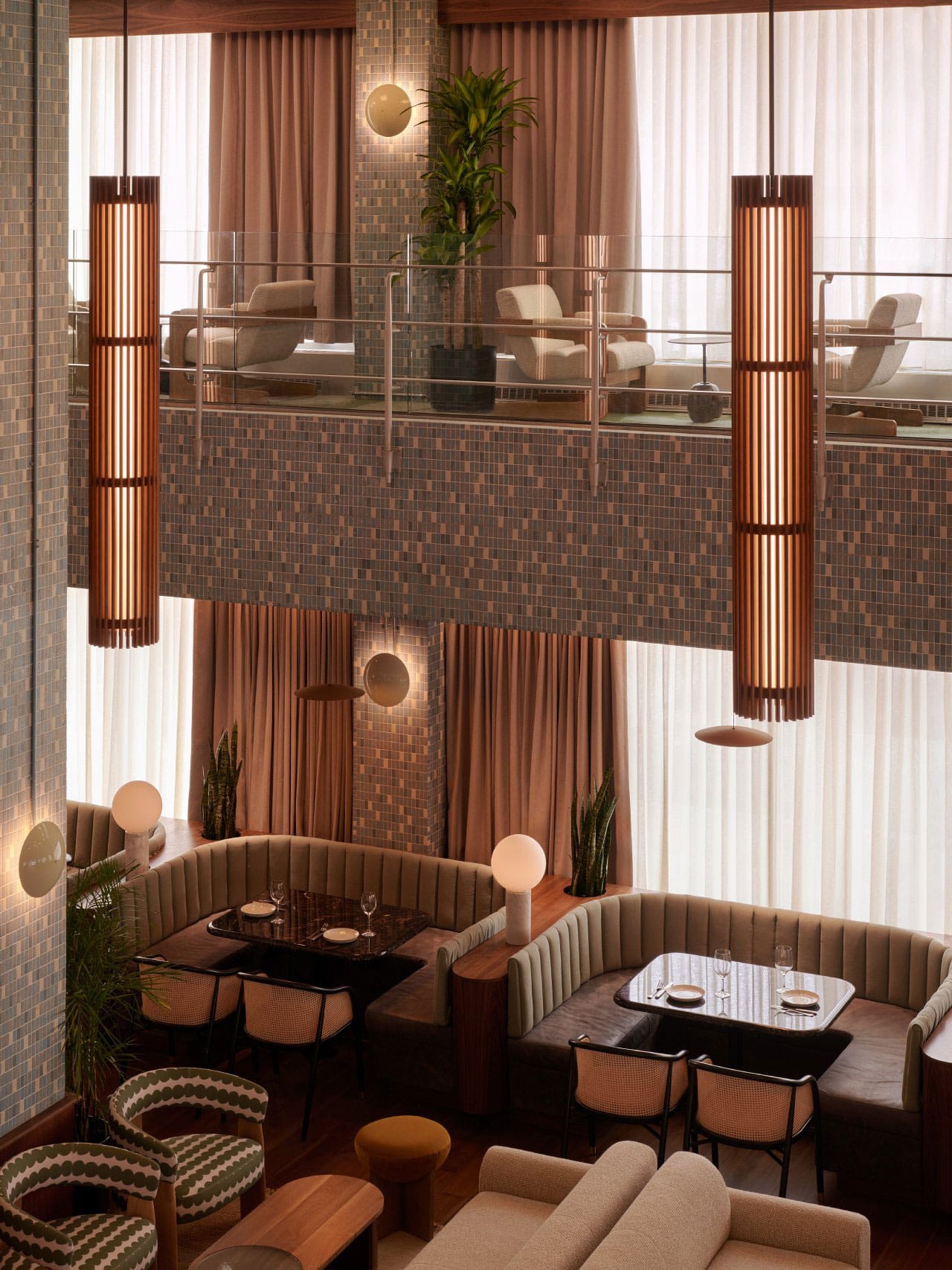
The predominantly concrete building anchors a prominent corner in Savannah, with its bold form softened by curved walls and arched openings. Interior spaces draw inspiration from original terrazzo floors, mosaic tile columns, and mid-century wood paneling and metalwork. Public areas – including the reception, bars, mezzanine lounge, and rooftop pool – celebrate Savannah’s character through texture, color, and pattern.(Zappia)
I particularly draw inspiration from the work pictured above, and love looking at how each individual piece of furniture contributes to the cohesive whole. Playing on textural elements with many soft edges the design invites interaction and comfort.
Zappia, Anna. “Andrew Ashey on Accidental Design, Empty Spaces, Plants + More.” Design Milk, 8 Aug. 2025, design-milk.com/f5-andrew-ashey-on-accidental-design-empty-spaces-plants-more/.