Fish Line Filler
After an interview with an Indiana DNR officer, I learned that lake management teams have long experimented with creating artificial habitats for aquatic life. In the 1970s and 1980s, these structures were commonly made of tires or concrete blocks. Today, efforts more often involve PVC or molded concrete to provide shelter and spawning grounds for fish (Baxter, 2025). During a visit to Alum Creek Park, I also observed that Ohio DNR has implemented monofilament fishing line collection systems, where anglers can responsibly dispose of used line in designated bins rather than general waste cans like in Build a Bin (BoatUS Foundation, 2025).
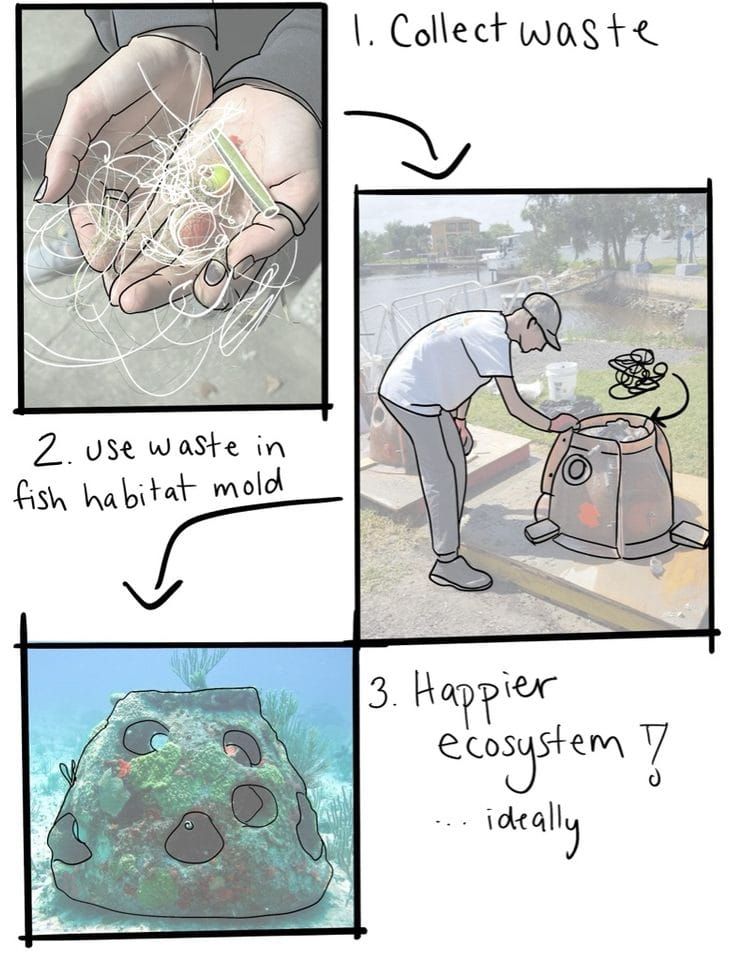
This conjecture proposes linking these two initiatives by using collected monofilament as a filler or binder in the molded concrete process for artificial habitats. Such a system could create a secondary use for fishing line that would otherwise end up in landfills, effectively closing part of the waste loop. However, implementation would require direct coordination between habitat builders and waste management teams, as well as consistent participation from anglers in using the collection bins. A significant concern remains that, if a structure were to break down, the line could reenter the ecosystem, once again posing risks to fish and wildlife.
References.
Baxter, S. (2025, September 22). How Fish Benefit From Artificial Structures - FishSens Magazine. FishSens Magazine. https://www.fishsens.com/how-fish-benefit-from-artificial-structures/
Monofilament - Build A Bin. (2025). BoatUS Foundation. https://www.boatus.org/reel-in
This conjecture is based on original material from Baxter’s How Fish Benefit From Artificial Structures (30%) and the BoatUS Foundation’s Monofilament – Build A Bin (30%), my own contributions (30%) in adapting these ideas through an interview with an Indiana DNR officer, a site visit to Alum Creek Park, and the proposal to integrate collected fishing line into concrete habitats, and AI support (10%) in refining, synthesizing, and structuring the narrative. All interpretations remain the responsibility of the author.