From Function to Feeling: The Materiality of Light
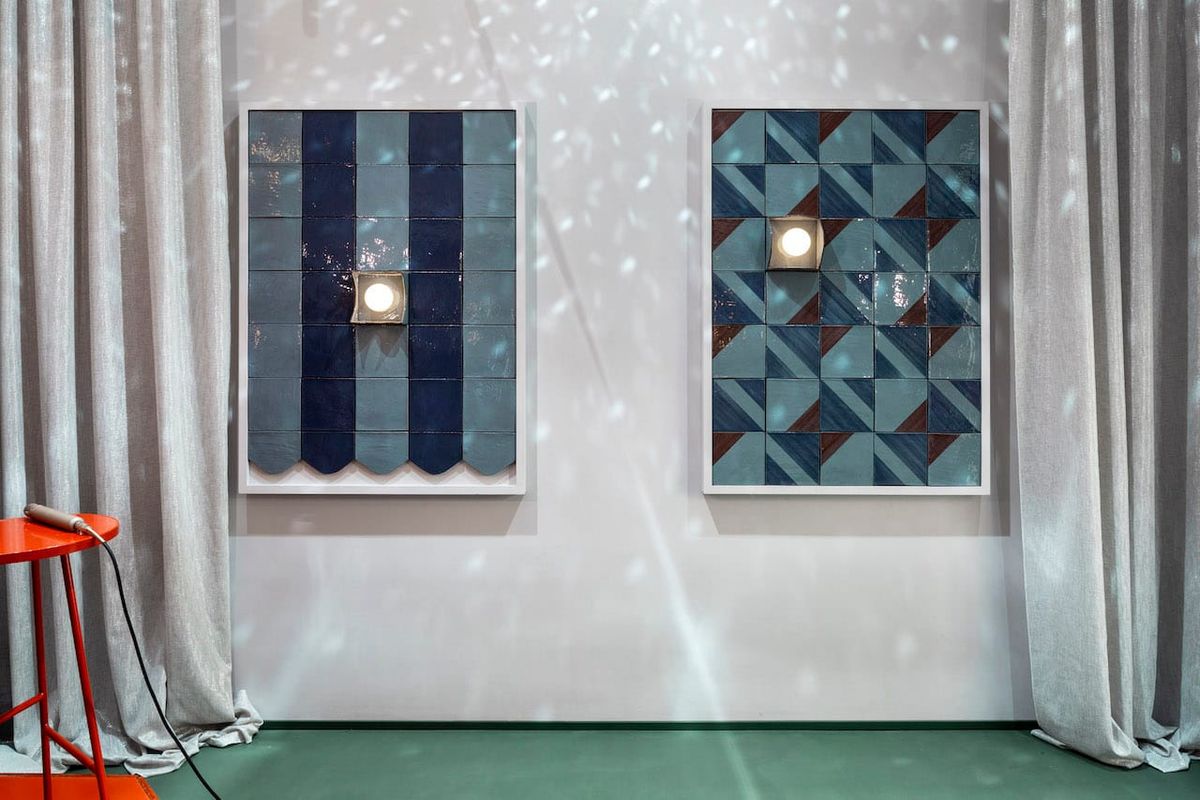
This collection turns lighting into a material experience rather than just a functional element. I am interested in this exploration of how light interacts with spaces and textured surfaces; transforming something ordinary into a dynamic, tactile experience that invites touch and engagement.
Ceramic lighting continues to surprise us – first with tiles that double as hooks and lamps, and now with STUDIOTAMAT and Arianna De Luca’s collaboration with Ninefifty. This time, lighting isn’t simply paired with tile; it’s embedded directly into ceramic compositions, turning wallcoverings into luminous and artful statements. From glaze to glow, the BALERA collection pushes ceramic conventions into bold new territory, merging artisanal craft with sculptural lighting design.
The collaboration is the latest chapter in OFFTAMAT, an experimental offshoot of STUDIOTAMAT, where design exploration takes center stage. The studio uses OFFTAMAT as a platform for limited-edition pieces that blur the boundaries between function and art. For the BALERA collection, they tapped Abruzzo-born designer and ceramicist Arianna De Luca, known for her expressive language that fuses bold silhouettes with vibrant, contemporary palettes, and Ninefifty, the Caltagirone-based ceramic manufacturer dedicated to preserving and evolving the tradition of artisanal ceramics. Together, they’ve crafted a series that speaks both to Ninefifty’s heritage in hand-glazed tilework, De Luca’s sculptural sensibility, and OFFTAMAT’s appetite for pushing materials into unexpected roles.
The brief for BALERA began with a deceptively simple request. “We had a very clear idea from our very first meeting. We asked Arianna to design a wall lamp starting from a precise measurement – 20×20 cm,” explains Matteo Soddu of STUDIOTAMAT. “We wanted to explore the plasticity of surfaces, and pair the lamp with simple graphic marks, inspired by its curves, to develop a modular language applicable to tiling.” From that single measurement, the collaboration unfolded into a series of ceramic compositions where light and glaze stand on equal footing.
BALERA’s modular compositions balance playful geometry with refined craft. Each 20×20 cm tile becomes part of a rhythmic grid, where curves meet crisp lines and glossy glazes reflect pools of light. The wall lamps nest seamlessly within the tiling, their soft glow accentuating the subtle reliefs and brushstrokes of the ceramic surface. In a single composition, the pieces act like building blocks, shifting between lighting, decor, and ceramics – transforming walls into illuminated, tactile canvases.
Color plays a pivotal role in BALERA’s visual impact. “For the BALERA collection, we worked extensively on building a shared chromatic language,” De Luca shares. “We aimed to blend my personal color world with Ninefifty’s, through a process of exchange and synthesis. We wanted both palettes to speak their own languages without overlapping, while merging in harmony.” The resulting hues range from soft, sunbaked neutrals to saturated, Mediterranean blues and greens, their glossy glazes catching light in ways that enhance the sense of depth. Against the glow of the embedded lamps, these colors take on new warmth, shifting in mood as the light changes throughout the day.
BALERA is a modern-day study of how lighting, ceramics, and architecture can merge to create something greater than the sum of their parts. By embedding light directly into ceramic compositions, STUDIOTAMAT, Arianna De Luca, and Ninefifty have crafted pieces that invite both touch and reflection, proving that even the most traditional materials can surprise us when given new roles. (Yang, 2025)
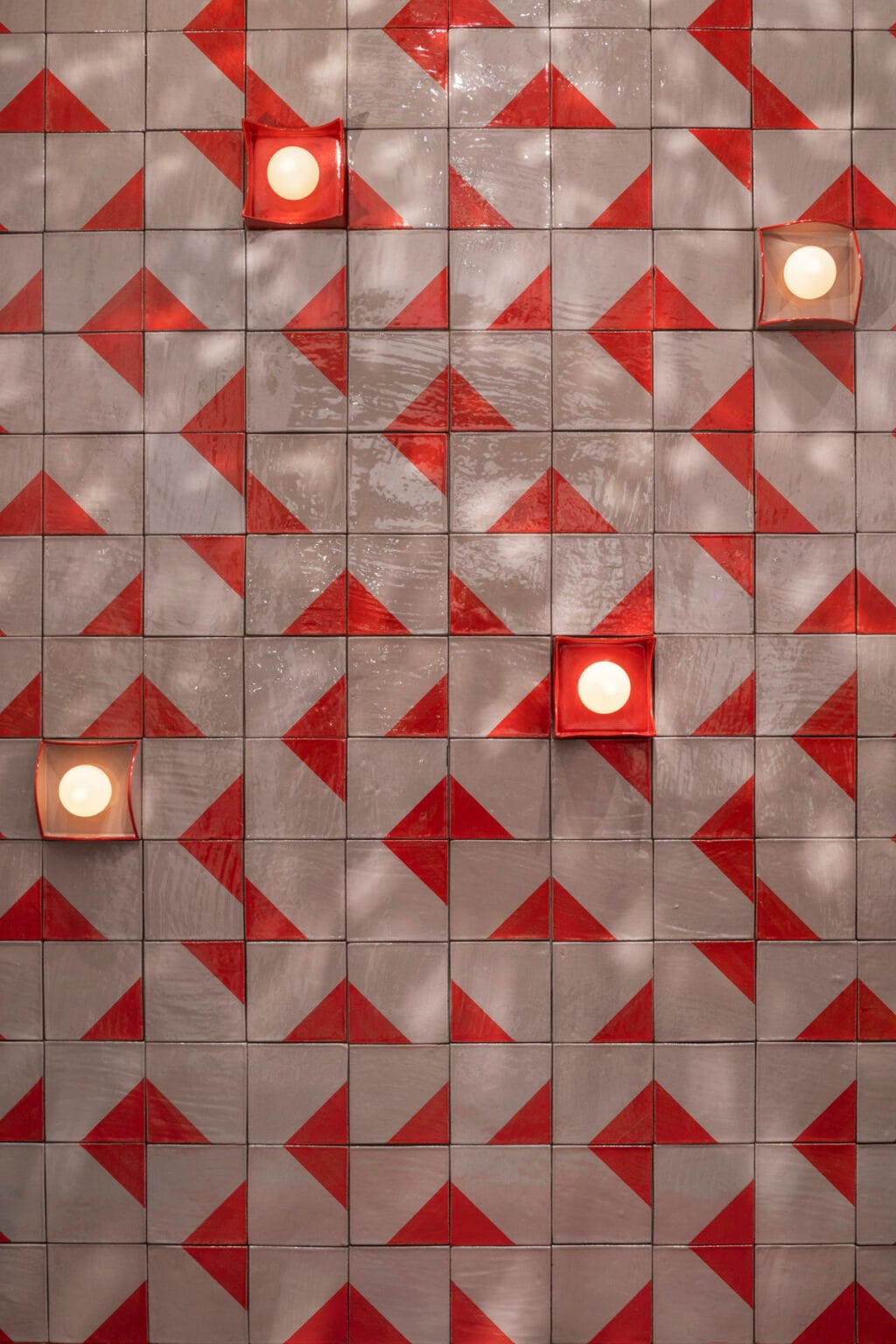
Exploring how interior elements (lighting, color, material) can create immersive, restorative experiences is a big interest of mine. I’m particularly drawn to how Balera balances modularity with playfulness: each tile is both independent and part of a larger composition, allowing for flexible, personalized designs.
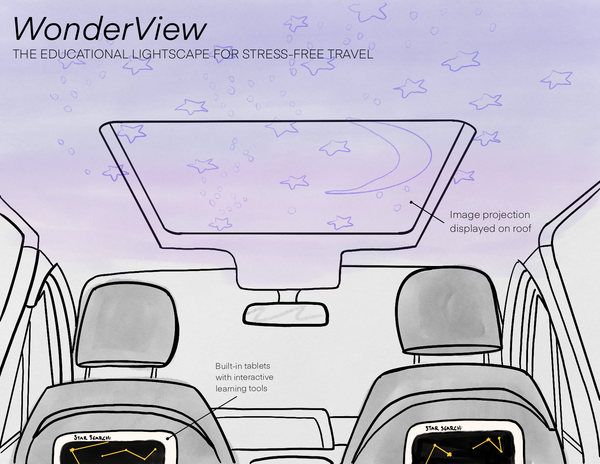
In a vehicle environment, similar principles could transform routine spaces into moments of delight and calm. By considering how light reflects, diffuses, and interacts with surfaces, I can experiment with creating environments that are visually engaging yet soothing, encouraging mindfulness and curiosity. The collection reminds me that thoughtful materiality and integrated lighting can make everyday experiences more alive and restorative.
References.
Yang, V. (2025, September 22). The Balera Collection is where the lighting lives in the tiles. Design Milk. https://design-milk.com/the-balera-collection-is-where-the-lighting-lives-in-the-tiles/
This reflection draws ~40% from Design Milk’s article “The Balera Collection Is Where the Lighting Lives in the Tiles” (2025), ~30% from the author’s own framing of the capstone context and design intentions, and ~30% from AI assistance (synthesizing article content, editing for clarity, and expanding argumentation). All interpretations and final perspectives remain the responsibility of the author.