Generation plastic: Unpacking the impact of plastic on children
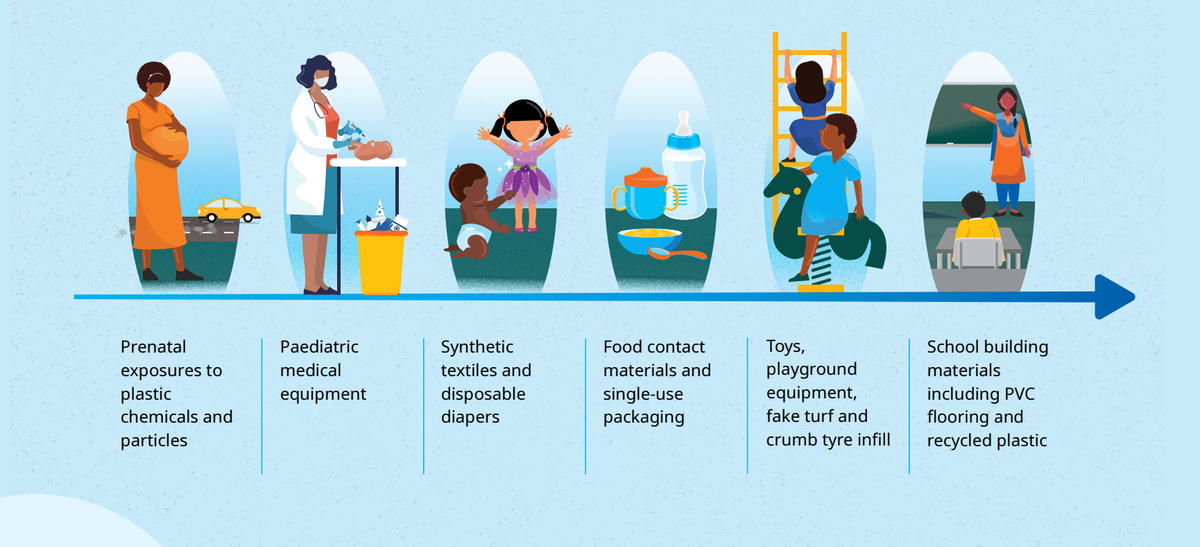
When thinking specifically about plastic intimacy, I wanted to learn focus on children. UNICEF, the United Nation Children’s Fund, provides humanitarian aid to children around the world. They released this 84 page report in 2024 that documents the effects of plastic pollution on children in different parts of the world. It is incredibly detailed and nuanced and at its core, calls for environmental justice and accountability.
From a UNICEF report titled Generation Plastic:
"‘Generation Plastic’ refers to today’s generation of children growing up in a world full of plastic" (Generation Plastic, 2024).
"Every stage of the plastic life cycle – from production to use and waste – impacts children around the globe" (Generation Plastic, 2024).
"Today’s children are surrounded by more plastics than ever before. Plastic pollution in places where children live, learn and play, along with the presence of toxic chemicals in plastic products they use, highlight only part of this growing crisis" (Generation Plastic, 2024).
"A recent estimate pegged global plastic production at a staggering 435 million metric tons in 2020 alone. And this scale of production is not expected to peak anytime soon: plastic production and use are projected to increase by 70 percent from 2020 to 2040" (Generation Plastic, 2024).
"On the one hand, lightweight and flexible plastics have been used to extend the life of foodstuffs, produce electronics and facilitate global vaccination campaigns. Some of these uses lack accessible and affordable alternatives. On the other hand, children’s unique vulnerabilities have too often been left unaddressed" (Generation Plastic, 2024).
"When it comes to plastics, young children also use different plastic products compared to adolescents and adults: disposable diapers, baby bottles, plastic toys and packaged baby foods are marketed specifically at infants and young children" (Generation Plastic, 2024).
"Plastic waste predominantly flows from higher-income regions that are well-prepared to manage waste but have high recycling costs to lower-income countries facing higher rates of waste mismanagement and inadequate enforcement capacities" (Generation Plastic, 2024).
"While less than 21 per cent of plastics today are designed to be recyclable, less than 10 percent of plastics have ever been recycled, compared to 65–70 per cent for paper and cardboard and 90 per cent for glass" (Generation Plastic, 2024).
"The chemistry of plastics means that the quality of the material inevitably degrades during recycling. The best solution to plastic waste is prevention" (Generation Plastic, 2024).
"Because children’s bodies metabolize and eliminate toxic substances differently compared to adults, children are less able to break down and eliminate some hazardous substances. Meanwhile, their rapidly developing organs are more vulnerable to hazardous substances that can potentially lead to permanent damage and lifelong health consequences" (Generation Plastic, 2024).
"Single-use menstrual products such as tampons and pads are a significant contributor globally to single-use plastic waste, containing up to 90 per cent plastic" (Generation Plastic, 2024).
"Synthetic (plastic-based) textiles (e.g., polyester, acrylic, nylon) have become increasingly common, accounting for over 60 per cent of clothing material today. At the end of life, the volume of discarded clothes traded globally has increased sevenfold over the past four decades, growing 10 per cent annually, and contributes to plastic pollution, in some cases in disadvantaged communities" (Generation Plastic, 2024).
I can’t help but wonder if our indifference and reliance on plastic is because we’ve been surrounded by plastic items our whole lives. We have not known anything other than plastic. It’s just become so normal in our everyday routines that we forget it’s even there. Perhaps it’s hard for us to imagine and use alternative materials when we didn’t grow up with it. Plastic is a big part of our childhood from diapers to playgrounds to toys.
UNICEF shows us that plastic disproportionally affects children, especially those in the Global South. There are children who can’t attend school because they work as waste pickers. There are children who live in garbage dumps or next to incinerators. If only 10% of plastics have ever been recycled than recycling is not the answer. UNICEF actually turns to zero waste as the best solution. If zero waste is to work, we need systems that support it.
No generative artificial intelligence (AI) was used in the writing of this work.
References
United Nations Children’s Fund, Generation Plastic: Unpacking the impact of plastic on children, UNICEF, New York, 2024.
Sripada, K. (2024). Generation Plastic: Unpacking the impact of plastic on children. UNICEF. https://ceh.unicef.org/sites/default/files/2024-11/Generation Plastic_Unpacking the impact of plastic on children.pdf