Health Effects of Microplastic Exposures: Current Issues and Perspectives in South Korea

In general, microplastics are synthetic polymer compounds that form when large plastic materials are fragmented and micronized to a size ≤5 mm. (Lee)
When considering large scale environmental and human health impacts of microplastic, it is important to know where it is coming from to get at its source.
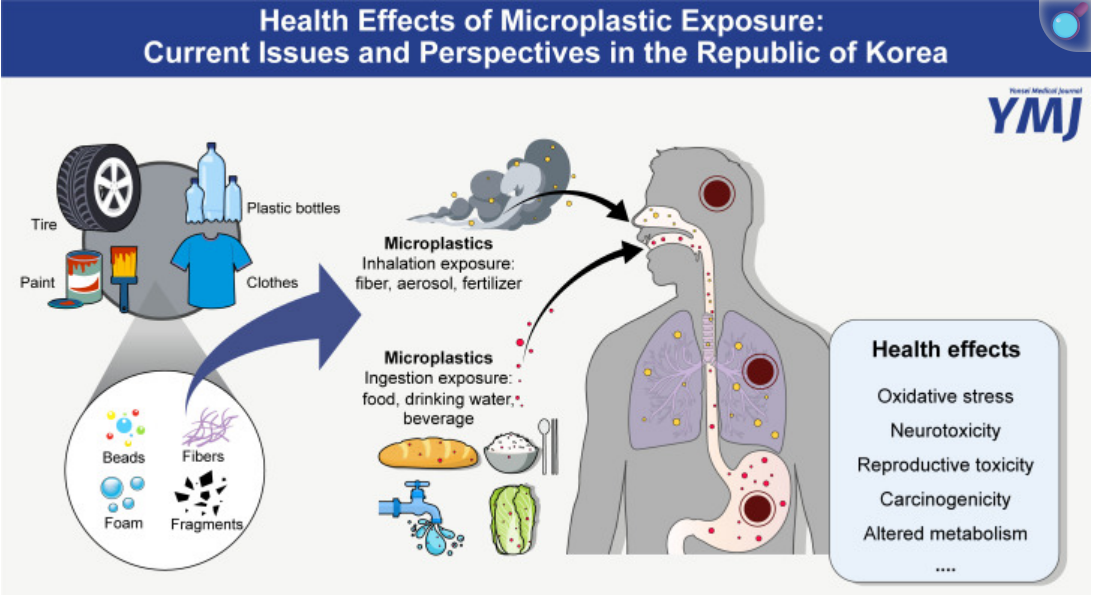
In general terms, microplastics can be categorized as primary and secondary microplastics. Primary microplastics are intentionally created plastic particles, such as consumer-care products (e.g., detergents and cosmetics) or industrial products...Secondary microplastics are products containing plastics, such as plastic waste and fibers, or plastic products that have decomposed after being exposed to the environment.
Various human activities and products, such as washing, worn tires, city dust, road paint, ships, and cleaning products, have been reported as sources of microplastics;1 however, the main sources of microplastics have not been clearly identified. Although various cases of microplastic pollution have been reported globally, such as in marine ecosystems, freshwater, air, and human bodies, (Lee)
While there are many things known to cause the secondary release of microplastics, it is interesting that we do not know the biggest source of microplastics concretely. This is such a new development that scientists are working without many pieces of the full picture.
Microplastics are easily ingested due to their micro-level sizes. They also move easily through the food chain and persist in the environment since they are refractory to biodegradation. (Lee)
The small size and persistence of microplastics makes them hard to track and contain.
Various examples of damage caused by microplastics have been reported, such as microplastic accumulation in the bodies of marine and aquatic organisms (leading to malnutrition), inflammation, reduced fertility, and mortality.
previous reports have shown that ultrafine microplastic absorption resulted in complex toxicity in zebrafish,2 and that microplastics under 100 nm in size can reach almost all organs after entering the human body.3 (Lee)
There are many impacts to our wildlife causing adverse health effects. Reduced fertility in an already endangered population could quickly spell out doom for many animal species. If left unchecked there would be rippling effects across the food chain.
humans can be exposed to microplastics through direct ingestion, direct contact, and inhalation
Ingested or inhaled microplastics may accumulate in the body and trigger an immune response or cause local particle toxicity. In addition, chronic exposure may cause more problems through accumulation in the body. However, to date, no definitive evidence has been reported regarding exposure levels, due to a limited number of studies on the exposure doses.
The United States and France introduced regulations banning the intentional use of primary microplastics in cleaning products
Microplastics have irregular shapes, such as cubic, spherical, and rod shapes depending on their morphological characteristics, which should be considered when assessing risks to humans and the environment. Sharp microplastic particles can cause toxicity by physically stimulating the human body. In addition, various chemicals are used when synthesizing plastic polymers, depending on the end use, most of which are endocrine disruptors. Endocrine disruptors, also referred to as hormonally active agents, can harm the human body by causing various cancers and reproductive-system disorders. Microplastics can also affect the human body by stimulating the release of endocrine disruptors. In addition, microplastics can carry other toxic chemicals such as heavy metals and organic pollutants during adsorption, which can adversely affect the human body. (Lee)
There are different shapes that nanoplastics can form into, which makes me wonder if we could purposely degrade plastic into a shape that is less harmful to us and our environment.
the digestive systems are affected when microplastics are ingested, and physical irritation to the gastrointestinal tract may eventually cause inflammation, resulting in various gastrointestinal symptoms.
These toxic substances can enter the body through the gastrointestinal tract when microplastics are ingested orally, leading to various gastrointestinal symptoms including nausea, vomiting, and abdominal pain.16
In addition, microplastics interfere with the production, release, transport, metabolism, and elimination of hormones, which can cause endocrine disruption and lead to various endocrine disorders, including metabolic disorders, developmental disorders, and even reproductive disorders (i.e., infertility, miscarriage, and congenital malformations).20 (Lee)
Humans are equally affected by microplastics and there is an alarming lack of research on the adverse health consequences. What we do know is that microplastics on the nanoscale can enter any part of the human body, effecting complex endocrine systems and the functioning of the GI track.
Lee, Yongjin, et al. “Health Effects of Microplastic Exposures: Current Issues and Perspectives in South Korea.” Yonsei Medical Journal, U.S. National Library of Medicine, May 2023, pmc.ncbi.nlm.nih.gov/articles/PMC10151227/#abstract1.