How a Colombian Influencer Made Recycling Cool
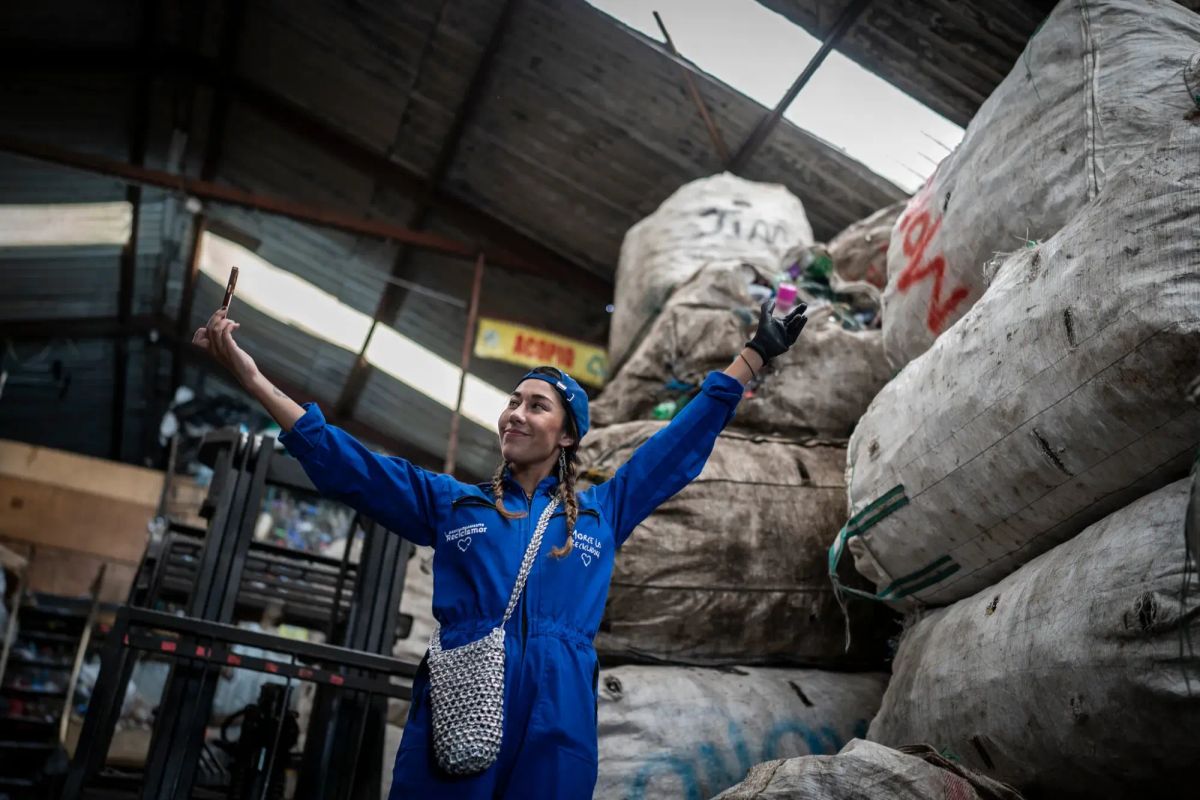
With my special interest being the future of recycling, it seemed fitting that I came across an article for an influencer dedicated to increasing engagement with recycling. Sara Samaniego is a recycling Youtuber dedicated to spreading awareness on how to recycle while also destigmatizing the independent recyclers that the country depends on to recycle without a formal collection service. Social media being so prevalent today it makes sense to take to those platforms to make change and increase visibility.
Through her colorful aesthetic and peppy persona, Ms. Samaniego brands herself as Latin America’s first recycling influencer, attracting a passionate fan base in Colombia’s capital, Bogotá, by educating followers on how to clean and sort their garbage through her character, Marce the Recycler (Glatsky, 2024).
Bogotá, like many cities in the developing world, has no government service for collecting items on a set schedule. Instead, it relies on about 26,000 informal recyclers, according to Consuelo Ordóñez, the director of the city’s public utilities authority (Glatsky, 2024).
Families traverse streets digging through garbage left outside homes and businesses, searching for glass, cardboard and plastic. They load recyclables onto huge wheeled carts that they drag by hand to recycling organizations or private warehouses where they redeem their haul. The waste is eventually converted back into raw materials and made into new products (Glatsky, 2024).
The work is very labor intensive and the recyclers often have to clean out the containers and cut off labels which adds a significant amount of time to the process.
Ms. Samaniego’s widely seen videos have helped recyclers avoid a time-consuming step by encouraging viewers to clean items properly so that more can be redeemed (Glatsky, 2024).
During the coronavirus pandemic, Ms. Samaniego raised funds to donate food to informal recyclers, an experience that led her to create a nonprofit, Recycling Love, which helps provide health care and other services (Glatsky, 2024).
On May 13, 2019, Ms. Samaniego uploaded her first video, teaching viewers which items to put in white trash bags (recyclables) and which to put in black ones (nonrecyclables). Her account quickly took off, and soon she was fielding calls from local media outlets (Glatsky, 2024).
Blanca Usa, 57, was cutting the wrappers off plastic bottles. She has worked there sorting recyclables for nine years. Items arrive much cleaner than they once did, an improvement that she attributes to Ms. Samaniego (Glatsky, 2024).
Gina Villabon, a schoolteacher in La Cascada, a rural town about 200 miles south of Bogotá, discovered Marce during the pandemic when she was looking for ways to engage with her students virtually for a unit on the environment (Glatsky, 2024).
“She was our inspiration,” Ms. Villabon said. “The children know the color code very well, and at home, they are making an effort to separate the garbage.” (Glatsky, 2024).
Ms. Sammaniego's account and approach to the recycling issues in her community are an example of how modern and future problems can be addressed. By engaging with people through a platform that they are already on she figured why not make content that they will see and maybe incorporate into their daily routines. Those actions help not just the environment with the increased recycling, but the workers within the community are able to recycle more without having to set aside time to sort and clean as much. Having advocates in an area proves to help promote change.
Reference.
Glatsky, G. (2024, November 11). How a Colombian influencer made recycling cool. The New York Times. https://www.nytimes.com/2024/11/11/world/americas/colombia-recycling-sara-samaniego.html