
How Big Oil Misled The Public Into Believing Plastic Would Be Recycled
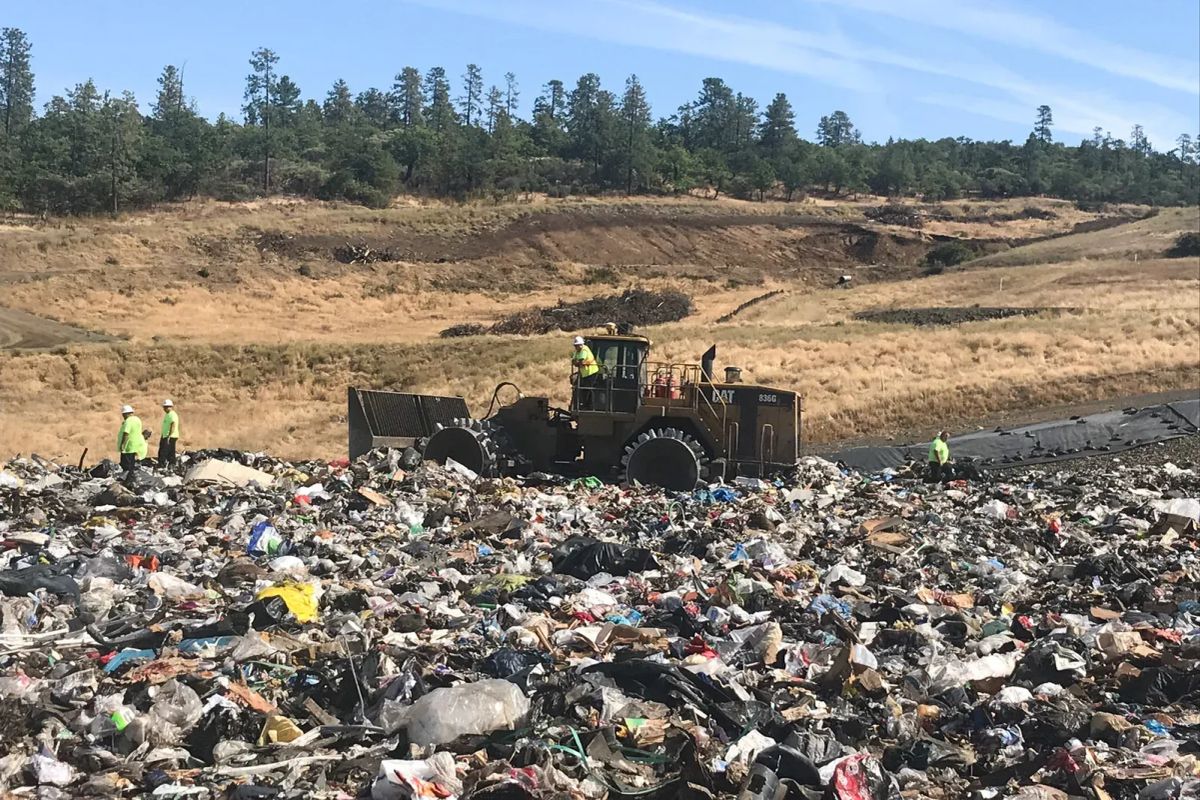
I remember in middle school when I learned where plastic comes from. My dad was like, “It’s made from oil.” And I was like, “What do you mean?” And then he told me about how plastic is made from byproducts of oil refineries.
From Laura Sullivan at NPR:
"Rogue, like most recycling companies, had been sending plastic trash to China, but when China shut its doors two years ago, Leebrick scoured the U.S. for buyers. She could find only someone who wanted white milk jugs. She sends the soda bottles to the state" (Sullivan, 2020).
"NPR and PBS *Frontline* spent months digging into internal industry documents and interviewing top former officials. We found that the industry sold the public on an idea it knew wouldn't work — that the majority of plastic could be, and would be, recycled — all while making billions of dollars selling the world new plastic" (Sullivan, 2020).
"The industry's awareness that recycling wouldn't keep plastic out of landfills and the environment dates to the program's earliest days, we found. 'There is serious doubt that [recycling plastic] can ever be made viable on an economic basis,' one industry insider wrote in a 1974 speech" (Sullivan, 2020).
After the plastic boom of the 60s and 70s, people began to get upset about all the plastic trash that was accumulating and plastic companies were under fire. To get them out of this mess, they began to advertise that plastic could be recycled even though they knew it couldn’t.
"'If the public thinks that recycling is working, then they are not going to be as concerned about the environment,' Larry Thomas, former president of the Society of the Plastics Industry, known today as the Plastics Industry Association and one of the industry's most powerful trade groups in Washington, D.C., told NPR" (Sullivan, 2020).
"NPR tracked down almost a dozen projects the industry publicized starting in 1989. All of them shuttered or failed by the mid-1990s. Mobil's Massachusetts recycling facility lasted three years, for example. Amoco's project to recycle plastic in New York schools lasted two. Dow and Huntsman's highly publicized plan to recycle plastic in national parks made it to seven out of 419 parks before the companies cut funding" (Sullivan, 2020).
"None of them was able to get past the economics: Making new plastic out of oil is cheaper and easier than making it out of plastic trash" (Sullivan, 2020).
Small recycling facilities at the time accepted things like aluminum, paper, and steel. However, plastic started showing up at these facilities because of the small triangle symbol.
"Starting in 1989, oil and plastics executives began a quiet campaign to lobby almost 40 states to mandate that the symbol appear on all plastic — even if there was no way to economically recycle it. Some environmentalists also supported the symbol, thinking it would help separate plastic" (Sullivan, 2020).
"Smith said what it did was make all plastic look recyclable" (Sullivan, 2020).
This article supported what my team had learned from the very beginning at Marble Plastics that recycling is not the answer. But it’s not because people don’t recycle. It’s because it’s structurally and economically impossible to recycle plastic at the scale we need to stop pollution. This is fundamentally where the circular economy steps in. It is meant to stop plastic (and other materials) from ever reaching the landfill. However, why would companies ever support something that would eventually put themselves out of business?
No generative artificial intelligence (AI) was used in the writing of this work.
References
Sullivan, L. (2020, September 11). How big oil misled the public into believing plastic would be recycled. NPR. https://www.npr.org/2020/09/11/897692090/how-big-oil-misled-the-public-into-believing-plastic-would-be-recycled