How did China come to dominate the world of electric cars?
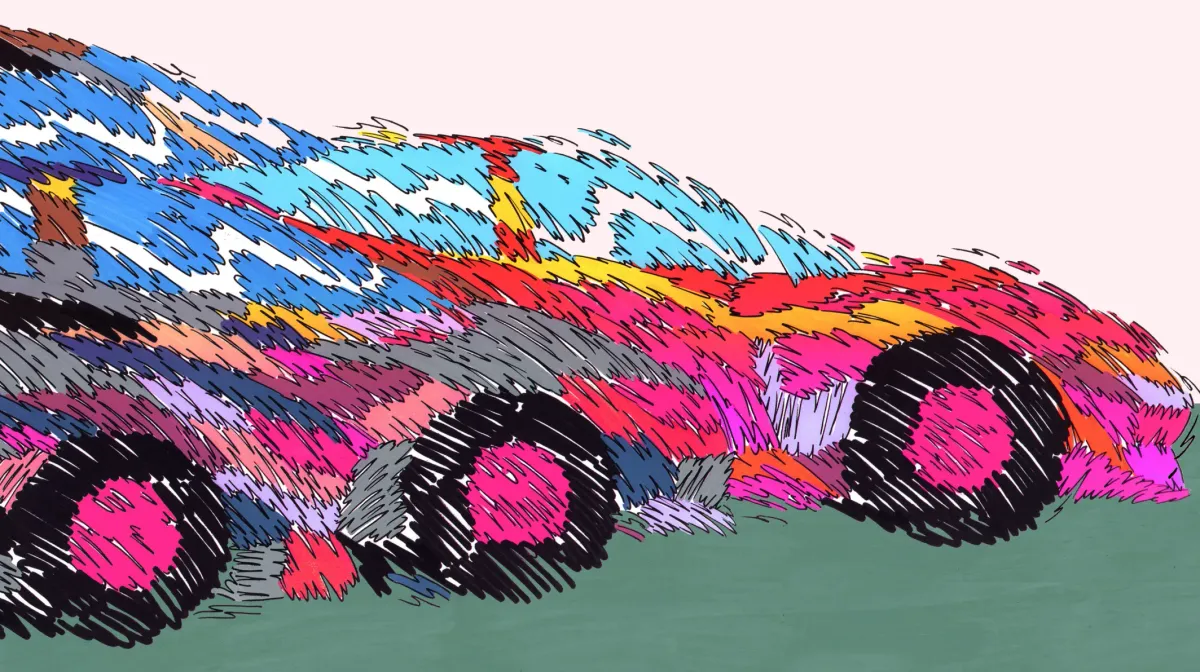
I was in China for two weeks over the summer and the cultural difference around electric vehicles was a shock to me. Walking around in Chengdu, at least half of all the cars in the streets are EVs. And all of the city buses already are. How did China carve out space for a plethora of EV companies and what can we learn from them?
Quotes taken from Zeyi Yang at MIT Technology Review:
"In just the past two years, the number of EVs sold annually in the country grew from 1.3 million to a whopping 6.8 million, making 2022 the eighth consecutive year in which China was the world’s largest market for EVs. For comparison, the US only sold about 800,000 EVs in 2022” (Yang, 2025).
"Several experts tell MIT Technology Review that the government has long played an important role—propping up both the supply of EVs and the demand for them. As a result of generous government subsidies, tax breaks, procurement contracts, and other policy incentives, a slew of homegrown EV brands have emerged and continued to optimize new technologies so they can meet the real-life needs of Chinese consumers. This in turn has cultivated a large group of young car buyers” (Yang, 2025).
"So the Chinese government took steps to invest in related technologies as early as 2001; that year, EV technology was introduced as a priority science research project in China’s Five-Year Plan, the country’s highest-level economic blueprint” (Yang, 2025).
On the government side of things…
"Starting in 2009, the country began handing out financial subsidies to EV companies for producing buses, taxis, or cars for individual consumers. That year, fewer than 500 EVs were sold in China. But more money meant companies could keep spending to improve their models. It also meant consumers could spend less to get an EV of their own” (Yang, 2025).
“'China has millions of public transits, buses, taxis, etc. They provided reliable contracts for lots of vehicles, so that kind of provided a revenue stream,' says Ilaria Mazzocco, a senior fellow in Chinese business and economics at the Center for Strategic and International Studies. 'In addition to the financial element, it also provided a lot of [road test] data for these companies'” (Yang, 2025).
"In populous cities like Beijing, car license plates have been rationed for more than a decade, and it can still take years or thousands of dollars to get one for a gas car. But the process was basically waived for people who decided to purchase an EV” (Yang, 2025).
"Finally, local governments have also sometimes worked closely with EV companies to customize policies that can help the latter grow. For example, BYD, the Chinese company currently challenging Tesla’s dominance in EVs, rose up by keeping a close relationship with the southern city of Shenzhen and making it the first city in the world to completely electrify its public bus fleet” (Yang, 2025).
When asked about applying China’s strategy to other countries, Yang had this to say:
"While the US and some countries in Europe meet the objective requirements to supercharge their own EV industries, like technological capability and established supply chains, ICCT’s He notes that they also have different political systems. 'Is this country willing to invest in this sector? Is it willing to give special protection to this industry and let it enjoy an extremely high level of policy priority for a long time?' she asks. 'That’s hard to say'” (Yang, 2025).
Based my other literature review with the oil/plastic industry, we know that money is a driving factor in sustainability; but, it doesn’t have to fall completely on small businesses or consumers to take the economical brunt of recycling or zero-waste initiatives. The reason why EV’s are so successful in China was because they had policies that helped them get there. There are systems in place, incentives for buyers, and subsidies for companies. If we want the circular economy to be real, if we want recycling to work, then we must have government structures in place that support it (even if it loses money at first).
No generative artificial intelligence (AI) was used in the writing of this work.
References
Yang, Z. (2025, July 18). How did China come to dominate the world of electric cars?. MIT Technology Review. https://www.technologyreview.com/2023/02/21/1068880/how-did-china-dominate-electric-cars-policy/