How the Guerilla Girls Used Art to Stage a Revolution
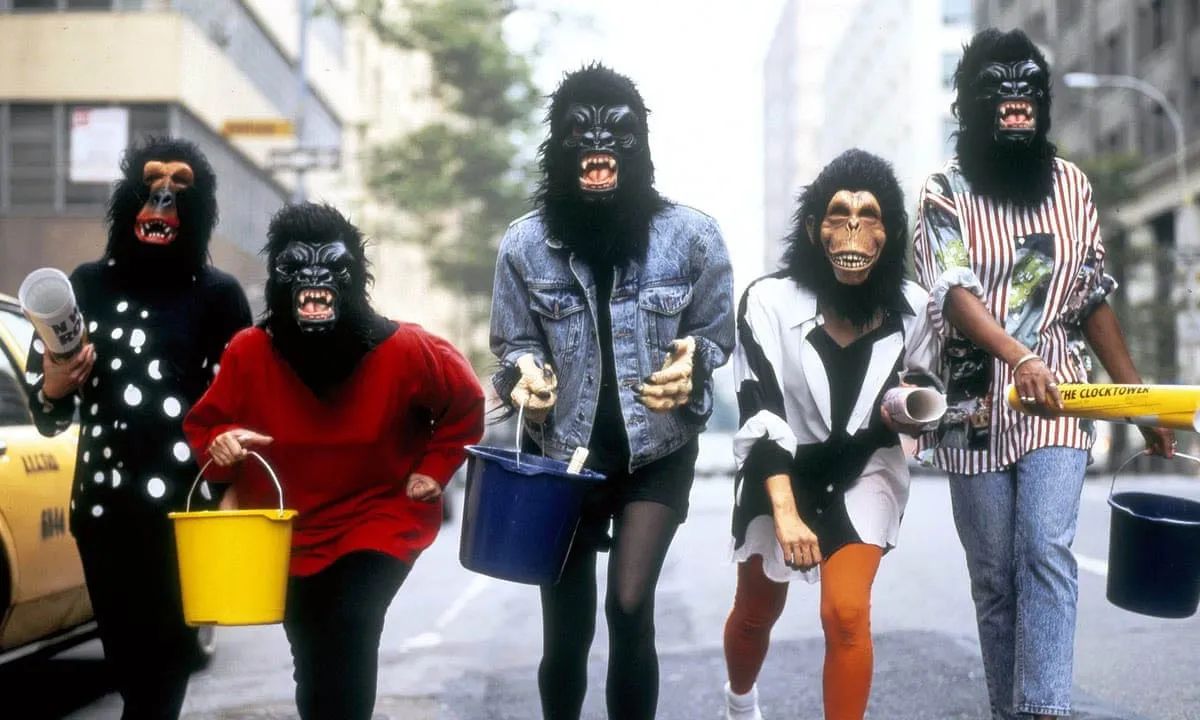
In this article from The Collector, author Rosie Lesso writes about how the Guerrilla Girls fought sexism, racism, and discrimination in the art industry with bold, radical confrontational posters that demanded New York City's attention beginning in the 1980s.
"The Guerrilla Girls are an anonymous group of activist-artists dedicated to fighting institutional sexism, racism, and inequality within the art world. Since their formation in New York in 1985, they have challenged the art establishment with hundreds of provocative art projects staged around the world including poster campaigns, performances, speaking tours, letter-writing campaigns, and influential publications" (Lesso, 2020).
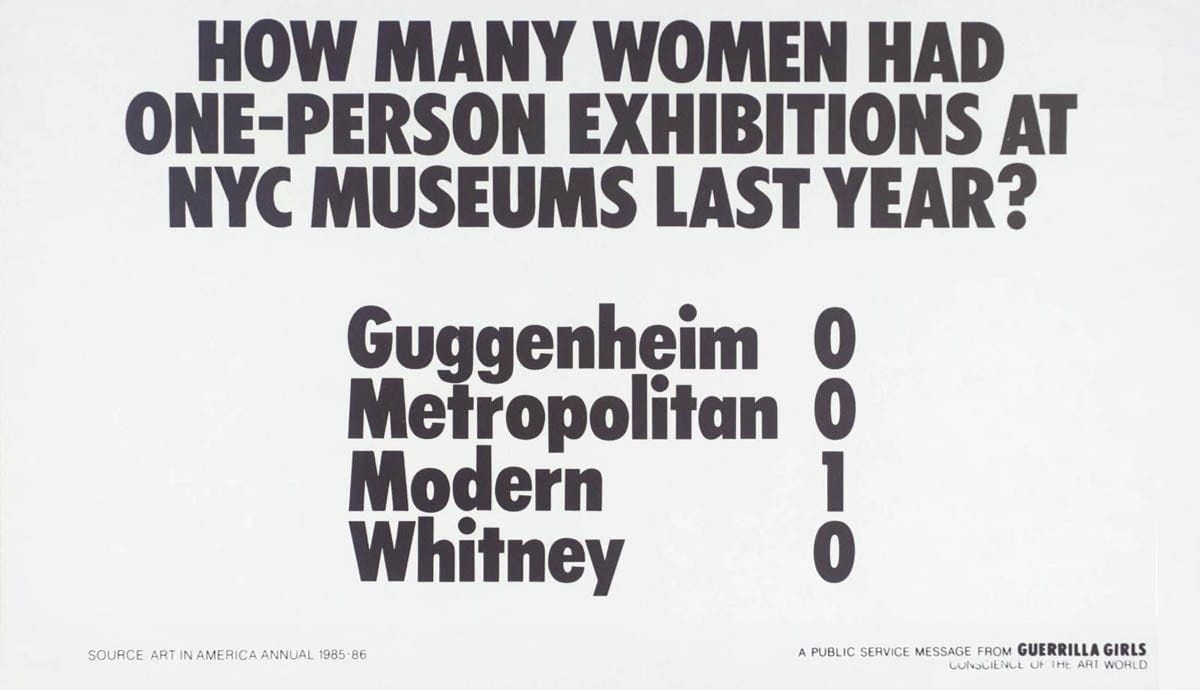
"Adopting the maxim of 'fighting discrimination with facts, humor and fake fur' the Guerrilla Girls quickly caused a stir amongst the New York art scene. Writer Susan Tallman points out how effective their campaign was, observing, 'The posters were rude; they named names and they printed statistics. They embarrassed people. In other words, they worked'" (Lesso, 2020).
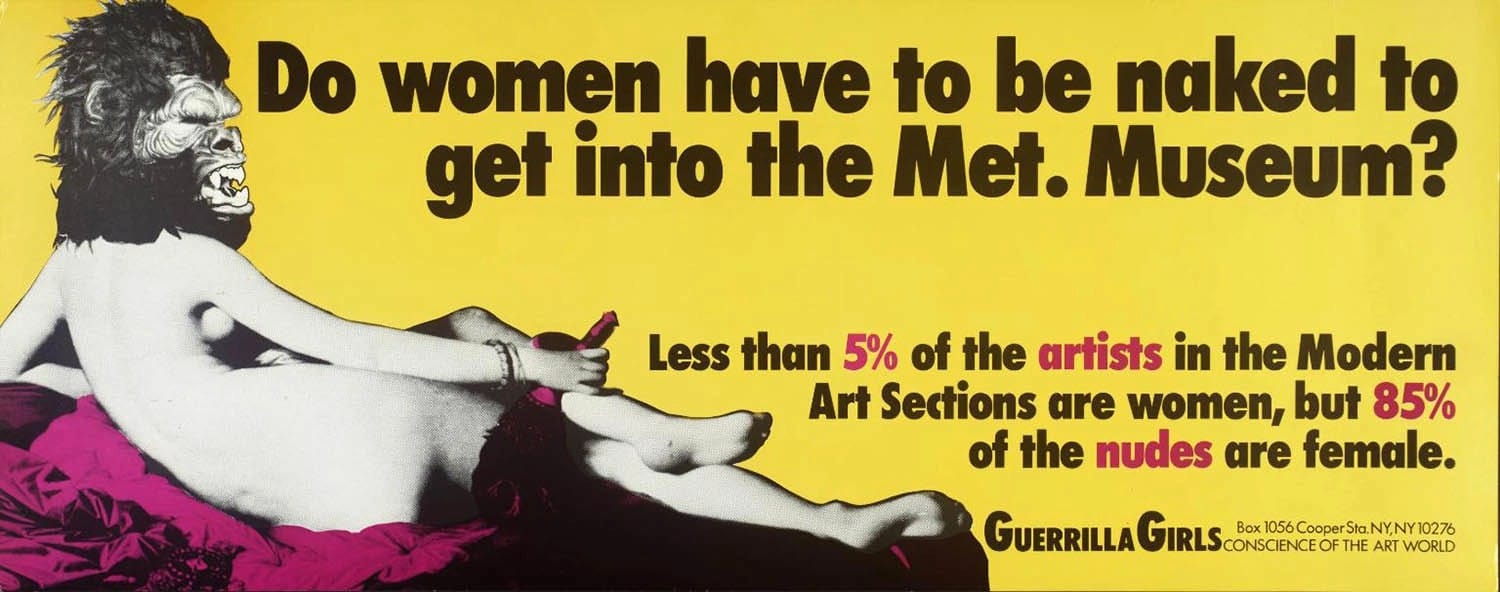
"In 1989 the Guerrilla Girls made their most controversial piece yet, a poster titled Do Women Have to be Naked to get into the Met Museum? Up until now, there had been no imagery to accompany their terse statements, so this work was a radical new departure. It featured a nude lifted from Romanticist painter Jean-Auguste Dominique Ingres’ La Grande Odalisque, 1814, converted into black and white and given a gorilla head. The poster presented the number of nudes (85%) with the number of women artists (5%) in the Met Museum" (Lesso, 2020).
"Throughout the 1990s the Guerrilla Girls responded to criticism that their art was exclusive to 'white feminism' by creating activist artworks addressing a range of issues including homelessness, abortion, eating disorders, and war" (Lesso, 2020).
"Though the Guerrilla Girls had initially set out as an activist group, by this stage in their careers their posters and interventions were becoming increasingly recognized by the art world as vitally important works of art; today printed posters and other memorabilia relating to protests and events by the group are held in museum collections all around the world" (Lesso, 2020).
"The band of rebellious Guerrilla Girls in the 1980s transformed the relationship between art and politics, allowing the two to bleed into one another like never before. They also proved women and ethnically diverse artists, writers and curators should play an active and equal role in art history, pushing institutions to take a long, hard look at their attitudes towards inclusivity" (Lesso, 2020).
Review
Insulted by the lack of representation of women and minority artists in the professional art world, the Guerilla Girls used their angst to radically draw attention towards this issue with a blatant tone and unapologetic attitude. Motivated not only by the imbalance they observed but also the lack of public awareness on the matter, they chose to respond using a creative approach. I liken this to how designers use their creativity to formulate possible solutions to a problem, whether it be larger societal issues or a product's pitfalls in usability. While researching the impact of outdoor recreation on the environment, I have observed similar issues with a lack of public awareness which motivates me to get park-goers thinking more critically about how their actions impact the natural world. I am also interested in how the "in-your-face" approach the Guerilla Girls embraced in their work can be translated to solutions that grab people's attention in ways that current park signage may fall short.
References
Lesso, R. (2020, August 6). The Guerrilla Girls: Using Art to Stage a Revolution. The Collector. https://www.thecollector.com/guerrilla-girls/