How to Leave No Trace
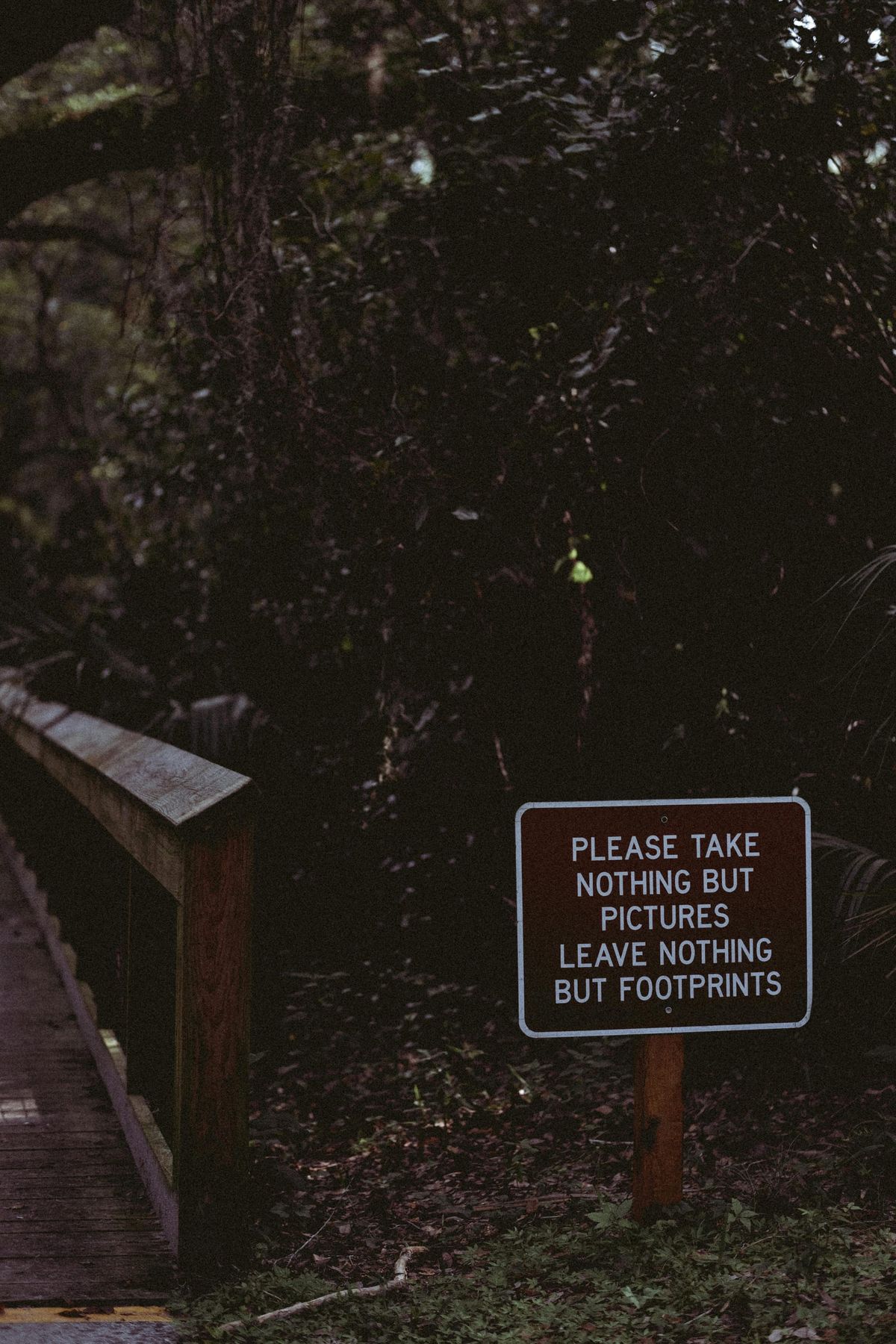
Given the goal to minimize the impact of recreational activity on state parks, I went looking for best practices for park visitors. I found an enlightening digital booklet on the subject from the York County Conservation District.
Excerpts from York County Conservation District's (2021) guide to low-impact recreation:
Trails are created in specific areas and often with special features to limit erosion. It is best to walk or bike single file in the center of the marked trails to limit damage to trail-side plants such as Christmas fern and jewelweed. Even when you come across a muddy section, it is best to go
straight through it rather than around it. As you step around a muddy area, you can damage plants. This may widen the trail and increase future erosion. Even a slight movement off of the trail can damage plant life and tree saplings. Movement off trail can lead to contact with poison ivy or stinging nettle, which can cause skin irritations.
When you wander off a trail to check out something interesting, you are creating the beginnings of a user-created trail. User-created trails are trails in a forest that are accidentally created by hikers or bikers who venture off of the marked trails. At first a user-created trail may appear as a faint path but it attracts others who follow to “explore” the less traveled path. As more and more people travel the path, the plants, shrubbery and tree saplings receive enough damage that they die and give way to bare dirt and rocks. Since user-created trails are not planned in areas to minimize erosion, they can lead to major impacts on areas near the trail. Without plant and tree roots to hold the soils in place, rainwater washes the soil away. If you are hiking or biking and see the beginnings of a user-created trail, it is important to ignore it and stay on the main trail. This allows the user-created trail time to “heal”.
When you need to take a break to rest, try to find a sturdy surface, such as a rock outcrop or other non-vegetated location. Sitting on or laying backpacks and gear on plants can damage them and create long term impacts. Keep in mind that live tree seedlings are critical to the long term
maintenance of a forested area. While hiking in a forest, it is also important to not damage mature trees. Hikers are often tempted to carve their names or initials in a tree’s bark. Do not attach a sign to the bark of a tree to mark a spot for others in your group. Each of these acts not only affects the beauty of a tree but they also damage the tree’s bark and possibly make the tree sick. The bark of a tree is a tree’s “skin” which protects the softer inner parts of the tree from damage. Damage to its bark makes a tree more likely to get a disease, rot and be attacked by animals or insects. It also
destroys some of the tissues that carry food and water in the tree. When a tree’s bark is damaged most of the way around the tree it is called girdling. Girdling usually kills the tree.
Trash also negatively impacts the natural environment. A bag waving from a tree may discourage birds or squirrels from using a tree. If that tree depends on birds or squirrels to disperse its seeds, that tree is now unlikely to be able to spread its seeds.
It is also important to avoid collecting “souvenirs” such as leaves, plant seeds, or insects during a hiking or biking trip in a forest. Leaving the area exactly as you found it allows others that come after you the same sense of discovery. Collecting “souvenirs” is a common way that
invasive species can be spread from one area to another. An invasive species is a species that has become a pest. It grows or reproduces very rapidly, spreads, and displaces native species. One of the more common invasive species is the tree of heaven.
Invasive species are difficult to control and can take over whole areas in a forest. Native species often lose out to the invasive species. Invasive species infestations are very expensive to control and are environmentally harmful. Because of their dominance, invasive species infestations reduce biodiversity in the area. Biodiversity is the variety of living things in an area. Biodiversity is required to maintain healthy natural habitats.
Invasive species can unknowingly be transported between forests by “hitchhiking” their way on the clothing or gear of the hiker or biker. For that reason, it is very important to clean everything including clothing, shoes, pets, backpacks and other equipment before going to a new area.
Removing “hitchhiking” seeds, plant parts, and insects will decrease the risk of spreading an invasive species to other areas. The spotted lanternfly is a common “hitchhiking” insect
Observe wildlife from a distance. Do not follow or approach them. Never feed animals. Feeding wildlife damages their health, alters natural behaviors, and exposes them to predators and other dangers. Leave rocks and logs as you find them as they are animal habitats. Protect wildlife and your food by storing food and trash securely. Control pets at all times, or leave them at home. Avoid wildlife during sensitive times: mating, nesting, raising young, or winter.
Although I’ve always been an avid nature lover and frequent hiker, there were many points in these “Leave no trace” guidelines that I had never heard before, or that make total sense but had never occurred to me. I now know that I’ve probably done a lot of damage to the parks I’ve been to without realizing it, by walking off the official trail, taking ‘souvenirs,’ following birds to get a better look, and not cleaning my shoes and gear before entering and leaving a park.
When designing for my capstone, I’ll have to keep in mind that many people whose hearts are in the right place might just need to be educated on these things, and that these habits will likely be hard to break.
References.
York County Conservation District. (2021). Low impact recreation: protecting our forests. York County Conservation District. https://www.yorkccd.org/wp-content/uploads/2021/11/Low-Impact-Recreation.pdf
No generative AI was used in the creation of this post.