How Well Should Your Car Really Know You?

This article pushed me to think differently about AI and its ability to track user preferences, allowing for seamless integrations both in the car and beyond. While it’s a highly controversial topic, especially around privacy, it challenged me to expand my perspective.
Artificial intelligence is rapidly changing how brands and customers interact. AI-powered chatbots, zero-click search results and targeted messaging are accelerating the connection between thought and outcomes, challenging traditional marketing channels and touchpoints. To capitalize on this shift, brands need a corresponding jump in both the quality and depth of their data — the indispensable fuel that turns a model's expectations into accurate recommendations and action.
“You could say data is ‘king’ or ‘queen’, but now it’s the universal force,” says Graham Wilkinson, chief innovation officer and global head of AI at Acxiom, a data and identity solutions company connecting brands with 2.6 billion people globally. “You need trusted, connected, clean data as a foundation for AI.” To drive both big-picture innovation and growth, brands must empower experts and curious minds to pair the right AI models with data curated for diverse business needs.
Ahead, explore what it takes to become an AI-driven brand, and establish a culture with the expertise and processes to maximize AI investments.
Data’s Defining Moment And The Need For Curated AI Ecosystems
On the path to becoming an AI-driven enterprise, C-suite leaders are grappling with a fundamental obstacle: data quality. In Forbes Research’s 2024 AI Survey, 31% of CxOs cited data quality as a main challenge for AI adoption over the next two years. And just 33% rated their current data cleaning and reprocessing for AI initiatives as effective.
"Many organizations don't necessarily have their data in order, including having the right, curated foundation that will fuel their AI," says Jarrod Martin, global CEO of Acxiom. “Data readiness is fundamental to realizing the promise of AI.”
Organizations are already taking steps to apply AI at key consumer touchpoints. For example, 72% of CMOs in the Forbes AI Survey said they use AI chatbots and virtual assistants, with 27% using them extensively to provide real-time personalized responses.
Despite this, only 9% of CEOs find AI to be very effective in achieving enhanced CX as a strategic goal, and less than a third of CxOs say their use of AI has very positively impacted CX metrics.
Making the most of generative AI agents takes more than just accelerating traditional, siloed marketing workflows. Strategists must seek insights and opportunities outside the linear model and single-tool solutions, says Wilkinson. By rethinking their marketing workflow, brands can meet the needs of thousands of different customers with dynamically created assets.
With the right tech, connected data and AI in place, brands can go from building a campaign in months to one day, he notes, adding that while execution is not perfect yet, the need for speed is here. These advancements aren’t just about efficiency—they’re about accurately building campaigns that can engage your audience across channels based on timely data.
“AI transforms marketing into a high-velocity learning lab,” says Martin. “Now brands can leverage their data and identity to test creative elements in a dynamic environment and make the most of their marketing and tech investments.
Martin adds that this same principle applies to the AI platforms that brands use. Since different models have dramatically different strengths, it’s unlikely that any one model or tool will solve all challenges. Instead, he says organizations should pair their curated, privacy-compliant data with models best suited to specific use cases. (Compton, 2025)
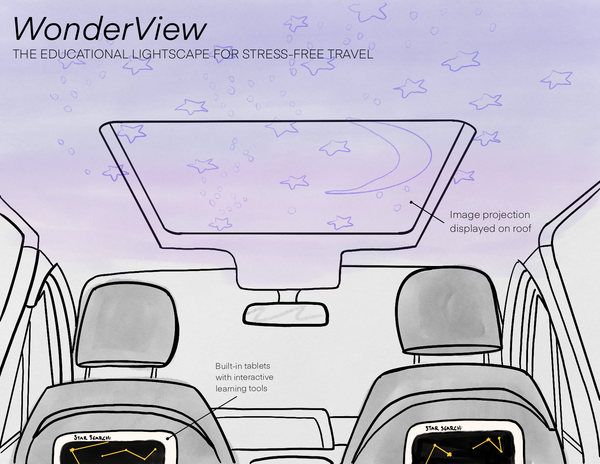
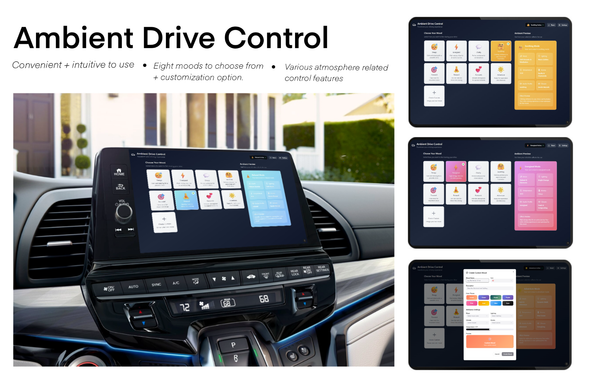
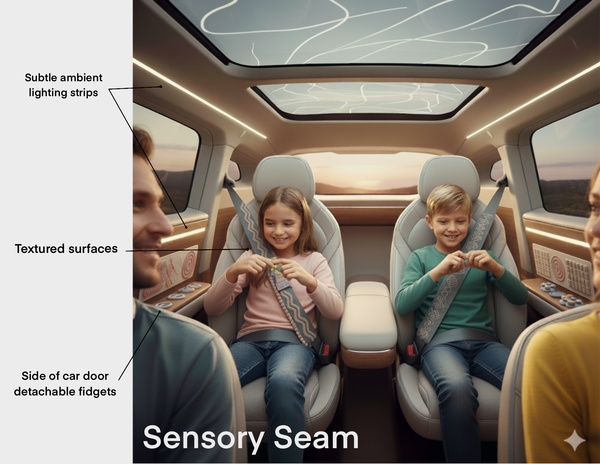
What stood out to me in this article is how connecting identity and data can make experiences feel not just efficient, but personal. Of course, it raises questions around privacy, but I couldn’t help imagining how this might translate into a car setting. What if a vehicle could “know” its passengers the way a brand knows its audience? A child’s favorite music, lighting preferences, or even sensitivities to textures could be remembered and adjusted automatically, creating a calmer ride.
For parents the car could anticipate stressful moments like long traffic jams or restless kids and offer small adjustments to ease the atmosphere before tension builds. Moreover, the mention of digital twins (AI models that mimic user behavior) made me think about backseat spaces that adapt to different personalities or moods. It made me realize that making a relaxing car experience is not static, but responsive in terms of all its users' needs.
References.
Compton, J. (2025, September 12). The new brand growth formula: A data-driven culture fueled by ai. Forbes. https://www.forbes.com/sites/insights-acxiom/2025/09/12/the-new-brand-growth-formula-a-data-driven-culture-fueled-by-ai/
Getty Images - Royalty-Free Stock Photos, Creative Images & Vectors | News, Fashion, and Entertainment imagery . Getty Images. (n.d.). https://www.gettyimages.com/
This reflection draws ~40% from Forbes Insights article “‘The New Brand Growth Formula: A Data-Driven Culture Fueled By AI” (2025), ~35% from the author’s own framing of the capstone context and design intentions, and ~25% from AI assistance (synthesizing article content, editing for clarity, and expanding argumentation). All interpretations and final perspectives remain the responsibility of the author.