Indigo Hippo: Preventing Waste and Encouraging Recycling
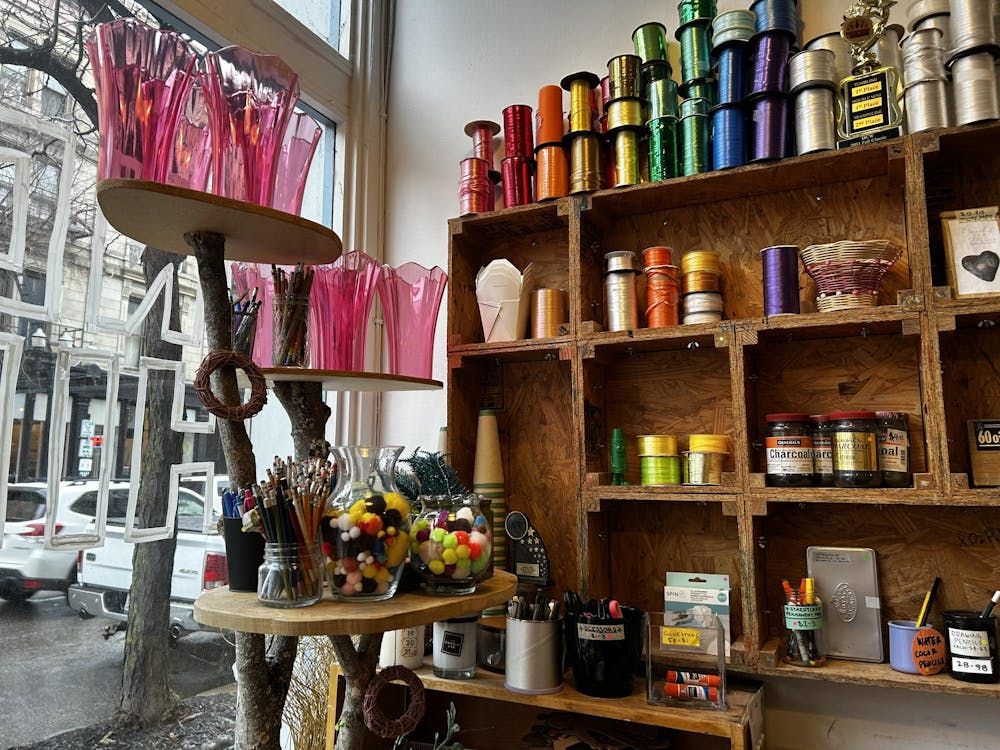
With a lot of common art supplies and mediums being tricky to recycle, this business model encourages engagement within the community by keeping craft and art supplies out of the landfills, collaborating with other local businesses, and providing accessible pricing to local patrons.
Indigo Hippo is an art supply shop located in Cincinnati that offers plenty of supplies, ranging from knitting, printmaking and illustration to photography, hardware and floral (Cline, 2025).
“Our mission is to broaden access to creativity, reduce waste, and inspire a sense of possibility by giving creative materials a second life in the hands of our community. Sustainability is a key piece of our mission, and our work centers care of earth and care of people,” their website reads (Cline, 2025).
A very interesting part of their business is that they offer a “pay-what-you-can” system. When you step into the shop, you will find that all items have a sticker attached to them of four colors; these colors indicate the sliding scale price for that item (Cline, 2025).
"To date, we have collected 233,974 pounds of materials and diverted it from the waste-stream," Schroeder said. "The focus on the creative reuse model helps keep creativity sustainable, but it also helps make creativity accessible to more people. It is amazing how our community can work together to achieve these goals in tandem." (Cline, 2025).
Schroeder began her career at Indigo Hippo after working in fashion design and art education, which made her realize just how much the textile industry wasted, as well as how important it is for art education to be accessible. She has been passionate about waste reduction and the arts for a very long time now (Cline, 2025).
Over the course of Indigo Hippo's lifetime, it has narrowed down its list and process on how to accept donations and what to do with what cannot be accepted (Cline, 2025).
"Generally, if an item can be repurposed creatively, we will take it. However, there are items that we do not take, purely because there are some other resources in the city that can take these items in greater quantities, like egg cartons. We rarely discard donations," Dake said (Cline, 2025).
Having this type of a business model is inspiring for a designer who seeks circularity. By serving as a hub for donations to come in, there is a twofold benefit: materials have the opportunity to be rehomed to individual people who need the supplies, and materials are directed to other companies that could instead use the product. Their willingness to accept hard to recycle objects, even if those objects are not specifically desired, prevents waste and seems like an area of opportunity to create something educational to help direct those resources. Along with an educational opportunity for the community on recycling for those harder materials.
Reference.
Cline, A. (2025, April 1). Indigo hippo: Preventing waste and encouraging recycling. Indigo Hippo: Preventing Waste and Encouraging Recycling - Wright State Guardian. https://www.wsuguardian.com/article/2025/04/indigo-hippo-preventing-waste-and-encouraging-recycling