Innovations in recycling

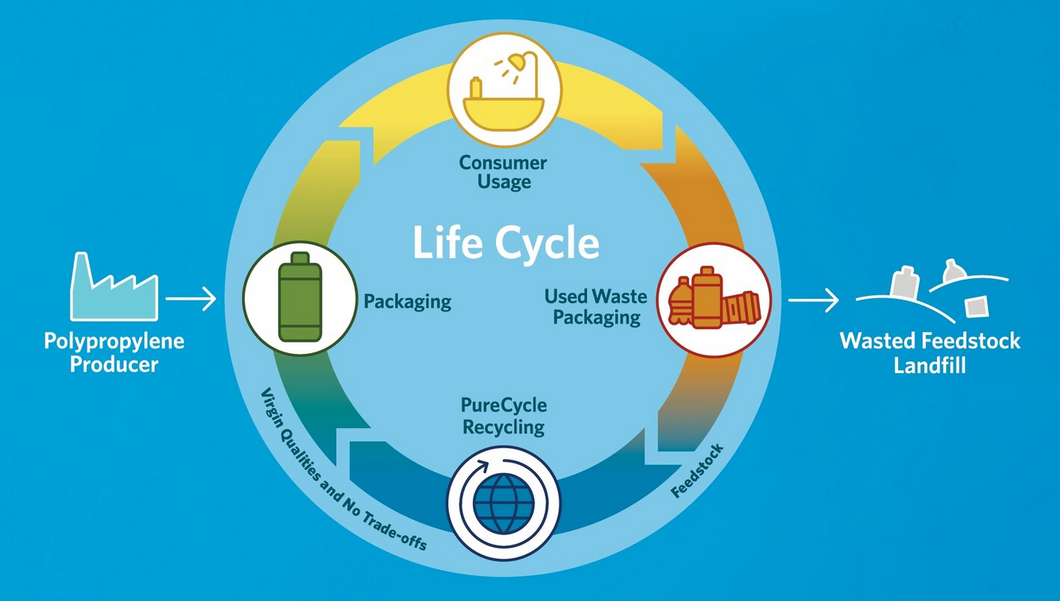
Plastic waste is one of the most urgent environmental issues of our time. Less than 10 percent of the plastic we use is recycled, and there’s currently an estimated 100 million tons of plastic in oceans around the world. But what would happen if we stopped thinking of plastic as waste, and instead as a valuable renewable resource?
Scientists around the world want to find out. The plastic “end-of-life challenge” calls for new ways to recycle and reuse plastics endlessly in a closed loop system, so they never become waste. Innovation on that scale would convert the current “make-take-dispose” linear economy into a circular economy, where recycling plastic for eternity is possible. (Cook)
This article shares many ideas and values with my capstone project. Taking a look at current closed loop recycling initiatives can give my project scope.
John Layman, head of material science at Procter & Gamble and chief technologist and founding inventor of PureCycle Technologies, developed a revolutionary process to remove color, odor, and contaminants from polypropylene plastic waste and transform it into a “virgin-like” resin, which is the basis for plastic products. (Cook)
One concern with plastic recycling is the brittleness caused by impurities from repeatedly melting down. This technology is exciting because it negates this problem. By reverting recycled plastic back to a resin like state it allows the final products to keep all the best aspects of the material time and time again.
Layman focused on polypropylene because it’s one of the three largest plastic resins used in the world. Its super powers include flexibility and impact resistance. It’s found in most caps on most bottles. It’s in luggage and carpets, computers and phones. In the grocery store, it’s everywhere—yet it’s hardly the favorite of recyclers looking to make a profit. It holds onto pungent smells and contaminants, and it can only be made into black or gray products. For those reasons, the little that’s recycled is usually made into park benches or car bumpers—important but limited applications. (Cook)
Additionally, the purification process used here may be useful for other types of plastics as well.
To recycle polypropylene into higher-value products, Layman knew he would first have to purify the plastic waste, and in an energy-efficient way. (Cook)
It is important that the process of recycling minimizes ecological harm as well. Processes, finishes, and use of plastic materials all have an environmental impact.
The first PureCycle plant is expected to purify and recycle 119 million pounds of polypropylene and produce 105 million pounds each year. Those numbers sound huge, but Layman puts it in perspective by pointing out that 120 billion pounds of polypropylene were produced globally in 2018 alone. “You can see we have a long way to go,” he says. (Cook)
It will be interesting to see how this technology continues to be implemented in the future and what challenges they may need to overcome. This is an exciting step in the right direction.
Cook, Stacey. “Innovations in Recycling.” Science, 10 May 2024, www.nationalgeographic.com/science/article/paid-content-innovations-in-recycling.