Is Less More? An Interview with Sally Connolly
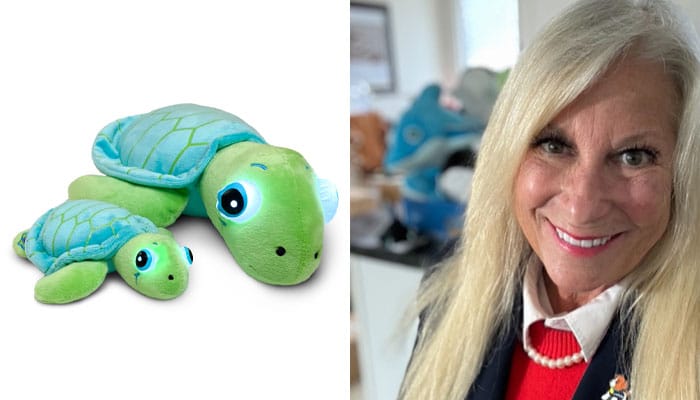
There are a lot of conversations in the children's entertainment space about excessive stimulation and it's impacts on development. As such, Connolly's approach focusing on a core experience could help inform design decisions that allow children to calm down and focus while standing out as a business.
Sally, it’s great to connect. To kick us off, what was your route into toys?
I fell into it! I’ve always been an entrepreneur and was very successful in another industry in my twenties. I then made the commitment to stay home and raise my boys, which was awesome, but we started getting bored… We started playing with different toys and I felt there was a space for toys that were under-engineered.
So you found most toys had too much going on?
Yes! We found a lot of toys were too hard to get to grips with. Or too loud… Just too much! There was a space for a toy that would help my boys quieten down and calm down before bedtime. That’s when I started playing around with product development. I also saw it as a good opportunity to educate my children about globalisation and the wider world. I also love intellectual property – patents, trademarks, copyrights…
One day, I thought it would be a good idea to see if we could file a patent on an idea for plush with illuminated eyes. We filed a patent and it took about five years…
Wow.
We had some opposition from Glo Worm, who felt they owned the whole space – which I understand. But NightBuddies is different from Glo Worm; it illuminated – it didn’t glow. It’s cloth-covered… It’s a soft sensory experience. So after five years we won the patent – and that’s how I entered the toy industry!
Does simple sell? Or was the ‘less is more’ approach a tough sell in this industry?
It was tough. I’ve been told by many people: “Why are you just doing light-up? Add music, add vibrations, add scents…” I think everyone’s products brings some kind of joy to kids, but I’m focused on driving simplicity and comfort. It’s plush with a purpose – and that doesn’t call for more and more. It actually fits nicely with today’s MESH movement – we’re working to get MESH accredited at the moment.
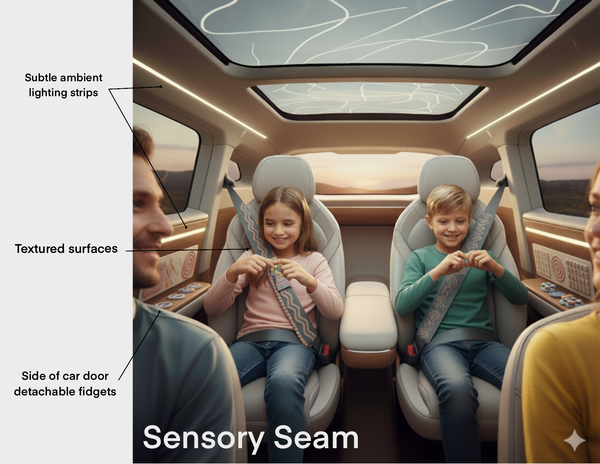
Connolly mentions that toys that have too much going on in the sensory department can rile children up. If I were to adapt this insight to my own project, I might create a solution focusing on one sensory avenue to induce mediation or a process similar to it. For example, creating a backseat function that provides something soft to interface with and hold onto could distract from uncomfortable elements related to surfaces (ill-sized seating, hot surfaces).
If I were to interpret Connolly's insights more broadly, making sure not to make my solution complicated for a child to understand is vital. My solution most likely won't cover every single aspect of a car trip gone wrong, so straining my solution to make that happen would only reduce the focus of my project.
References
Langsworthy, Billy. 2024. MOJONATION. "Napa Valley Toys’ Sally Connolly on her “under-engineering” approach to design". https://www.mojo-nation.com/napa-valley-toys-sally-connolly-on-her-under-engineering-approach-to-design/
All original works in this article were done without the assistance of AI tools.