Is This the Future of Relaxation?
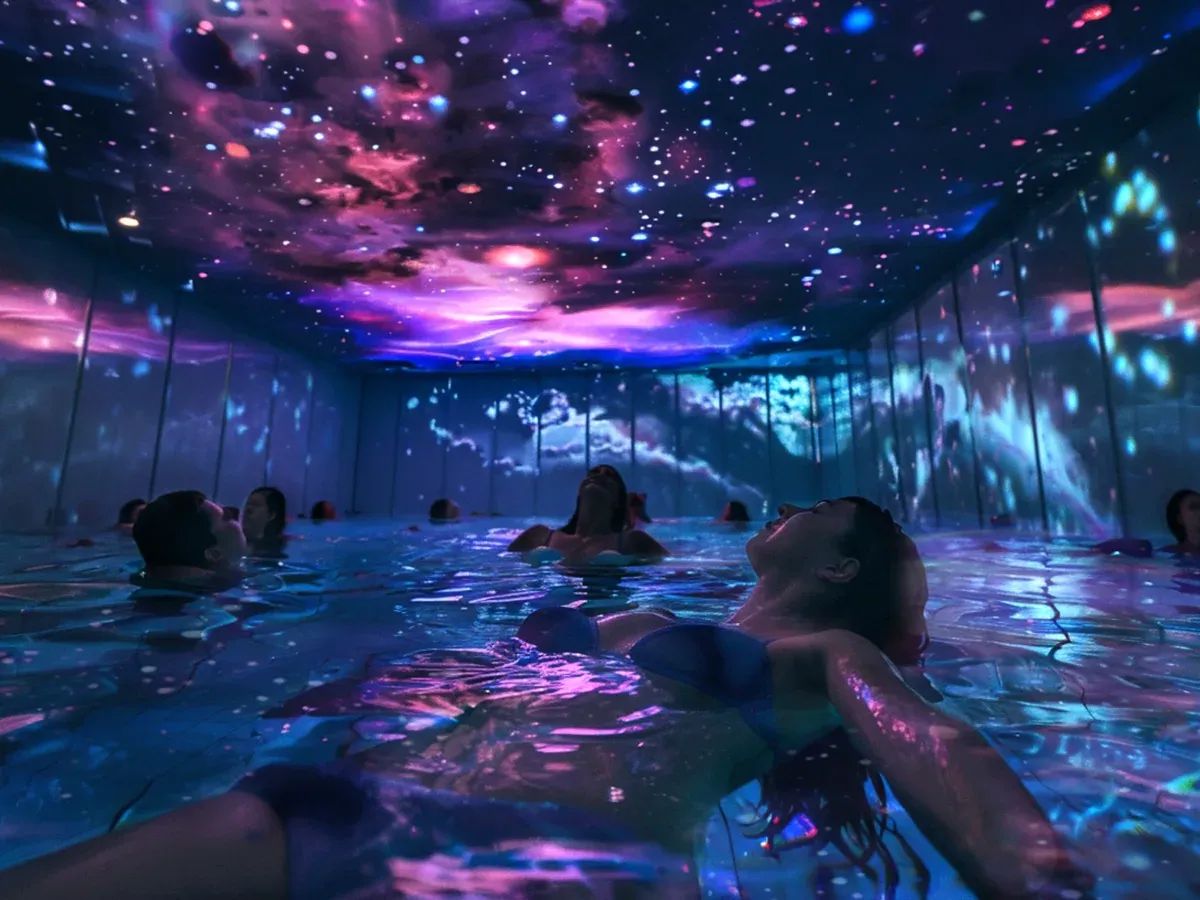
The future of immersive technology could be vastly different from how we currently understand it today. This article explores an entertainment system designed to offer a therapeutic experience, which, from a design perspective, could significantly enhance my journey towards designing a relaxing backseat experience.
In an era of spiralling disconnection, a new paradigm of wellness is emerging. From the intersection of immersive technology, neuroscience, and healing practice comes immersive wellness: multi-sensory environments and experiences that allow people to access deeper states of connection, awareness, and wellbeing.
At the vanguard of the emerging movement is Submersive, a startup founded and led by Corvas Brinkerhoff, formerly cofounder at art collective Meow Wolf. Part-bathhouse, part art museum and part wellness destination, the first location is due to launch in Austin, Texas in 2026.
At SXSW 2025, Brinkerhoff shared his vision for wellness spaces that act as a catalyst for transformation. "You could think of Submersive as a kind of massive state change machine with a collection of rooms that are engineered to draw us into these high value states: states like awe, wonder, euphoria, transcendence, unburdening, inspiration, connection,” said Brinkerhoff. The experience he said, will offer “deep connectedness to oneself, to others, to nature, to imagination, to our humanity." The goal is to build ”environments that don't just entertain us, but that have measurable, repeatable, therapeutic impact.”
The concept for Submersive draws upon the science of neuroaesthetics, which explores how art and aesthetic experience can rewire the brain, nervous system, and ultimately, our behavior. Initial renders for the venue depict a spa-like environment of pools, waterfalls, grottoes, steam and cold plunges enhanced by elements like light, sound, scent and visuals. Through the integration of biometric sensors and adaptive environments, these spaces will dynamically respond to visitors in real-time, optimizing therapeutic impact by inducing beneficial mental and physiological states like awe, euphoria, wonder, imagination and deep relaxation.
White Mirror, a wellness innovation consultancy based in London, is another pioneer in tech-driven therapeutic experiences. In 2024, they partnered with experiential art collective Marshmallow Laser Feast on a multisensory forest bathing experience commissioned by Thermengruppe Josef Wand for Therme Euskirchen in Germany. Lupuna immerses visitors in the sights and sounds of the Amazon rainforest, guiding them on a journey through a waterfall and a tropical downpour to giant lilypads where they can enjoy a contemplative meditation amplified with curated visuals and spatial audio design. According to White Mirror, which has its own neuroscience lab for testing and iteration, 81% of visitors reported feeling less anxious after the experience.
The fusion of art, technology and collective healing is also evident in Resolution: a cinephonic rhapsody for the soul. This immersive audiovisual experience created by musician Tim DeLaughter of the Polyphonic Spree and filmmaker Scott Berman premiered at SXSW in 2025 (see here for VML’s coverage). Designed for dome theaters, the shared experience offers an uninterrupted album playback of the band’s album Salvage Enterprise with custom visual treatments created for each song. In an interview, DeLaughter shared that the experience is being considered for FDA approval, because “people are finding that they get some relief from the experience – there’s a healing aspect to it.” (Stafford, 2025)
I found the emphasis on using biometric sensors and adaptive environments to be particularly compelling in this article. For my focus on automotive technology, this could mean incorporating integrated sensors, such as heart rate or stress level, to detect a driver's state of well-being.
I'm interested in how these advancements could make a car's interior a more dynamic space; detecting these feelings and instantly shifting to a calming or energizing zone. With the amount of time our society spends in transit these days, a car should be able to provide more for our basic human needs and senses. Ultimately, compelling me to explore the practical application of neuroaestheitics and sensory design.
References.
Grammarly. (n.d.). https://app.grammarly.com/
Stafford, M. (2025, April 23). Immersive wellness. VML. https://www.vml.com/insight/immersive-wellness