Kintsugi Philosophy and Materiality: Celebrating Brokenness

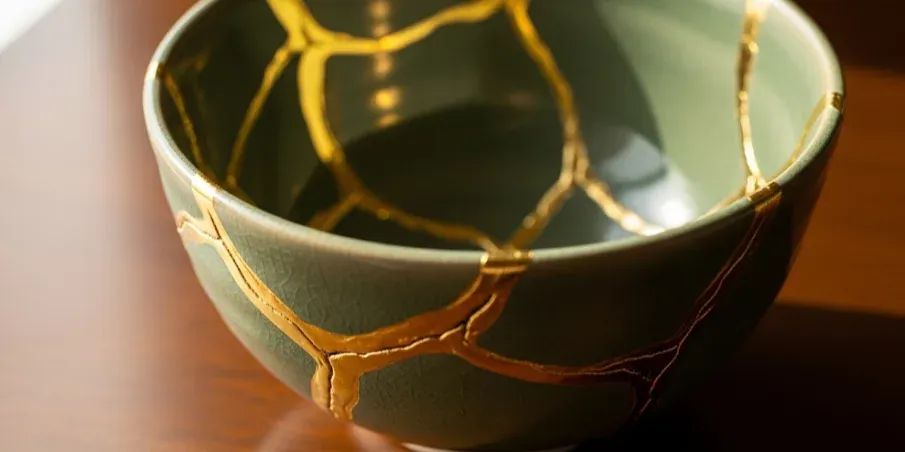
The art of Kintsugi is an ancient Japanese method of pottery repair that intentionally highlights surface fractures and broken geometry as design features. In this article from My Modern Met, the author describes the different kinds of Kintsugi techniques that artists have used throughout history.
Poetically translated to “golden joinery,” kintsugi, or Kintsukuroi, is the centuries-old Japanese art of fixing broken pottery. Rather than rejoin ceramic pieces with a camouflaged adhesive, the kintsugi technique employs a special urushi lacquer, made from tree sap, dusted with powdered gold, silver, or platinum (Richman-Abdou, 2024).
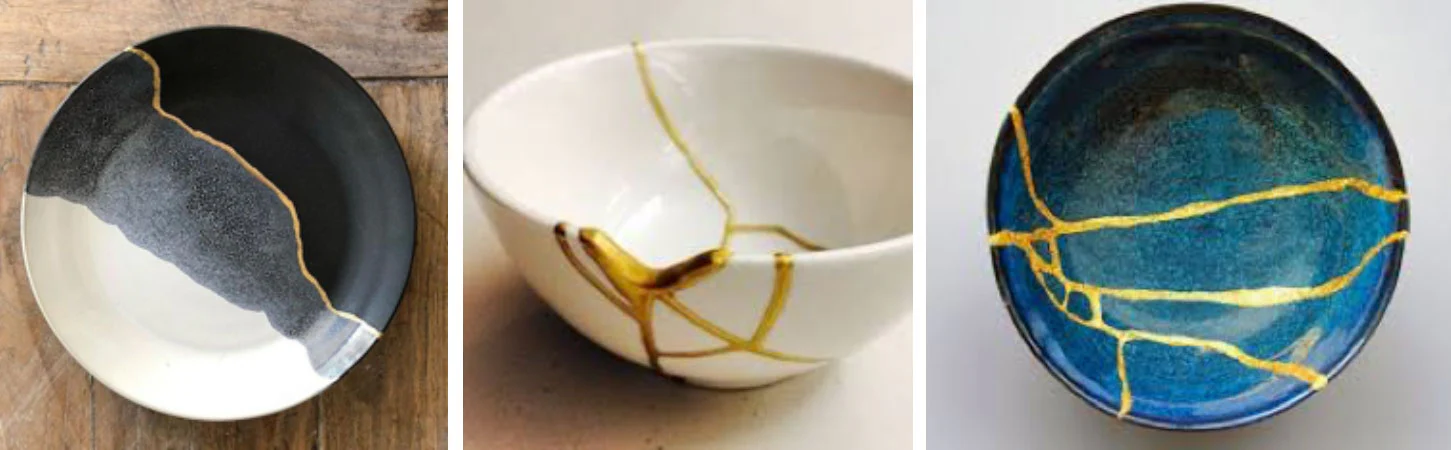
This unique method celebrates each artifact's unique history by emphasizing its fractures and breaks instead of hiding or disguising them. In fact, kintsugi often makes the repaired piece even more beautiful than the original, revitalizing it with a new look and giving it a second life.
Drawing inspiration from this tradition, plastic recycling could be reimagined as an art form that values imperfection and transformation rather than hiding flaws. Instead of melting plastic down into uniform pellets, designers could create repair techniques that highlight seams, cracks, or joins with contrasting materials—such as metallic pigments or brightly colored resins—so the repair becomes a celebrated feature rather than something to hide or cover up.

In addition to serving as an aesthetic principle, kintsugi has long represented prevalent philosophical ideas. Namely, the practice is related to the Japanese philosophy of wabi-sabi, which calls for seeing beauty in the flawed or imperfect.
Artists who incorporate trash into their work are practicing the concept of wabi-sabi without realizing it. Curbing plastic waste, and managing waste more broadly, involves seeing the untapped potential even if something that has been damaged or forgotten about.
Objects mended using the crack approach are touched up with minimal lacquer. This is the most common kintsugi technique, and it culminates in the shimmering veins that have come to define the art form.
Works restored with the piece method feature replacement fragments made entirely of epoxy.
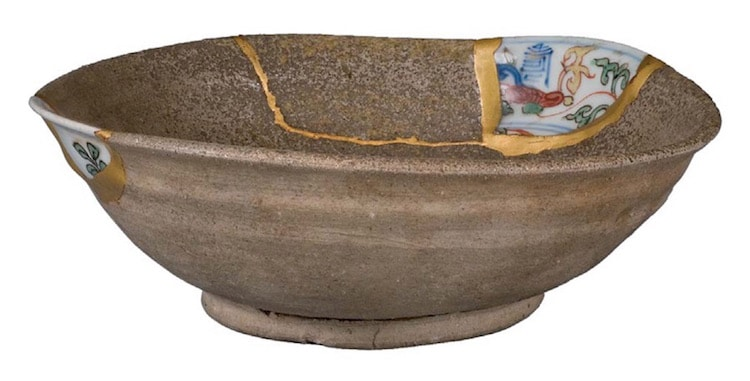
Pieces fixed using the joint-call technique employ similarly-shaped pieces from other broken wares, combining two aesthetically different works into one uniquely unified product.
Philosophically, a kintsugi-inspired recycling practice would encourage people to value the story of their plastic items. The scratches, repairs, and transformations that happen to a plastic product can be celebrated rather than discarded at the first sign of wear. Repair kits could be designed for consumers that allow them to mend plastic goods at home in creative, visible ways, giving objects new identities.
References
Richman-Abdou, K., & My Modern Met Team. (2024, September 20). Kintsugi, a centuries-old Japanese method of repairing pottery with gold. My Modern Met. https://mymodernmet.com/kintsugi-kintsukuroi/