The Philosophy of Land Art and Human Transcendence

In Nancy Pearcy's book Saving Leonardo, she ventures through both art history and parallel developments in religious and philosophical thought. The author uncovers the underlying worldviews of many popular western artists and identifies ways their ideology influences art and culture more broadly. In this particular chapter, she explores the eastern concept of negative theology and being submersed in the "cloud of unknowing" through meditation.
In Hindu and Buddhist mediation, the most popular mantra is the syllable Om. The purpose of repeating a single monosyllable over and over is to clear the mind—to free it from its preoccupation with the material world until at last thought itself is transcended, inner silence is achieved, and the meditator merges with the Infinite or the Void (Pearcey, N. , 2010 202).
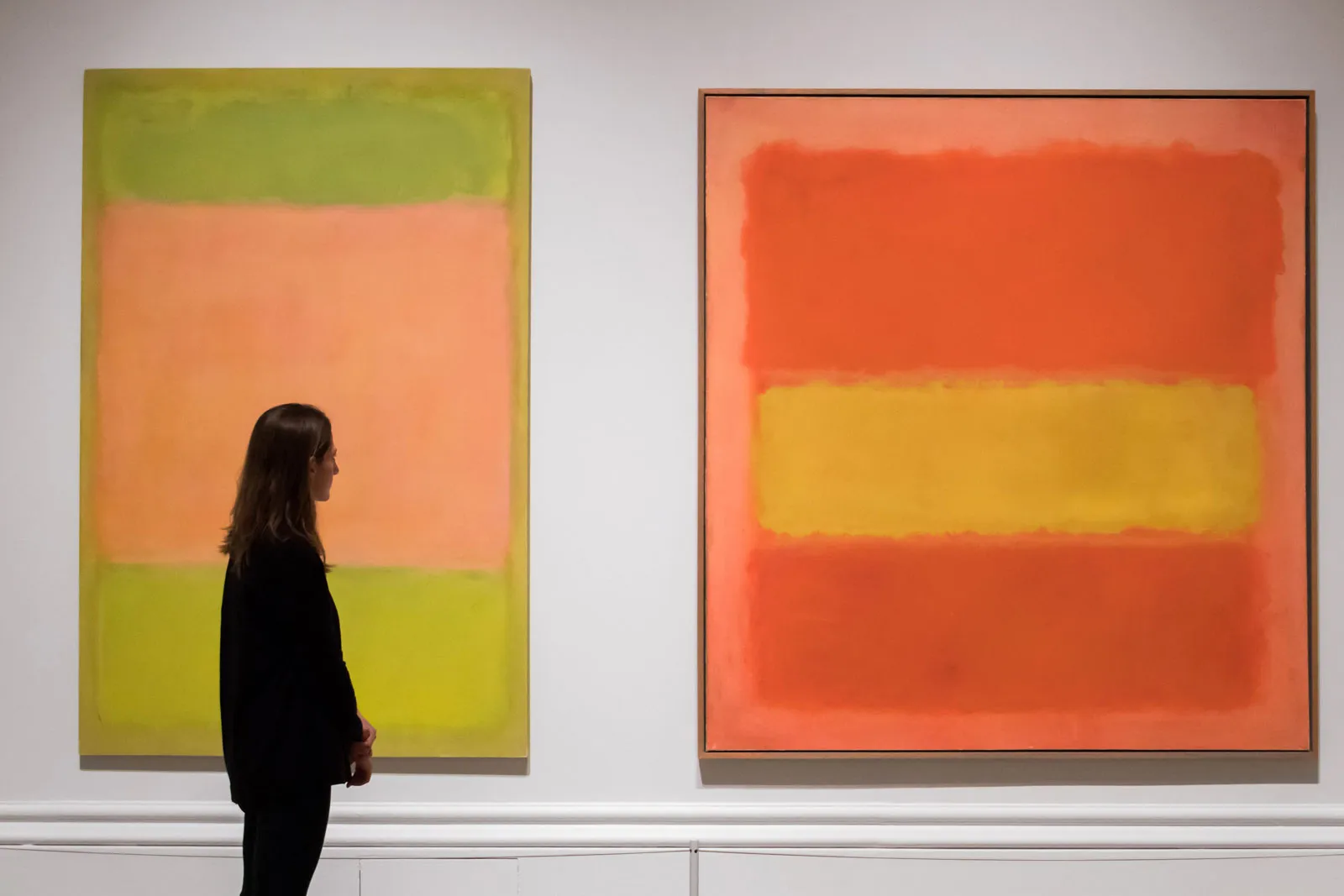
She then examines the work of painter Mark Rothko and Musician John Cage. Rothko in particular, used his paintings as a way to express the hiddenness of God. They are supposed to act as images of a bleak nothingness, absence, and stillness. They reach the divine through a negative process of experiencing what the divine is not. Rothko's paintings make no positive claims about God because Rothko was convinced God was unknowable.
In the same way, an abstract painting is intended to free the mind from its preoccupation with material objects and draw the viewer up to the spiritual realm. You might think of mono-chromatic art (a canvas painted a single color) as a visual parallel to the monosyllabic Om.
John Cage worked with similar assumptions about God and humanity, but also in regard to man's relationship to nature. Inspired by Zen Buddhism, Cage challenged the notion that a musician's goal was to make anything at all. Why create sound with instruments when ambient sound was all around? This led him to perform piece 4'33", which consisted of exactly four minutes and thirty-three seconds of silence as his hands hovered over the piano keys. He wrote other music too, which consisted of entirely random and disharmonious notes that when played by an orchestra, is completely chaotic.
The implication, Cage decided, was that the composer should not impose his own likes and dislikes on tones. Instead, he should treat every sound as an equally valid form of music.
The work of Rothko and Cage pose an uncomfortable question. When faced with absolute stillness and silence, do humans ultimately matter? If the goal of Bhudist mysticism is to achieve the Zen state of one-ness with reality, what does this imply about creativity and our relationship to the material world? Pearcy concludes:
The problem with this approach... is that it 'represents a virtual denial of any human transcendence over nature.'
The philosophies of Rothko and Cage are shared by proponents of the Land-Art movement, popularized in the 70's and 80's. In the poem "Zazen on Ching-t’ing Mountain," by Li Po, we see the conclusion of Pearcy fully realized.
"We sit together, the mountain and I
until only the mountain remains."
It's a radically dehumanizing message. The poem implies that the human being has less value and dignity than a rock. So little, in fact, that it is best to dissolve away and disappear into the rock—until only the mountain remains.
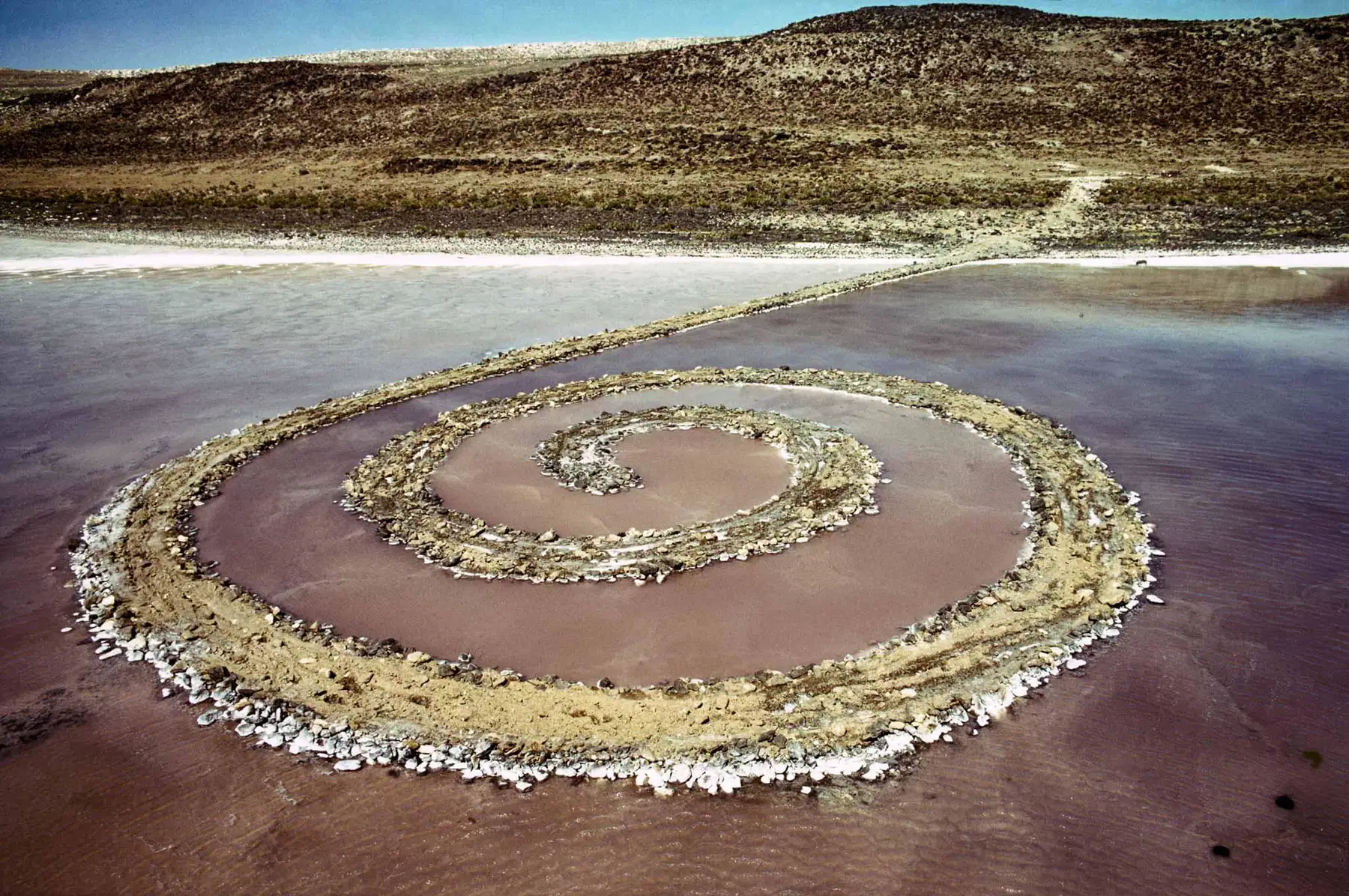
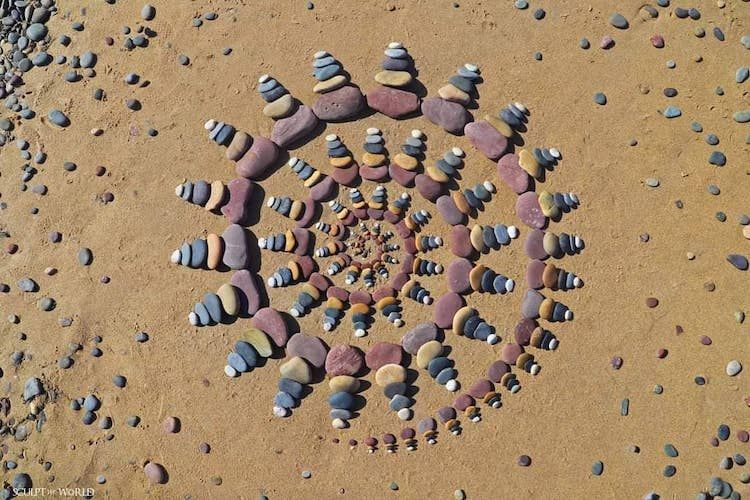
The tradition of Romantic nature mysticism lives on in land art. Seeking to escape the pressure to commodify their work, artists have abandoned the white-walled galleries of Soho to create abstract artworks in deserts, lakes, and mountains. Using bulldozers and caterpillars, they have constructed huge ramps and spirals, or stretched out fabric gauze across the landscape.
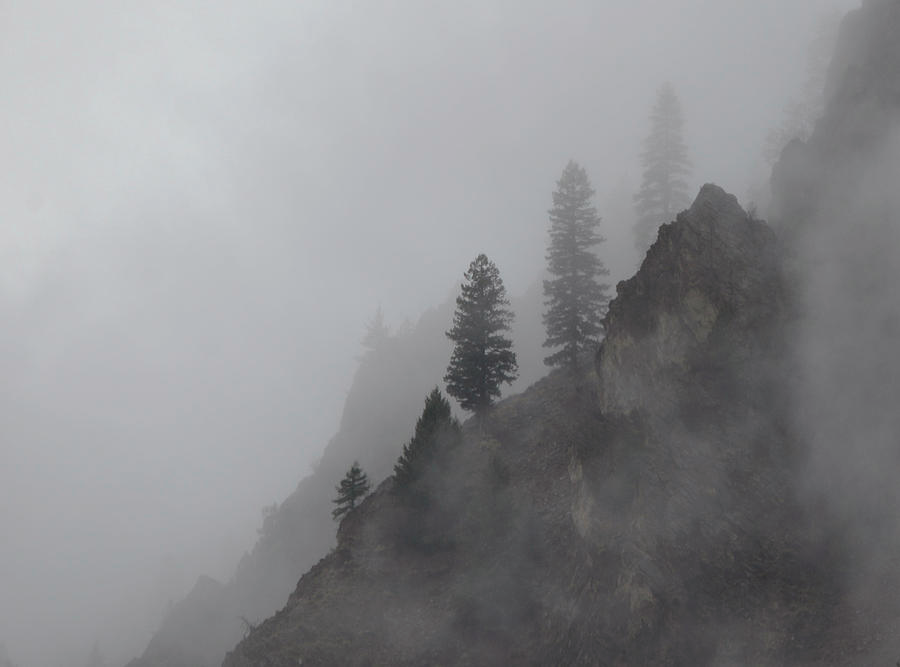
These works implicitly state that the impact humans on the planet will not last; that the land will eventually return to is natural state; that Nature will win in the end. Only the mountain remains.
Some environmental advocates, scientists, and even designers operate with similar philosophies to Rothko, Cage, and Po. The underlying assumption is that human activity is ultimately meaningless, and the permanence of nature reigns supreme. Plastics waste however, challenges this notion because they can be considered as outlasting nature itself. As a result, plastic critics cry out that humans are the problem, and that their activity is not "natural" and only impedes the purity of the untouched wilderness. The reality is that humans are a part of nature and will continue to shape the future of the planet and plastics testify to this. The answer is not to limit human activity or debate on which activities are more wasteful than others. Both product designers and architects should instead embrace their impact on nature and look for ways to co-design the world alongside it in a way that leads to abundance and beauty for civilization.
References
Pearcey, N. (2010). Saving Leonardo: A call to resist the secular assault on mind, morals, and meaning. B&H Publishing Group.