
Leave No Trace: Outdoor Ethics
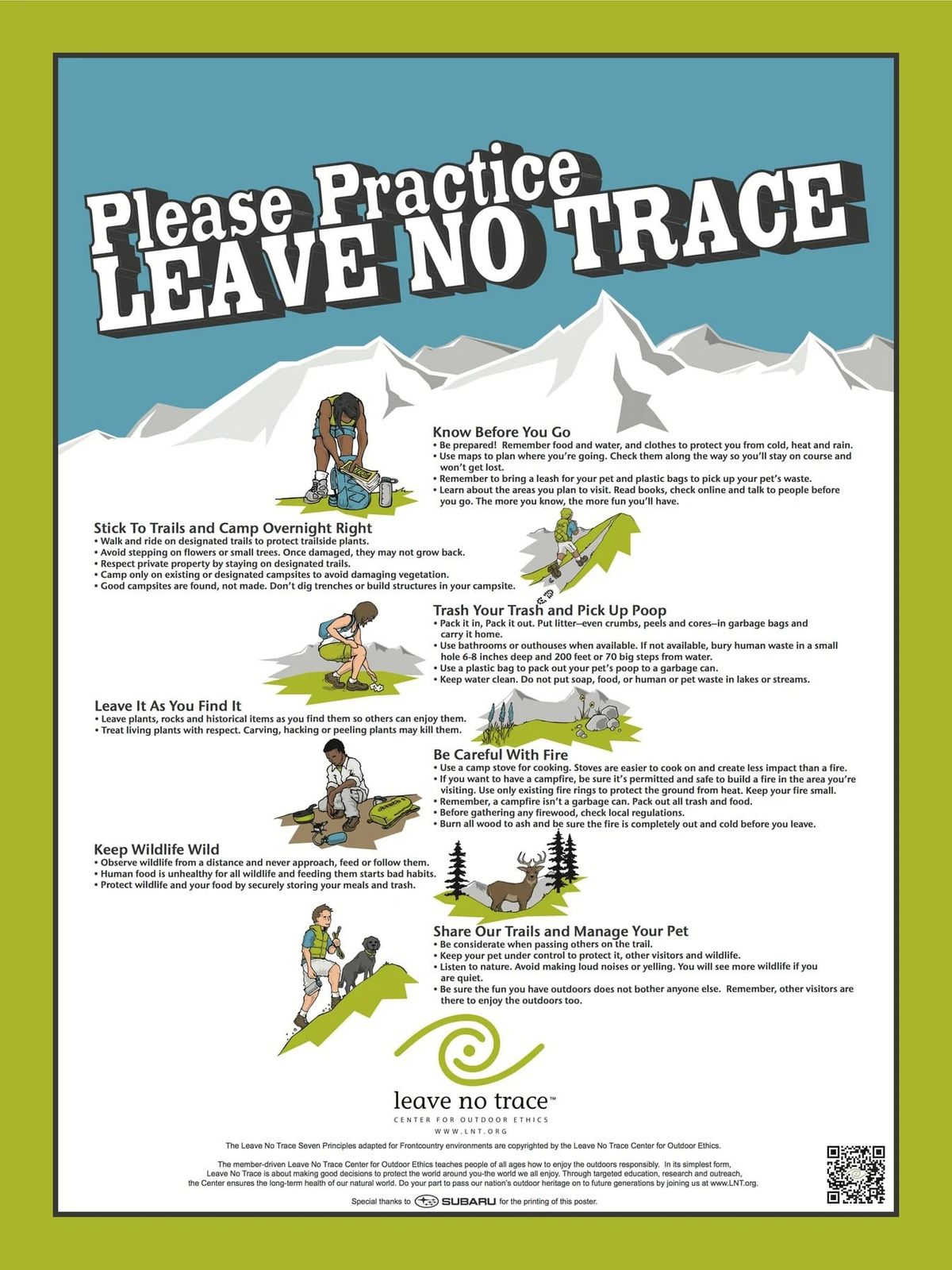
This article from Leave No Trace outlines their seven principles for outdoor enthusiasts of all experience levels and recreation types to keep in mind each and every time they engage in outdoor activities. The titles of each principle are linked to their respective webpages on the organization's site, with more in-depth information on how to abide by the principles.
"The 7 Principles of Leave No Trace provide an easily understood framework of minimum impact practices for anyone visiting the outdoors. The Principles can be applied anywhere — from remote wilderness areas, to local parks and even in your backyard" (Leave No Trace, 2025).
Plan Ahead and Prepare: "When outdoor visitors plan ahead and prepare, it helps to accomplish trip goals safely and enjoyably while simultaneously minimizing damage to the land. Poor planning often results in a less enjoyable experience and damage to natural and cultural resources" (Leave No Trace, 2025).
Travel and Camp on Durable Surfaces: "The goal of travel outdoors is to move through natural areas while avoiding damage to the land, foliage, or waterways. Understanding how travel causes impacts is necessary to accomplish this goal. Travel damage occurs when surface vegetation or communities of organisms are trampled beyond recovery. The resulting barren area leads to soil erosion and the development of undesirable trails or trampled areas. By understanding the best practices to travel and camp on durable surfaces responsibly, we can minimize human impact on outdoor spaces" (Leave No Trace, 2025).
Dispose of Waste Properly: "The waste humans create while enjoying outdoor spaces can have severe impacts if not disposed of properly. It is crucial to anticipate the types of waste you will need to dispose of and know the proper techniques for disposing of each type of waste in the area you are visiting. Leave No Trace encourages outdoor enthusiasts to consider the impacts they leave behind, which will undoubtedly affect other people, water, and wildlife" (Leave No Trace, 2025).
Leave What You Find: "The items we find in nature have a role to play, either in the ecosystem or the story of the landscape. Leaving what we find in place helps to preserve both. Allow others a sense of discovery by leaving rocks, plants, archaeological artifacts, and other objects of interest as you find them" (Leave No Trace, 2025).
Minimize Campfire Impacts: "Once necessary for cooking and warmth, campfires are steeped in history and tradition. Campfire building is also an essential skill for every camper. Yet, the natural appearance of many areas has been degraded by the overuse of fires and increasing demand for firewood. Moreover, wildfires continue to threaten outdoor spaces and are primarily caused by humans" (Leave No Trace, 2025).
Respect Wildlife: "Whenever you are in an outdoor space, you are in the natural habitat of many wild animals and should work to minimize your impact on them. Human impacts on wildlife can result in negative human-wildlife interactions, aggressive animals, a decline in the ecosystem’s health, and relocated or euthanized animals. All these impacts can be avoided if visitors respect wildlife on all outdoor trips" (Leave No Trace, 2025).
Be Considerate of Others: "One of the most important components of outdoor ethics is to maintain courtesy toward others. It helps everyone enjoy their outdoor experience. Excessive noise, uncontrolled pets, and damaged surroundings detract from the natural appeal of the outdoors. Being considerate of others ensures everyone can enjoy nature no matter how they interact with it" (Leave No Trace, 2025).
Review
Leave No Trace's article on the 7 Principles is packed full of useful information and guidelines for anyone about to embark on an outdoor adventure. They cover almost every aspect of the implications outdoor recreational activities have on the natural environment along with a range of activity types, from hardcore backpacking to casual day-tripping. What interests me most are the "ethics cards" made and sold by the organization, and promoted in this article, for use as a quick reference tool. These are small, lightweight, and include holes to clip them onto a bag or keychain, allowing recreationists to keep these cards with them wherever they go. Leave No Trace has made reference cards for each activity type, including hunting/fishing, mountain biking, canyoneering, and birding, that highlight ethical practices which abide by the seven principles. They have also made a "kids" version that makes the information more accessible for younger outdoor enthusiasts. I appreciate how they incorporate an element of fun into the cards, with illustrations that personify outdoor equipment, and the friendly Bigfoot card pictured below. I am interested in how design can improve this system, building on this current iteration to make it even more appealing and easy to use. I see this as a great way to spread awareness and information to park-visitors, not only in Ohio's state parks, but across the country.
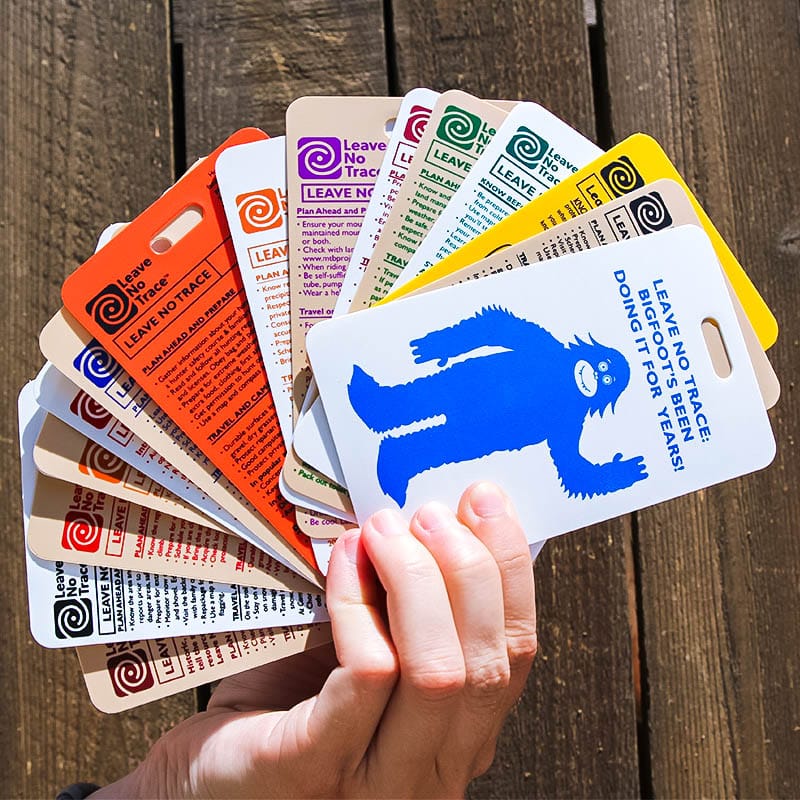
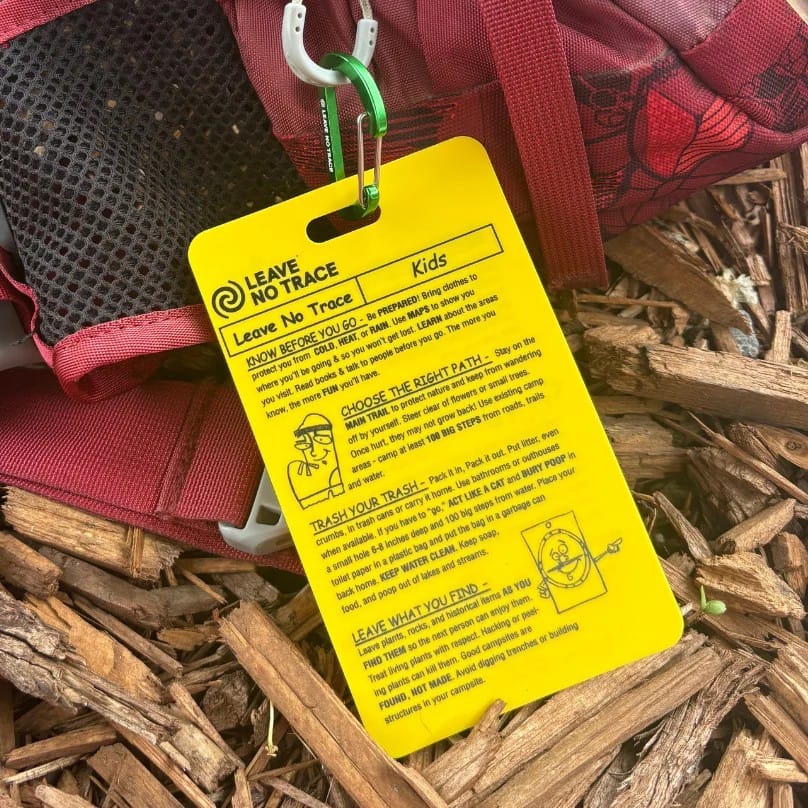
Ethics Cards from the Leave No Trace shop
References
Leave No Trace. (2025). The 7 Principles. https://lnt.org/why/7-principles/