
Live Conservation: Wildlife Tracking
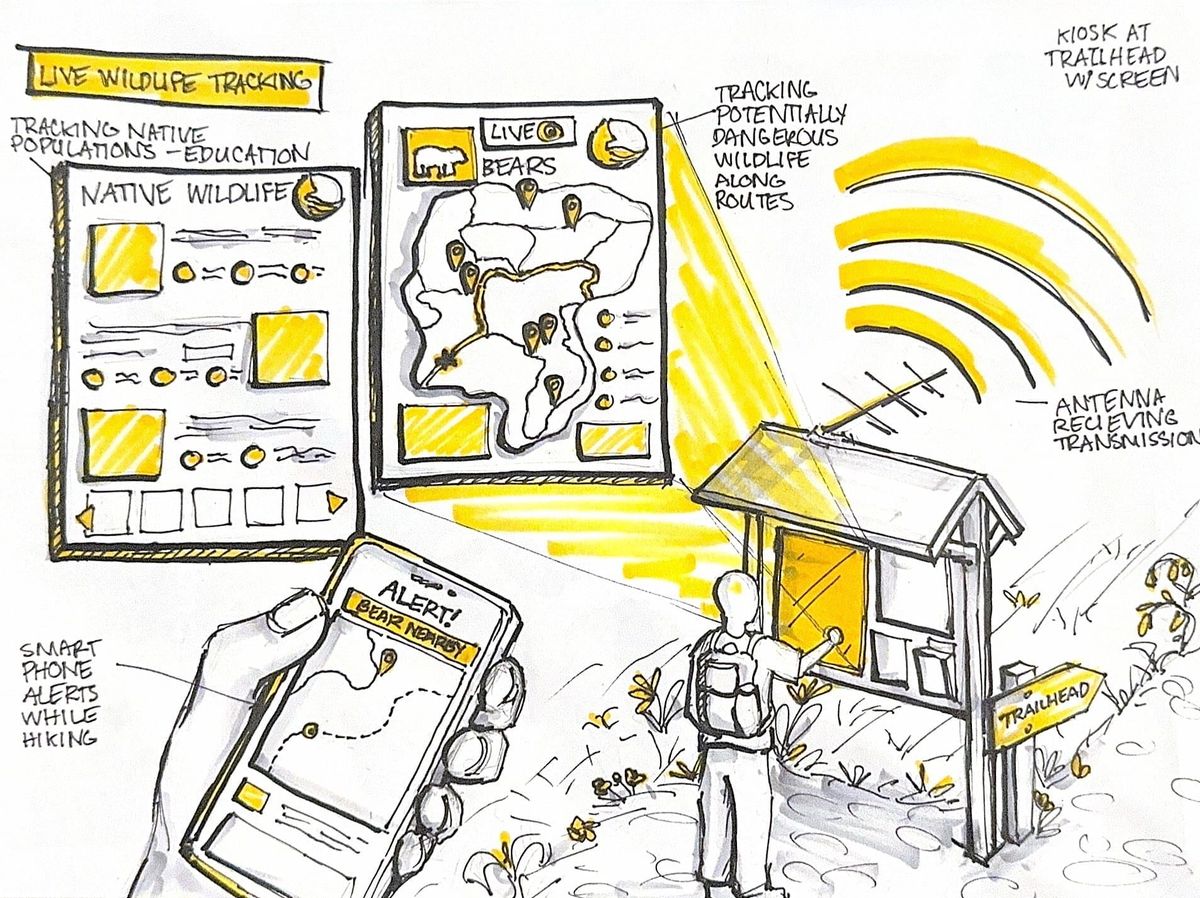
The advancement of tracking technology and its application to wildlife conservation efforts, as discussed in "How Radio Telemetry Helps Protect Wildlife", inspires this sketch exploring the possible translation of this technique into local state parks.
By tracking the movements of potentially dangerous animals like bears throughout state and national parks, this system could be used to inform recreationists of their proximity to these animals while on the trail, similar to the Early Warning Systems (EWS) model. Hikers can also check for potential threats at the trailhead and plan their route accordingly.
In places that don't necessarily have to worry about threats like these, the same kiosk example can be used to provide information on native wildlife and educate hikers on conservation practices that help protect them.
Several negative implications come to mind with this idea. Providing exact locations of wild animals could cause people to intentionally seek them out to take photos, cause disturbances, and potentially fuel illegal hunting activities. There's also the fact that wildlife would have to be tagged somehow, a process that would be taxing on both the animals and the park itself. Deer, for instance, are not an endangered species like Elephants which are tagged and monitored to ensure the protection of the species. This makes it difficult to justify tagging wildlife that are thriving in their natural habitats.