
Meditation
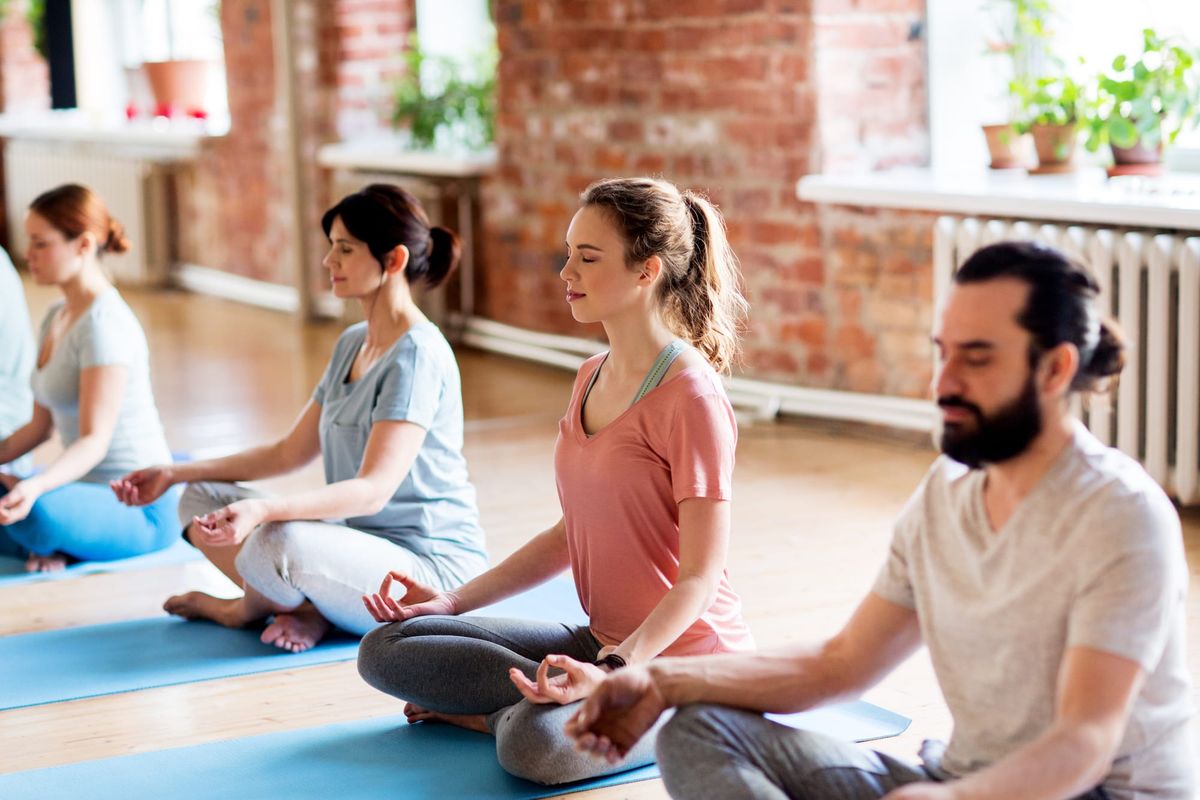
I looked into meditation, exploring this practice through the historical and religious lens as well as a method for improving health. My capstone has a strong focus on meditation. I wanted to learn more about the historical context and understand different types of meditative practices.
"The practice of meditation is thousands of years old, and different forms come from around the world.
Modern diagnostic and imaging techniques, like electroencephalography (EEG) and functional magnetic resonance imaging (fMRI) scans, show that meditation can positively affect your brain and mental health.
Meditation has foundations in ancient philosophies and several world religions, but you don’t have to be religious to meditate.
Buddhist: Several different forms of meditation have their origins in Buddhism (which is considered both a philosophy and a religion, especially depending on the nation of origin). Theravadan meditation is more common in Southeast Asia, especially in India and Thailand. Zen Buddhist meditation originated in China, and different forms of it eventually evolved elsewhere, such as Japanese Zen Buddhist meditation. Tibetan Buddhist tantric meditation comes from the former nation of Tibet, now an autonomous region of China.
Christian: Contemplation, which is when you focus intently on a question, idea, religious concept or deity, is a common practice in Christianity. Praying is often classified as meditation, especially when it takes this form.
Guided: This nonreligious form of meditation can happen with several people or one-on-one. It’s a common technique in counseling, therapy and group support settings.
Osho: This form of meditation, also known as “dynamic meditation”, comes from India and has its roots in Hinduism. Breathing exercises are deliberate and forceful.
Sufi: Sufism is a branch of Islam, and meditation is a common practice among people who follow it.
Taoist: Like Buddhism, Taoism is also considered a religion and philosophy. It originated in China and is best known through the writings of its founder, Laozi (also spelled “Lao Tzu” or “Lao-Tze”) (Cleveland, 2022)."
The article then provides more information of the different forms of meditative practices, shown in the list below.
"Transcendental: This form of meditation comes from India. It involves using mantras, which are phrases or words people focus on and repeat aloud or in their minds.
Yoga: This is a physical form of meditation and exercise from India. It can take on religious and nonreligious forms.
Body-centered meditation. This is sometimes called self-scanning. Doing this involves focusing on the physical sensations you can feel throughout your body.
Contemplation. This usually involves concentrating on a question or some kind of contradiction without letting your mind wander.
Emotion-centered meditation. This kind of meditation has you focus on a specific emotion. For example, focusing on how to be kind to others or on what makes you happy in your life.
Mantra meditation. This kind of meditation involves repeating (either aloud or in your head) and focusing on a specific phrase or sound.
Meditation with movement. This type of meditation can involve focusing on breathing, holding your breath or performing specific body movements.
Mindfulness meditation. This form of meditation is about staying aware of what’s happening at the moment rather than letting your mind wander and worrying about the past or future. It can also involve a similar approach as body-centered meditation, using what you feel throughout your body as a foundation for your awareness of the world around you.
Visual-based meditation. This kind of meditation involves focusing on something you can see (either with your eyes or by concentrating on a mental image) (Cleveland, 2022)."
The list below describes the found responses to practicing meditation.
"Decreased symptoms of anxiety, depression or post-traumatic stress disorder (PTSD).
Improved ability to think, concentrate and solve problems.
Better ability to adapt to and overcome emotional problems
(improve) sleep, high blood pressure and heart function, and much more.
Multiple research studies have found that people who meditate regularly have certain differences in their brain structure. Those changes usually involve brain tissue that’s denser or certain areas of the brain that are larger than expected, which is a sign that the neurons there have more connections to each other and the connections are stronger.
That means the brains of people who meditate regularly are healthier and less likely to show age-related loss of function. They also have a stronger ability to deal with and process negative emotions like fear, anger and grief (Cleveland, 2022)."
This article shows the different types of meditative practices and their particular benefits. It also explores the historical context of meditation, addressing the various religions that utilized meditation as a practice. These ideas help me to better understand how meditation has played a role amongst various cultures and the benefits of using this practice for better health. This is relevant to my capstone project because I want to understand what specific form of meditation makes the most sense in the context of a car to promote calm. I also wanted to gain a broader understanding of how meditation is perceived religiously and medically to help portray that to users who may not be familiar with the practice.
References:
Cleveland Clinic. (2022, May 22). Meditation: What it is, benefits & types. Cleveland Clinic. https://my.clevelandclinic.org/health/articles/17906-meditation
AI was used to check grammar for this reflection.