Meditation is Art. Art is Meditation
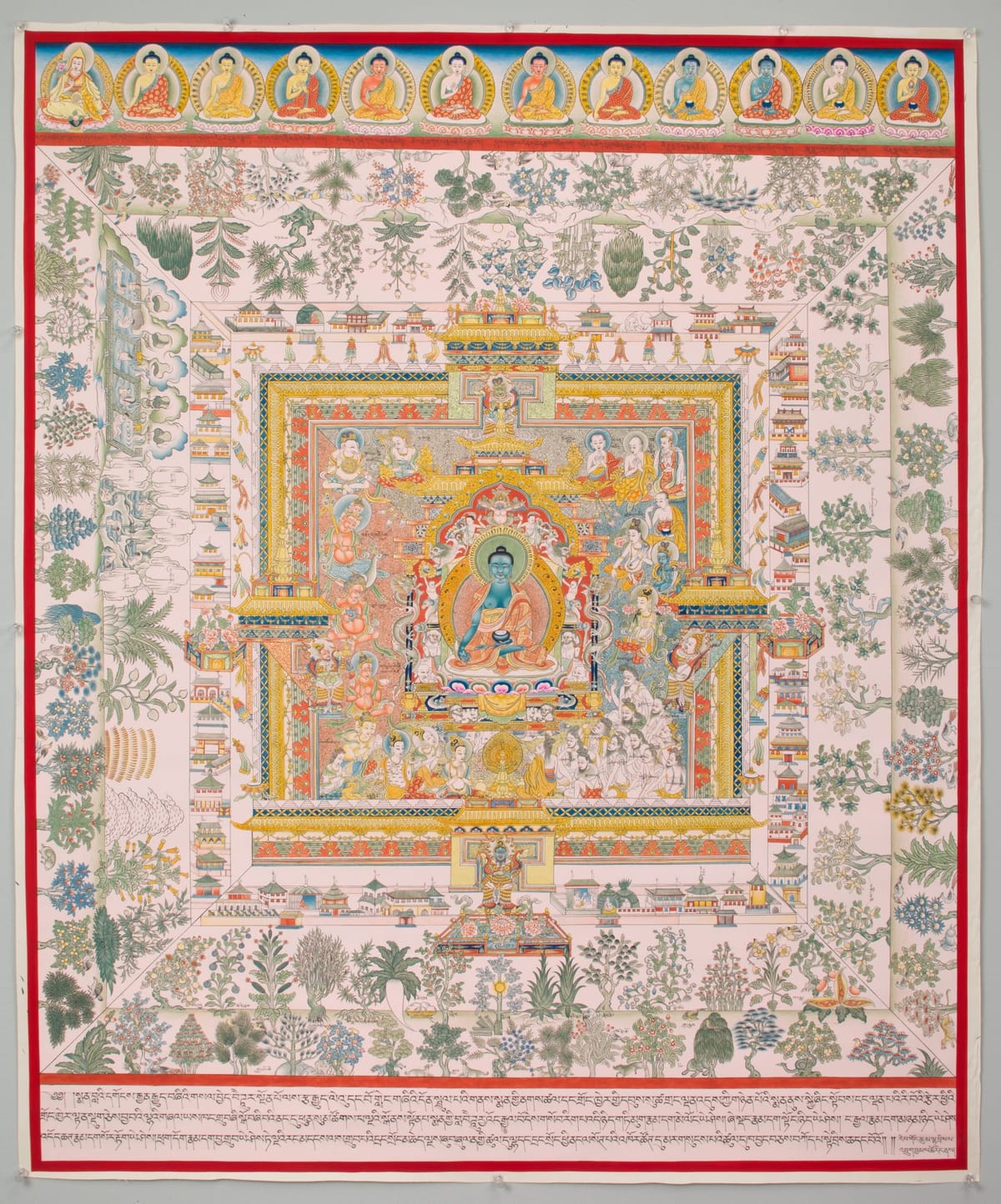
When staring out of the window of a car, I often find myself becoming lost in the world outside my window. Before I know it, time has past and I'm at my destination. A similar effect can be seen when observing art in a more controlled environment as seen in the Ruben Museum of Himalayan Art.
Mindfulness—the practice of focusing on the present moment while calmly observing your thoughts and feelings—can reduce stress, increase self-awareness, and deepen empathy with others. You can practice mindfulness while viewing any art at a museum, because art and mindfulness have a lot in common.
Much like mindfulness, art invites you to step into the present moment, unplug from your everyday concerns, and focus deeply on the object in front of you. Engaging mindfully with art can help you experience and appreciate it more fully. It might also help you gain some of the broader benefits of mindfulness.
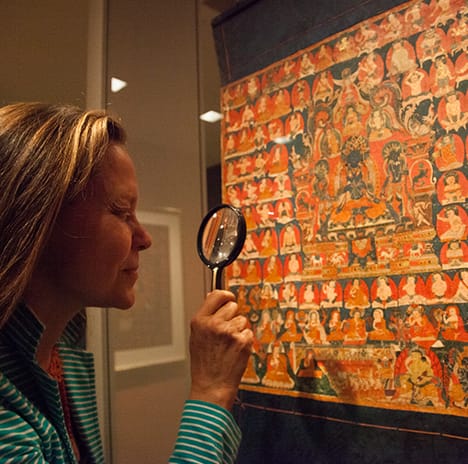
What is your first impression? Does the artwork make you feel anything? Some people experience a feeling of serenity when they gaze upon a buddha. Art can stir up plenty of other feelings, too. Maybe the mysterious expression on the face of a Renaissance portrait at the Met makes you feel curious or amused. The rhythmic splotches on a giant Jackson Pollock canvas at MoMA could arouse emotions you can’t quite name. Or you might feel no discernable feelings at all; that also is an emotional reaction. Whatever your initial reaction might be, notice it without judging it.
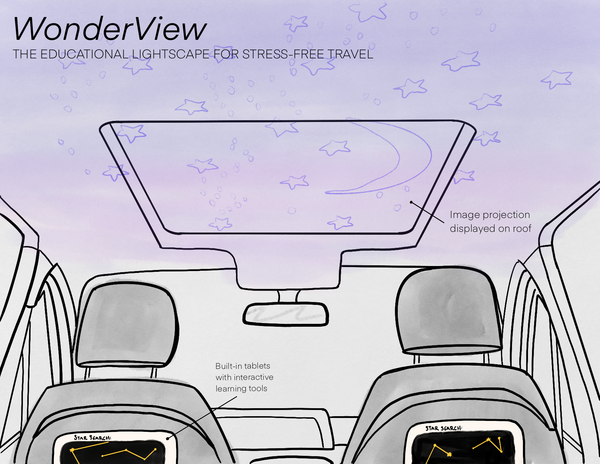
For my own design focus, encouraging children to practice mindfulness through observation can be a great way to create entertainment. The windows of a car show landscapes as they rush by; such views are prime for observation and reflection. Additionally, with the addition of outside cameras to cars, children may be able to see a view or object from multiple angles, building a more advanced understanding.
This concept of mindfulness through observation is similar to many already existing in-vehicle games. Some examples include asking kids to count how many yellow colored cars they pass on the road or asking them to keep an eye out for a certain object. There are also self directed games such as imagining a man running on telephone poles or jumping over clouds. Harnessing observation games and repurposing them for mindfulness could be valid design solution for creating calmer car trips.
References
Rubin Museum. 2018. "Art as Meditation: A Lesson in Mindfulness". https://rubinmuseum.org/art-as-meditation-a-lesson-in-mindfulness/
All original works in this article were done without the assistance of AI tools.