More Than Prototypes: A Look at the 3D Printing Industry

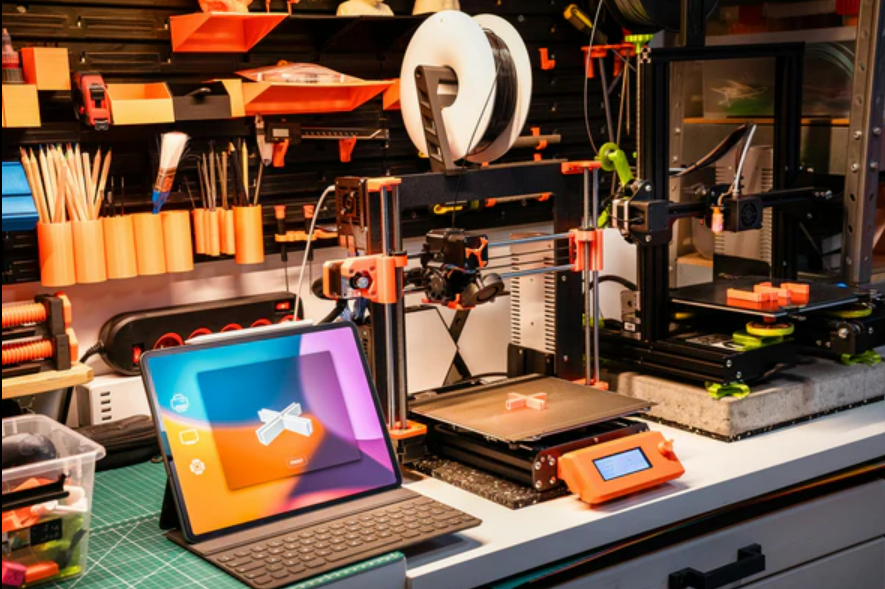
3D printers use various materials, including plastics, polymers, steel, titanium, gold and ceramic. This versatility means 3D-printed models can create numerous objects, including artistic sculptures and airplane components. Some 3D printers can print proteins and chemicals, enabling the devices to create food and medicine. (Conlin)
As this project focuses on plastic recycling, the context and uses of the 3D printing industry could lend to valuable insights for how to move forward. A large part of the industry revolves around the speed and accuracy with which 3D printers run, which allows for rapid prototyping and sharing of ideas. This is an additive creation process, that can use many different materials.
According to Grand View Research, the global 3D printing industry was valued at $20.37 billion in 2023 and is projected to reach $88.28 billion by 2030. Still, 3D printing is predominantly used for only a handful of project types today.
One of the oldest uses for 3D printers is the quick and efficient creation of prototypes. Since the printers were invented in 1983, companies have employed 3D printing to create workable models of their desired end products to test business ideas or pitch ideas to potential investors.
When engineers design a product, they must consider the limitations of the production process. 3D printers can create parts previously considered unachievable with traditional manufacturing techniques. This capability opens an entirely new world in the design phase, which can lead to better, more efficient products and components. Many 3D-printed creations add value to essential products, while others are downright unusual. (Conlin)
It is also interesting that 3D printed creations could be used by consumers in tandem with various products. 3D printed parts could be used for customization purposes for instance, as the process thrives on making individualized parts. Additionally, old pieces could be replaced by 3D printed parts, allowing product longevity and breathing life back into retired items.
“I think we’re going to see, as we see with almost every technology, two things happen: Things get cheaper and they get better,” Kaufman predicted. “As the quality of the printers gets better, the available materials to print get better and, as costs come down, you get to that moment — the Napster moment. [That’s] when the means of reproduction are now so diffuse, the ability to reproduce at a low cost had been so spread out, that you can no longer really enforce your rights entirely effectively with existing IP [intellectual property] laws.” (Conlin)
Hopefully we can see the price of printers decreasing as predicted, especially large-scale specialty printers. Making recycled filaments flawlessly is basically impossible, but putting pellets made from recycled materials into a pellet-based 3D printer is much more approachable. Have this technology readily accessible would create more opportunity for recycled plastic.
With 3D printing becoming an increasingly feasible integration into the supply chain for manufacturers, manufacturers must find employees with the appropriate skill sets to work the printers efficiently. (Conlin)
Conlin, Bennett. “3D Printing Applications for Business.” Business News Daily, 5 June 2024, www.businessnewsdaily.com/9297-3d-printing-for-business.html#what-is-3d-printing.