Naturalistic Observation of Children in Cars: An International Partnership
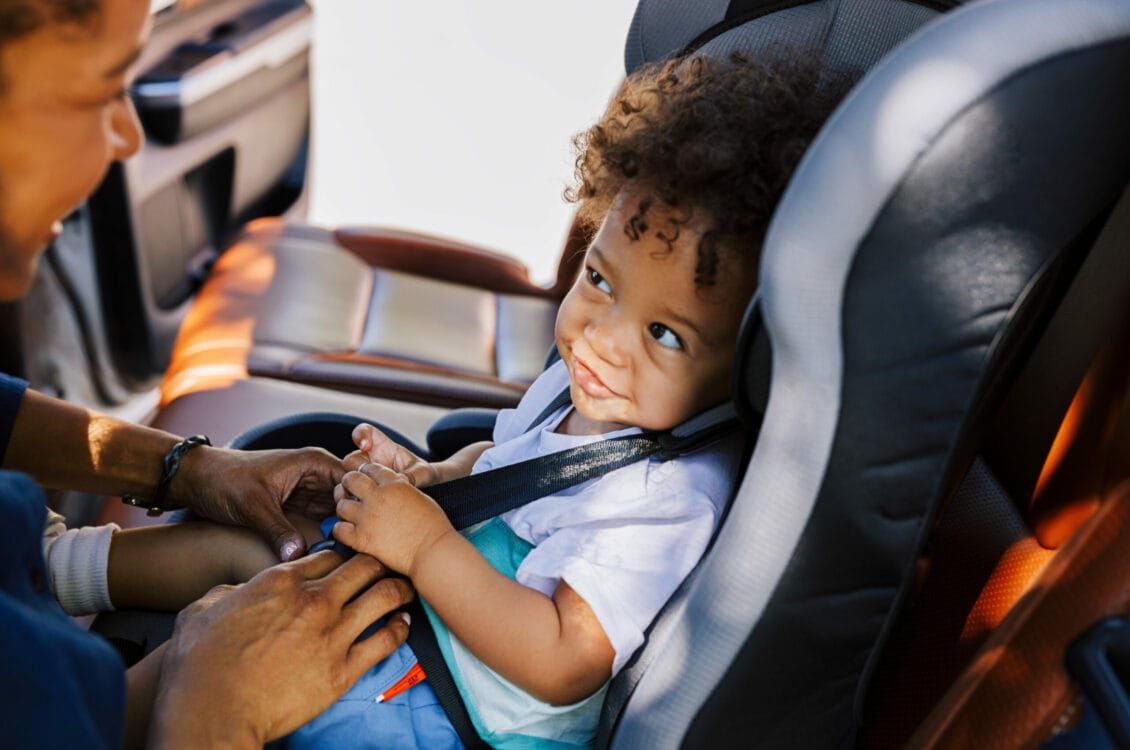
I was curious to look at what studies have been conducted on children traveling in the car. I found this study that looked at driver distractions and child safety with proper positions for travel. This is important to my capstone because I want to prioritize safety and understand what are the implications that occur in the car with child passengers.
"It is well known that in the rear seat of cars, small children squirm, slide, slump, sleep, play and interact with their fellow passengers. Our previous findings from a pilot study show that children rarely remain in an optimal position for the efficient functioning of their restraint systems throughout the duration of their journey. Such behaviours may not only affect restraint effectiveness but may also have a negative influence on driver performance and distraction.
Anecdotal reports from parents indicate that children do not sit perfectly still and upright while travelling in vehicles. Children can squirm, slide down, fall asleep, play and attempt to remove their restraints while travelling in their CRS, and therefore will be more likely to be seated away from the preferred design location, or to be considered to be OOP.
In addition to leading to elevated crash injury risks, children’s behaviours and OOP status observed by Christophersen, Meissner et al and van Rooij et al also have the potential to lead to driver distraction. Driver distraction is the diversion of attention away from activities critical for safe driving towards a competing activity and is a leading cause of traffic fatalities and serious injuries worldwide, with an estimated one-quarter of vehicle crashes resulting from the driver being inattentive or distracted. The most common distractions in terms of overall event durations were eating and drinking, distractions inside the vehicle (reaching or looking for an object, manipulating vehicle controls, etc.), and distractions outside the vehicle (often unidentified). Children were found to be about four times and infants almost eight times more likely than adults to be a source of distraction to the driver, based on the number of distracting events per hour of driving. Therefore, efforts to quantify and rectify suboptimal positions of child occupants may not only reduce the risk of serious injury to the child in a crash but may also play a crucial role in avoiding a crash, by reducing the distractions presented to the driver.
Additionally, we compared the sitting postures and comfort experience of children using an integrated booster cushion and a high-back booster. Notably, children’s activities and perceived discomfort influenced the selection of sitting posture and seatbelt 4 positions. Two key findings emerged from this preliminary research: First, the analysis of child posture showed that children were OOP around 70 percent of the time during trips. This suggests suboptimal restraint positioning for a significant proportion of children’s travel leading to serious implications for restraint effectiveness in the event of a crash. Secondly, children accounted for almost 20 percent of all potentially distracting activities/events and drivers interacted with children more than 12 times as often as with their mobile phones. Together, these findings highlight the potential to identify and develop solutions to counteract this behaviour including vehicle-based, child-restraint designs and behavioural approaches to improve child occupant protection and minimise driver distraction in the event of a crash (Charlton, 2013)."
This article discusses the studies that have been conducted on families with child passengers, suggesting that children can be a significant cause of distracted driving. The article also addressed the implications of children being out of position (OPP), which relates to distracted drivers and safety concerns, potentially leading to dangerous accidents and serious injuries. This research is relevant to my capstone project because this study gives insight to the more serious parts of traveling in the car with children. Children's safety and limiting driver distractions are very important to me when designing automotive travel products. How might I design something that promotes safety or adapts to current safety measures in the car? This also made me think about the importance of designing ethically. Designing something that causes more distractions for the driver would create issues with safety and could lead to more accidents. Although I want to create something engaging for the child to explore, I need to balance safety and the driver's experience as well.
References:
Charlton, J., Koppel, S., Cross, S., Kuo, J., Rudin-Brown, C., Arbogast, K., Loeb, H., Eby, D., Bohman, K., Svensson, M., Jakobsson, L., & Stockman, I. (2013, December). Naturalistic observation of children in cars: An international partnership https://www.researchgate.net/publication/301893570_Naturalistic_Observation_of_Children_in_Cars_An_International_Partnership
This reflection draws on content from the original source, including academic article Charlton, J., Koppel, S., Cross, S., Kuo, J., Rudin-Brown, C., Arbogast, K., Loeb, H., Eby, D., Bohman, K., Svensson, M., Jakobsson, L., & Stockman, I. (2013, December). Naturalistic observation of children in cars: An international partnership (~40%), the author’s own selection of materials, prompts, and interpretive framing (~40%), and summarization, AI-assisted grammar, and citation formatting (~20%). All interpretations and conclusions remain the responsibility of the author.