Ocean plastic: How tech is being used to clean up waste problem
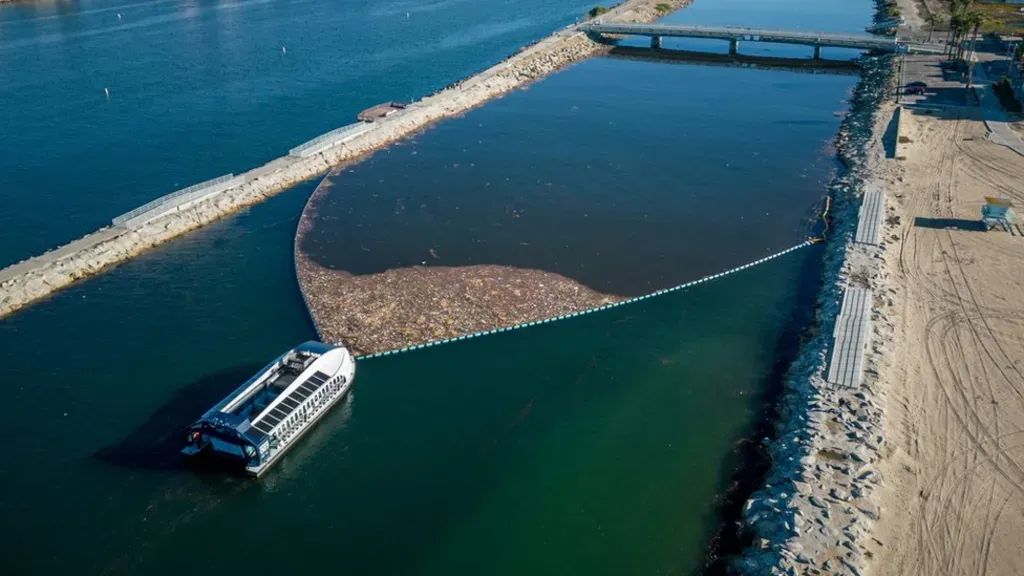
With my special interest being the future of recycling, the issue of the plastics in waterways appeared on my radar. In Columbus we have many clubs and organizations focusing on cleaning the watershed like with FLOW (Friends of the Lower Olentangy river Watershed) or the river specifically with Scioto Sweep. The Ocean Cleanup is a company that is trying to address the pollution in the oceans and riverways by collecting them in big nets to then sort and recycle or trash once brought back to land.
The Ocean Cleanup uses a long, u-shaped barrier, similar to a net, that is pulled through patches of rubbish by boats. It moves slowly to try to avoid harming marine life (McMahon, 2023).
Cameras powered by artificial intelligence (AI) are used to continuously scan the ocean's surface for plastic and calibrate the team's computer models, helping them understand which parts of the Pacific area to target (McMahon, 2023).
Plastic collected by the 800-metre-long (2,600ft) system, the second of its kind developed by the company, is periodically taken to land and emptied for recycling. Boyan said the system has so far cleaned up almost 200,000 kilograms (440,000 lbs) of ocean plastic (McMahon, 2023).
While this represents just 0.2% of the 100 million kilograms of plastic contained in the world's largest patch of plastic rubbish, he said it was still worth it: "Everything big starts small, right?" (McMahon, 2023)
Research carried out by the company in 2021 suggests about 1,000 of the world's rivers are the source of 80% of the river-borne plastic contributing to global ocean plastic pollution (McMahon, 2023).
It makes sense that rivers feed the issue, and I think there is a design opportunity there to help reduce trash get into water ways and transported.
"The rivers are really the arteries that carry trash from land to sea," Boyan said. "So when it rains, plastic washes from streets into creeks, into rivers, and then ultimately to the ocean." (McMahon, 2023).
The Ocean Cleanup uses its "Interceptor" solutions to try to catch rubbish in rivers before it reaches the sea (McMahon, 2023).
The tech behind these varies according to factors such as width, depth, flow speed and debris type of the river in question - again assessed using AI-powered cameras (McMahon, 2023).
"We are intercepting plastic in 11 rivers around the world," Boyan said, "but ultimately aim to scale this to all 1,000 heaviest polluting rivers in the world." (McMahon, 2023).
But noting the risks of microplastics to the heart of the marine ecosystem, Prof Lampitt said he thought that rather than cleaning up plastic in our seas, "it is really is an issue of stopping the tap and stopping this material getting into the ocean" (McMahon, 2023).
"I truly believe that with these technologies to clean up the legacy pollution in the ocean and to intercept plastic in rivers before it reaches the oceans, we will actually able to to put ourselves out of business in the not-so-distant future," he added (McMahon, 2023).
Implementing technology like AI to help catch trash before it travels too far down a water way is an innovative technique that I could see catching on. I am curious the accuracy of it's sensors and how it differentiates between wild life and garbage. I agree that solutions should start in the rivers and I wonder how many cities are currently participating in preventative measures, and if they are if the collected trash is being properly recycled or just thrown away.
Reference.
McMahon, D. F. & L. (2023, February 27). Ocean plastic: How tech is being used to clean up waste problem. BBC News. https://www.bbc.com/news/technology-64744926