Riding on Nerves: The Role of Sensory Design in Rethinking the Backseat Experience
Introduction
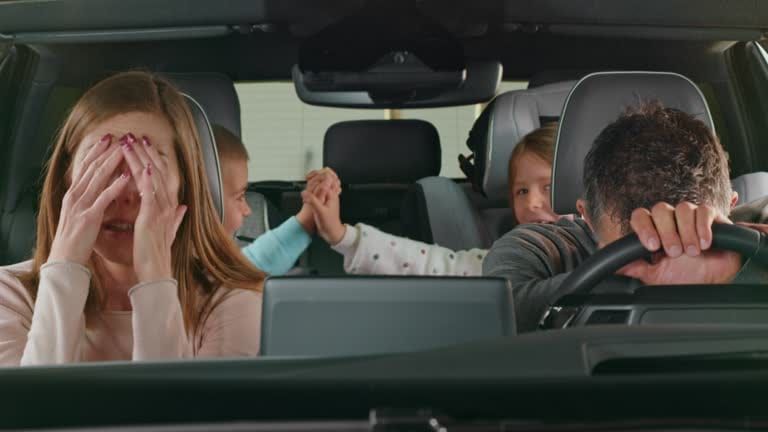
Every parent knows the scene: a long day, tired kids in the backseat, a commute home that feels endless. What should be a time of calm connection often becomes a storm of bickering, overstimulation, and stress. Sibling arguments erupt, seatbelts dig uncomfortably, one child demands pop music while the other begs for silence. Meanwhile, the parent at the wheel feels their patience fray; torn between the responsibility to drive safely and the impossibility of soothing restless children out of reach.
This is not a trivial problem. The car is more than transportation. For many families, it is a daily microcosm of domestic life; an environment that can either amplify tension or foster connection.
My research, in relation to my capstone project sponsored by Honda, backs the argument that the design of the backseat must evolve to better support both children and parents. Drawing from my survey data, interviews, literature reviews, and speculative design conjectures, I explore how ambiance and sensory design can transform the backseat from a source of tension into a site of calm connection.
The Problematic: Competing Needs in the Backseat
Through primary research with parents of children (n= 4 families), a consistent problem emerged: children require stimulation and engagement during car rides, while parents simultaneously require calm and focus.
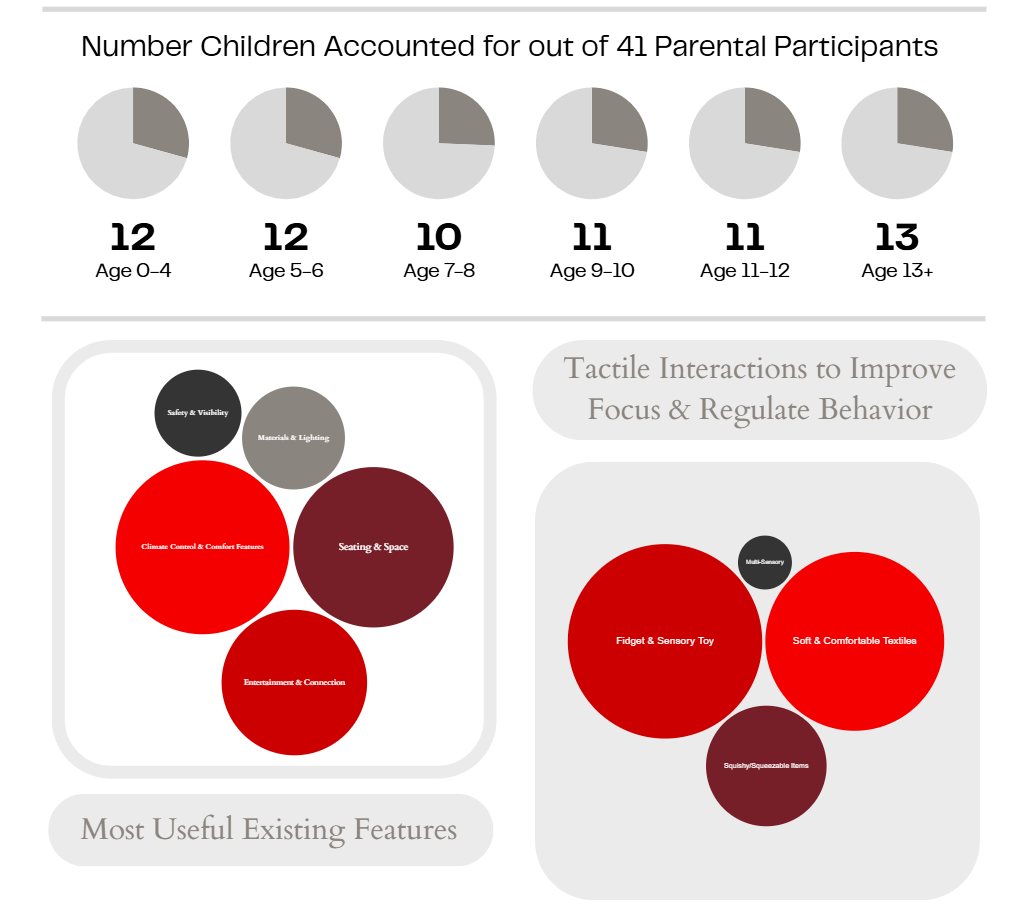
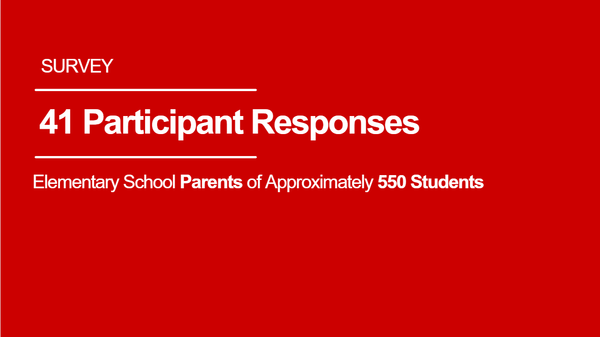
My survey results, collected through 41 participant responses, support this tension. Among parents surveyed at an elementary school in the Mamaroneck School District, 20 participants identified climate control as their most valued feature, linking temperature regulation to children’s mood and driver concentration. 17 participants highlighted seating and space, noting that personal zones reduced sibling conflict. 14 participants emphasized entertainment and connectivity, which they saw not only as a distraction for children but as a tool to shape the car’s emotional atmosphere. Parents also connected soft textures, stuffed animals, and sensory toys to their children’s ability to self-regulate during travel (Survey).
Interviews revealed the emotional consequences of these unmet needs. Two parents interviewed consistently described fighting between children as a central stressor. All three parents emphasized sensory discomfort, such as poor seatbelt fit or lack of personal lighting, as key irritants. All participants, from both interviews (n=3) and experience mapping activity (n=4), noted that while car rides can foster intimate conversations, they can equally be met with tension and overstimulation (Primary Research).
Therefore, the issue is not only practical but emotional: cars are designed for transportation, but not necessarily with family wellbeing in mind.
Why Ambiance and Sensory Design Matter
While car interiors often emphasize safety and mechanical reliability, research across multiple fields demonstrates that ambiance, including the use of light, sound, color, and materiality, is fundamental to human wellbeing.
In workplace studies, room pleasantness (measured through light, temperature, and air quality) was found to increase productivity by up to 25% (Constantinides, 2021). Neuroscientific and psychological research highlights that environmental cues such as lighting, scent, and color can reduce stress, improve emotional regulation, and even accelerate physical recovery (Cherry, 2024; The Park Place Venue, 2023). In healthcare design, sensory-driven environments have been shown to decrease anxiety, lower blood pressure, and support healing processes (Cox Architecture, n.d.). While not all of these outcomes directly apply to the backseat, they reinforce my focus on how the ambiance of a space influences human behavior, showing that these same sensory principles can create a more supportive environment for passengers during transit.
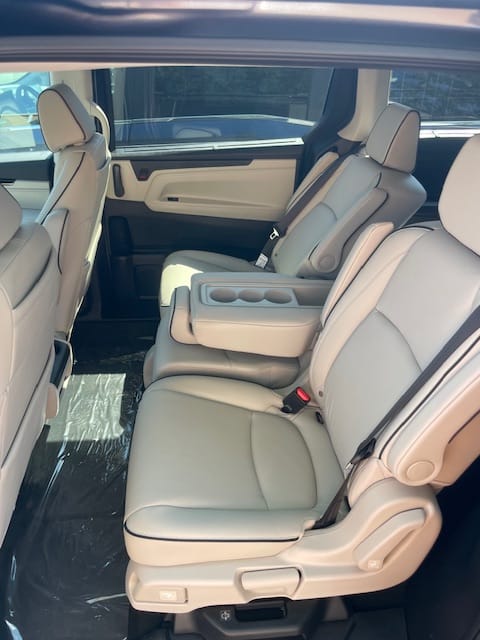
These insights reinforce a clear point: ambiance is not only ornamental but structural. Offices and hospitals intentionally use lighting, sound, temperature, and texture to enhance focus, comfort, and emotional wellbeing. Similarly, cars (spaces where families spend hours each week) should be treated as environments that shape mood, behavior, and connection. Children’s engagement, parents’ stress levels, and overall family harmony are directly influenced by sensory cues such as light, sound, materiality, and climate. Neglecting these factors risks tension rather than comfort.
By contrast, intentionally designing for ambiance can transform the backseat into a space that supports relaxation, emotional regulation, and shared positive experiences. Strategic use of lighting, interiors can transition between calm and stimulation; soft illumination for relaxation, brighter tones for alertness. Auditory design can buffer noise while offering auditory zones tailored to different needs. Material and color choices can support tactile comfort and emotional warmth, while temperature and scent control can subtly guide mood and focus. Together, these sensory elements form a responsive ecosystem that evolves with family dynamics, turning travel into an opportunity for restoration and connection rather than stress.
The following initial concepts build on these insights, proposing design interventions that directly respond to the sensory and emotional gaps in the backseat experience.
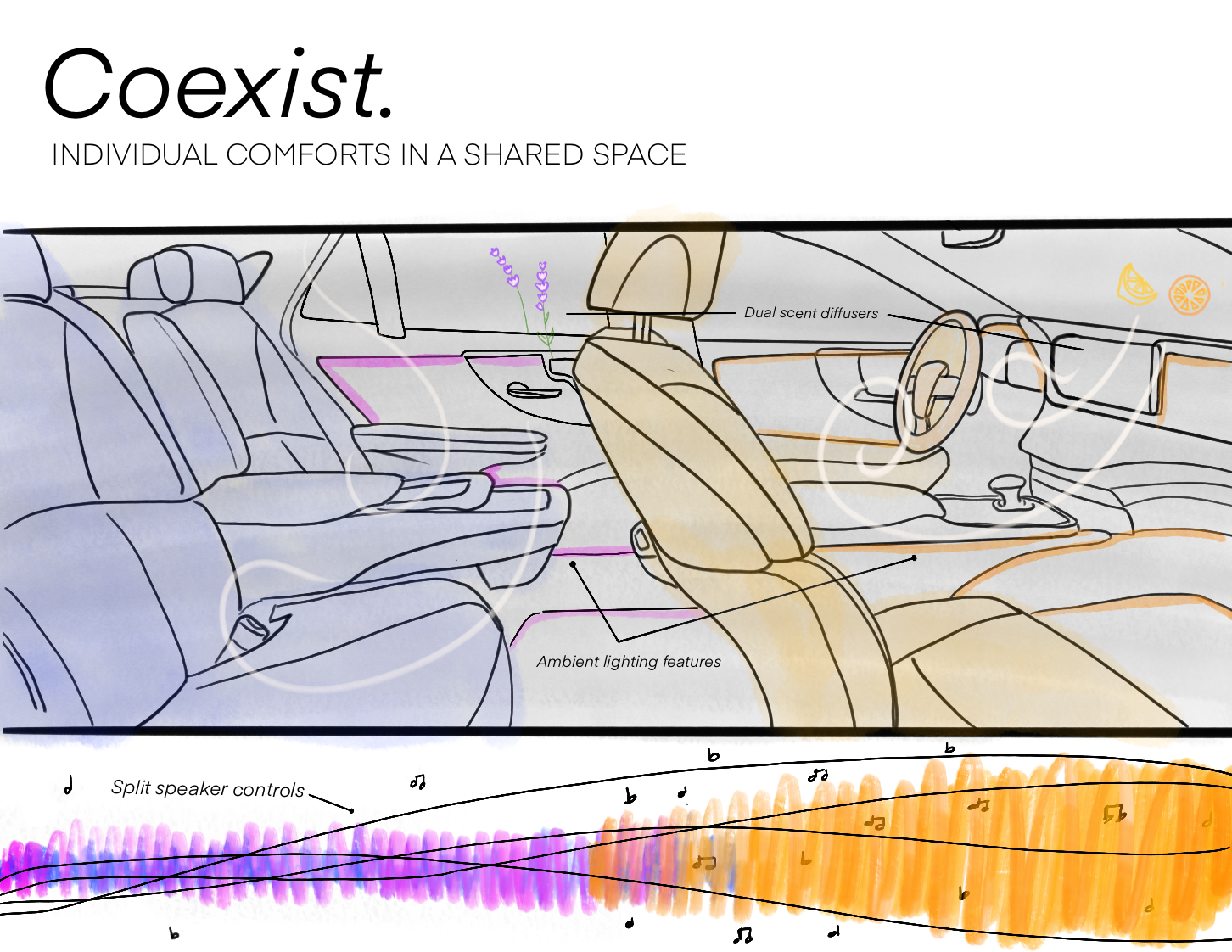
My business focused concept, Coexist, addresses one of the clearest tensions revealed through surveys and interviews: parent and child disagrements over environmental controls such as music, temperature, or lighting. In fact, parents have contributed sibling disputes to limited personalization of these features (Primary Research). Coexist proposes individualized comfort zones for each row, where lighting, audio, and climate can be customized without affecting other passengers. This concept reflects findings from workplace research showing that productivity and satisfaction increase when individuals can control their immediate environment (Moss, 2023). By translating this principle into the car interior, Coexist mitigates conflict and helps balance children’s need for stimulation with parents’ need for calm. While challenges remain, such as complexity and cost, its focus on personalization directly responds to the problematic of conflicting family needs within a confined space.
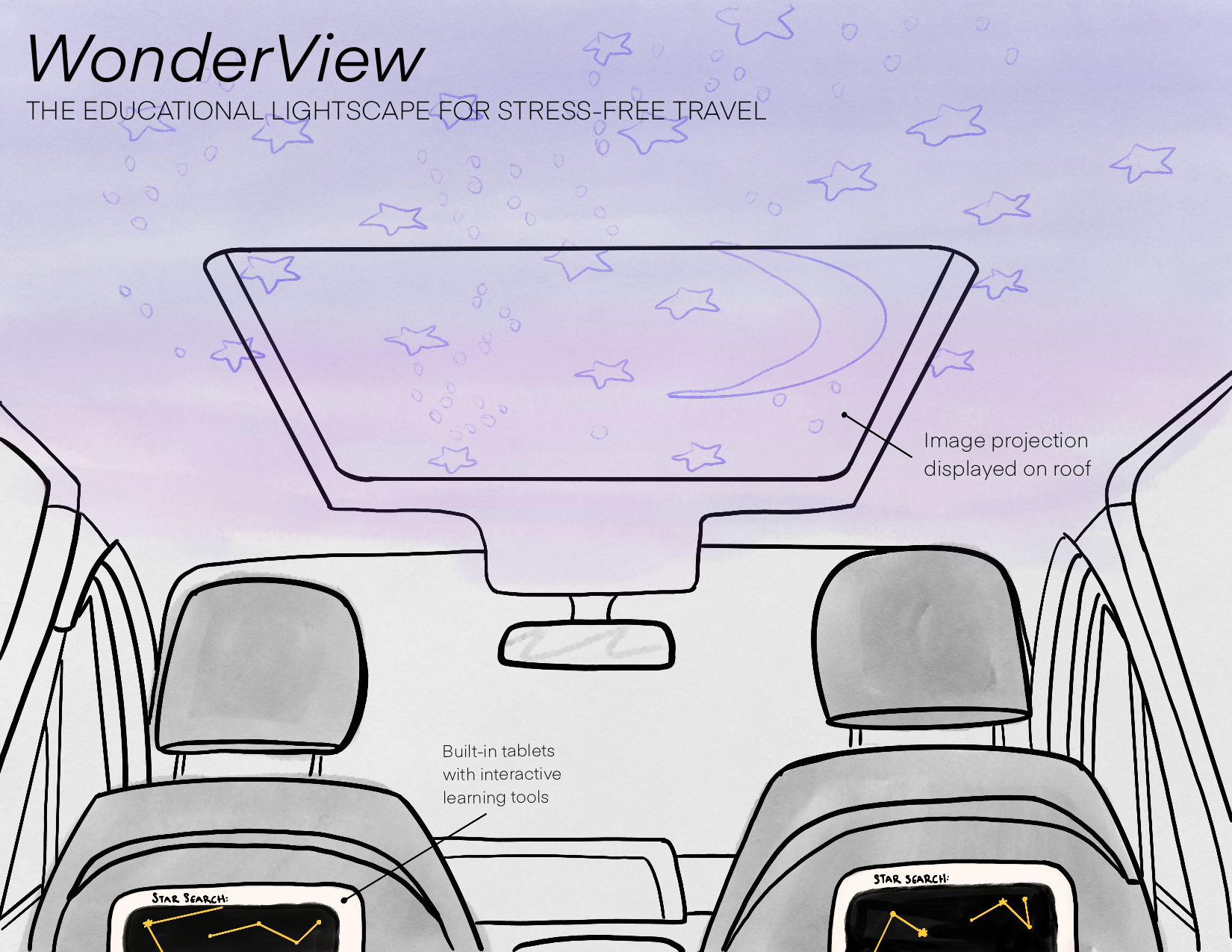
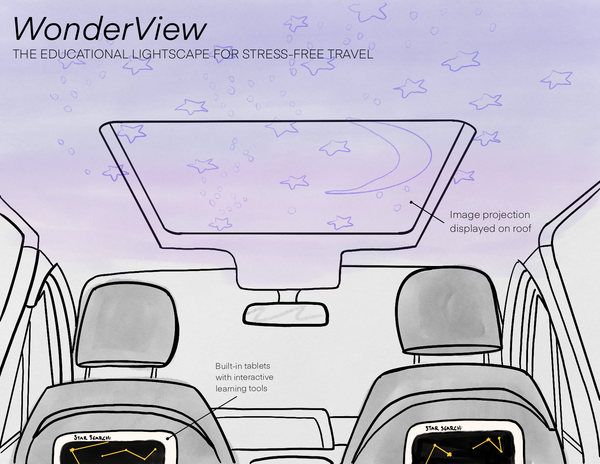
My science and technology focused concept, WonderView, addresses the challenge of restless, overstimulated children in the backseat. Parents noted that conventional entertainment screens often create conflict rather than calm; either due to disagreements over programs or because passive viewing fails to hold children’s attention (Primary Research). WonderView reframes screen time as an immersive learning experience, projecting interactive skies, clouds, or constellations onto the ceiling while children explore related content on tablets. Drawing from research on immersive learning environments, such as museum exhibits that blend tactile and digital interaction to sustain curiosity (Stafford, 2025), the concept turns entertainment into discovery, fostering quiet focus and fewer conflicts. However, while WonderView presents a promising synthesis of learning and play, potential challenges; such as driver distraction, overstimulation, cost, and maintenance, underscore the need to balance immersion with safety, usability, and long-term feasibility.
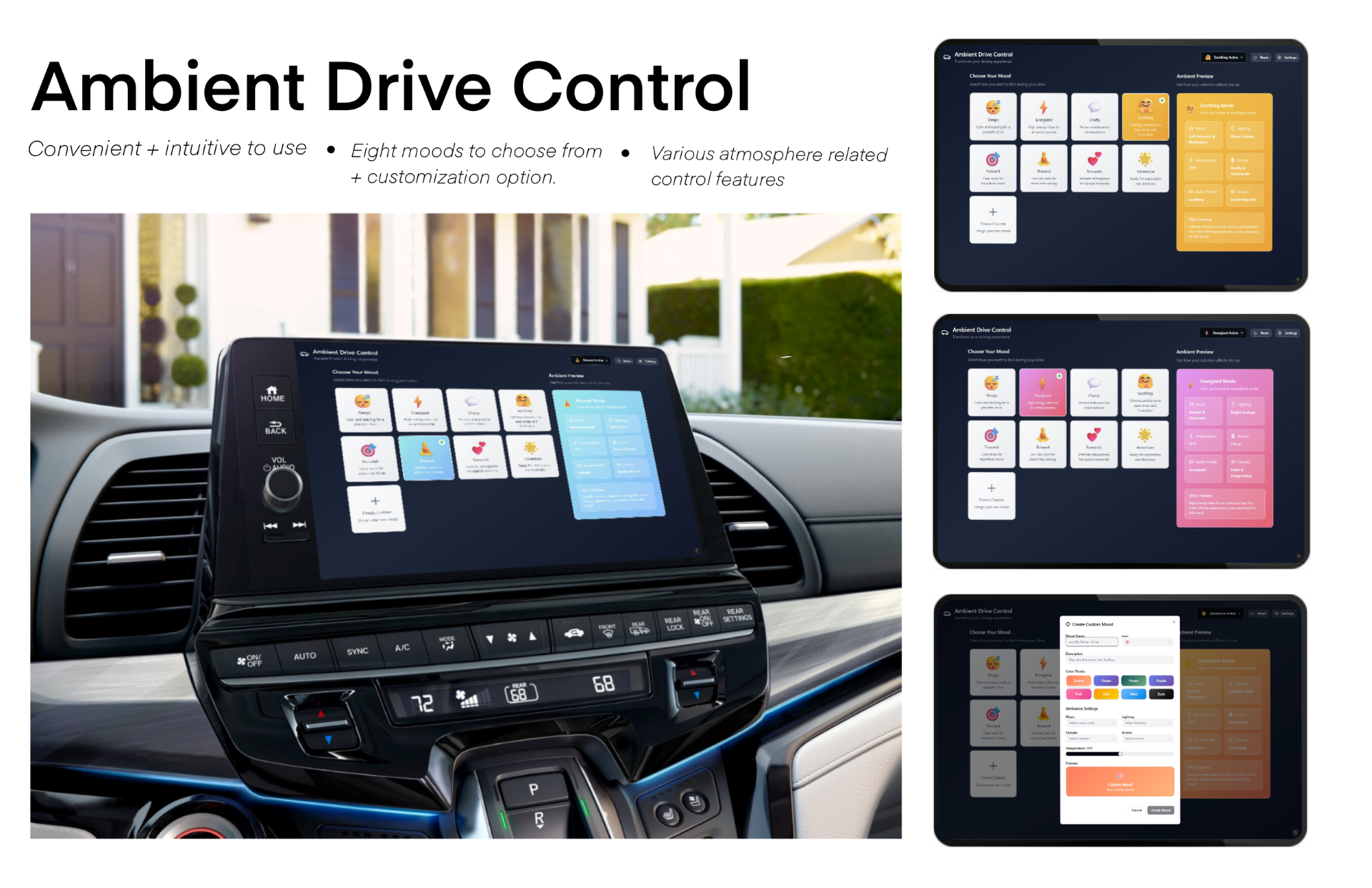
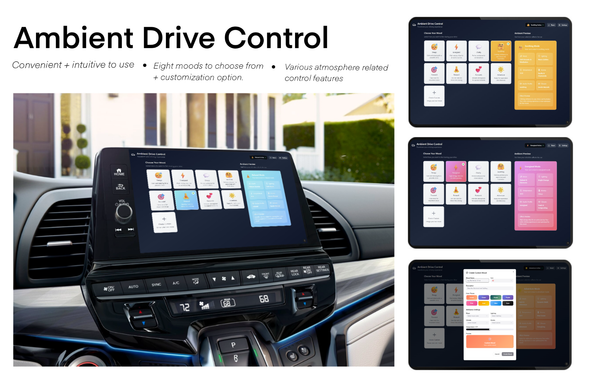
Lastly, my special-interest concept, Ambient Drive Control, builds on research into ambiance and emotional regulation. Parents in surveys and interviews emphasized lighting and music as powerful mood shapers, often wishing for softer light during night drives or calmer audio in stressful moments (Survey ; Primary Research). The system introduces preset modes: “Soothing,” “Energized,” and “Relaxed”, that synchronize lighting, temperature, sound, and scent to create cohesive sensory environments. Evidence from healthcare and hospitality design shows that curated atmospheres reduce stress and foster connection (Cox Architecture, n.d.; The Park Place Venue, 2023). Translating this to vehicles enables families to adjust ambiance to emotional needs, offering a practical, research-driven way to foster calm and focus. While inspired by sensory design research, such challenges reinforce the need to design with balance; ensuring personalization enhances, rather than compromises, safety, simplicity, and usability.
These conjectures emphasize a shared vision: the car must evolve into an adaptive sensory ecosystem rather than remain a static vessel for travel. The challenge extends beyond technology to fostering relaxation and emotional balance for all passengers. Although vehicles feature advanced lighting, audio, and climate systems, the industry has long prioritized efficiency over a focus on wellbeing. As research shows, investing in ambiance enhances satisfaction and performance (Moss, 2023). For Honda, this presents an opportunity to redefine the backseat, and the vehicle as a whole, as a responsive environment that nurtures calm, connection, and family wellbeing amidst the stressors of daily life. By prioritizing sensory design, personalization, and holistic ambiance, automakers can transform family travel while cultivating lasting trust and brand loyalty.
Conclusion
The backseat experience for families is shaped by a central tension: children seek engagement while parents need calm. Current features (entertainment screens, climate controls, and durable materials) address surface comfort but can often overlook deeper emotional and sensory needs.
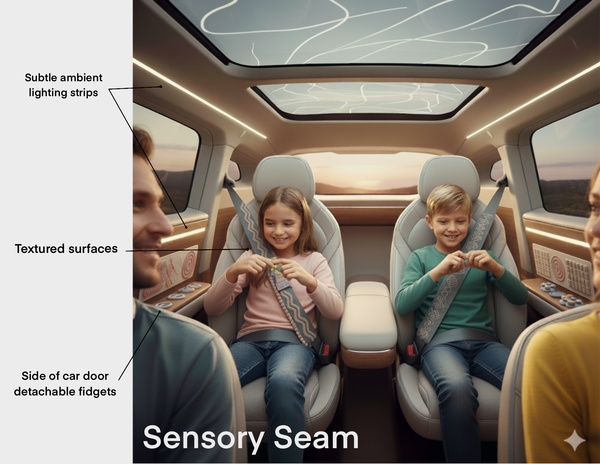
For this project with Honda, the vision is clear: the backseat can shift from a site of stress to a space of balance, connection, and care. Thoughtful sensory design (customizable lighting, dual audio zones, tactile materials, and ambient scents) can adapt to individual needs, supporting children’s curiosity and regulation while preserving parents’ focus and peace of mind. Beyond function, these innovations re-imagine the car as a responsive environment that enriches family experiences and encourages shared moments of calm and engagement.
The backseat is not flawed; it is an untapped opportunity. By prioritizing ambiance, in relation to sensory design, forward-thinking automakers like Honda can redefine mobility. Creating vehicles that nurture emotional wellbeing and transform everyday travel into a more harmonious, meaningful experience.
References.
Cherry, K. (2024, February 20). Color psychology: How colors affect mood, feelings, and behaviors. Verywell Mind. https://www.verywellmind.com/color-psychology-2795824
Constantinides, M., Šćepanović, S., Quercia, D., Li, H., Sassi, U., & Eggleston, M. (2021, September 13). ComFeel: Productivity is a matter of the senses too. arXiv.org. https://arxiv.org/abs/2109.05930
Getty Images. (n.d.). Parents trying to calm the children down as they fight in the back seat of the car. iStock . Retrieved from https://www.istockphoto.com/video/ld-parents-trying-to-calm-the-children-down-as-they-fight-in-the-back-seat-of-the-car-gm1320013106-406672678.
Grave, M., & Baker, J. (n.d.). Sight, sound, scent, taste and touch: The power of sensory design in Healthcare. COX. https://www.coxarchitecture.com.au/perspective/sight-sound-scent-taste-and-touch-the-power-of-sensory-design-in-healthcare/
Moss, J. (2023, October 20). Creating a happier workplace is possible — and worth it. Harvard Business Review.
Stafford, M. (2025, April 23). Immersive wellness. VML. https://www.vml.com/insight/immersive-wellness
The Park Place Venue. (2023, December 28). The science of good vibes: How space and atmosphere change how we feel. The Park Place Venue. https://theparkplacevenue.com/post/the-science-of-good-vibes-how-space-and-atmosphere-change-how-we-feel
This Op-Ed reflects a combination of sources and contributions: ~40% from Capstone Design Conjectures, Literature Reviews, and related course research materials; ~30% from the author’s original framing, synthesis of insights, and integration of primary research; and ~30% from AI assistance (refining structure, editing for clarity and flow, polishing APA in-text citations, and compiling the reference list). All interpretations and conclusions remain the responsibility of the author.