Reeling in Waste: Reimagining Shoreline Angler Waste Collection Methods
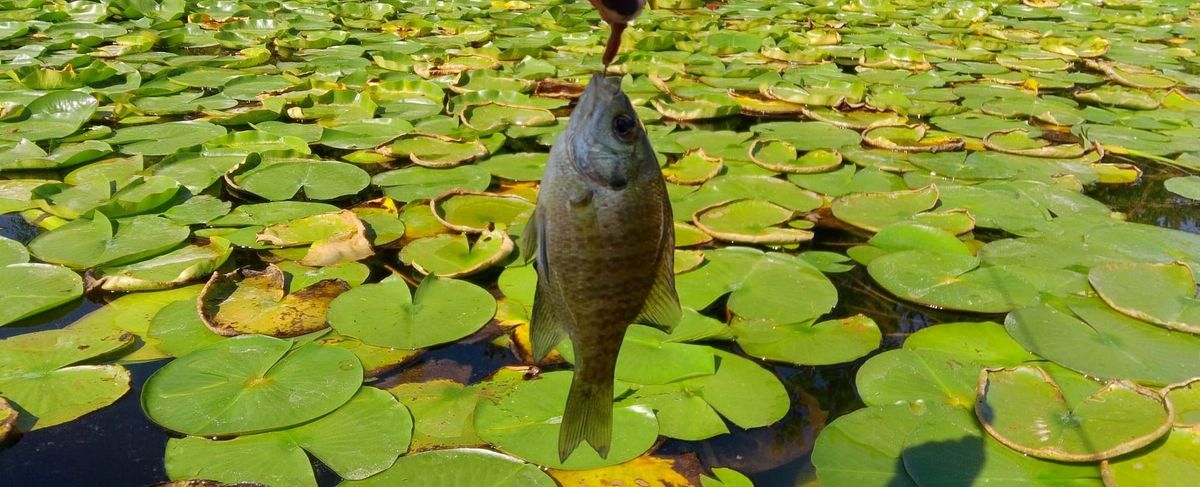
Low-impact recreation is often described as a way of engaging with the outdoors that leaves little trace on the environment. Activities such as walking, kayaking, or shoreline fishing are typically viewed as quiet and restorative practices that allow people to connect deeply with nature. They carry the connotation of sustainability in their very name: “low impact” suggests minimal harm. Yet, as closer observation reveals, even these seemingly harmless pastimes carry ecological consequences. For example, shoreline fishing, an activity that is relaxing and enjoyable, can leave behind a trail of environmental harm through misplaced fishing lines, discarded plastic bait containers, and lost tackle. What looks like a gentle afternoon hobby can, in fact, become a deadly trap for birds, turtles, bats, and fish.
This contradiction highlights a central challenge for natural resource managers: how can we enable recreation while simultaneously safeguarding ecosystems? In partnership with the Ohio Department of Natural Resources (ODNR) Division of Parks and Wildlife, my current work explores this very question. As Heather Bokman, ODNR’s Sustainability Coordinator, stated in our first meeting: the task is fundamentally about balancing conservation with recreation. Striking this balance requires not only managing parks for wildlife but also reimagining the user experience in ways that foster both enjoyment and responsibility.
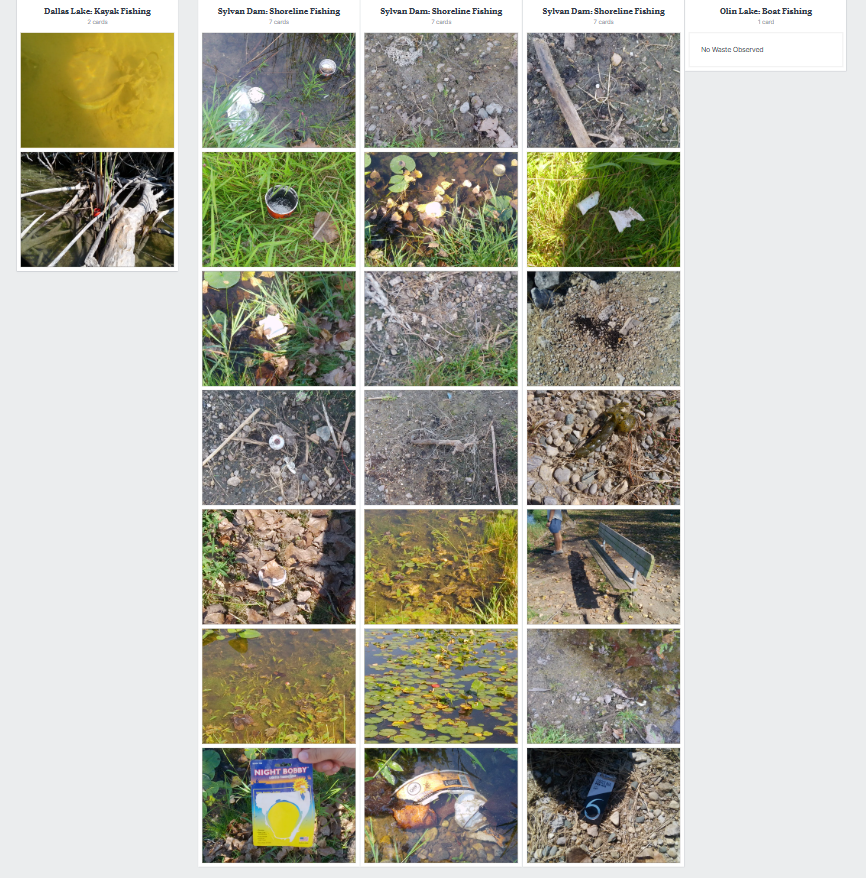
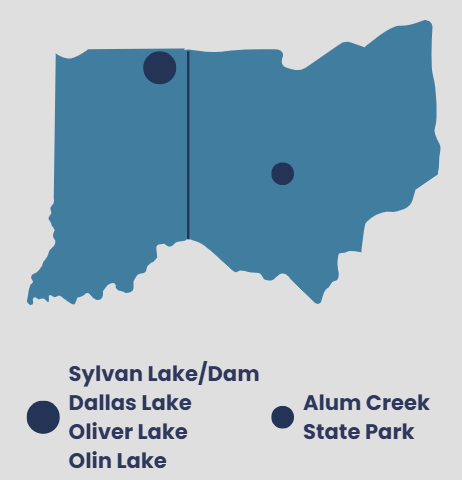
To better understand where the most pressing issues emerge, I began with fieldwork. After a visit to Alum Creek State Park, one pollutant repeatedly surfaced as a visible and dangerous problem: angler waste. To investigate further, I conducted a comparative study across three categories of anglers on several lakes in Indiana: kayak fishers, motorized boat fishers, and shoreline fishers (see above). The results showed that shoreline fishing produced the greatest volume (21 items pictured) of waste.
This waste takes many forms: bobbers, hooks, bait containers, fishing line, and other accessories scattered across the shorelines. While these items may seem minor, they collectively pose serious ecological threats. In an interview with Sandy Clark-Kolaks, Fisheries Research Biologist and South Region Fisheries Supervisor, I learned how such debris harms wildlife. Hooks snag and injure animals. Fishing line entangles and strangles birds, turtles, and even bats. Lead weights and other tackle, when ingested, poison both aquatic and terrestrial species. The discarded gear that anglers leave behind lingers in ecosystems far longer than the momentary enjoyment of the hobby itself.
Sandy Clark-Kolaks also expressed that this extends beyond ecological impacts. She explained that plastic bait containers, often made of conventional single-use plastics, slowly degrade in waterways. This process releases microplastics, contaminating the very waters that fish inhabit. Moreover, polluted shorelines filled with tangled line, dangerous hooks, and unsightly trash erode the quality of recreational experiences for park visitors. As anyone who has stumbled upon such waste knows, few things diminish a peaceful day outdoors more quickly than being forced to clean up after someone else. Park managers, who admit they are stretched thin in our survey, must regularly remove this waste to maintain safety and aesthetics, diverting time and resources that could otherwise support habitat management.
Thus, shoreline fishing represents a paradox: it is classified as a low-impact recreational activity, yet in practice it creates some of the highest-impact consequences for local ecosystems.
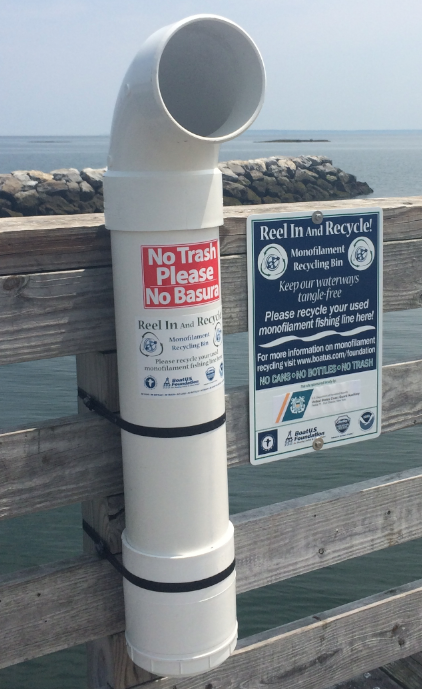
Recognizing the dangers of discarded fishing line, ODNR has taken proactive steps by installing specialized receptacles for monofilament collection. Early versions of these receptacles were constructed from PVC piping, modeled on designs such as those promoted by BoatUS.org (see above). However, as Tracey Coe, Clean Marinas Coordinator for ODNR, explained, these opaque tubes proved problematic. Many anglers hesitated to use them because they could not see inside, raising concerns about what might be lurking within. Others misused the receptacles entirely, dropping cans or other trash into the tubes simply because the opening allowed it.
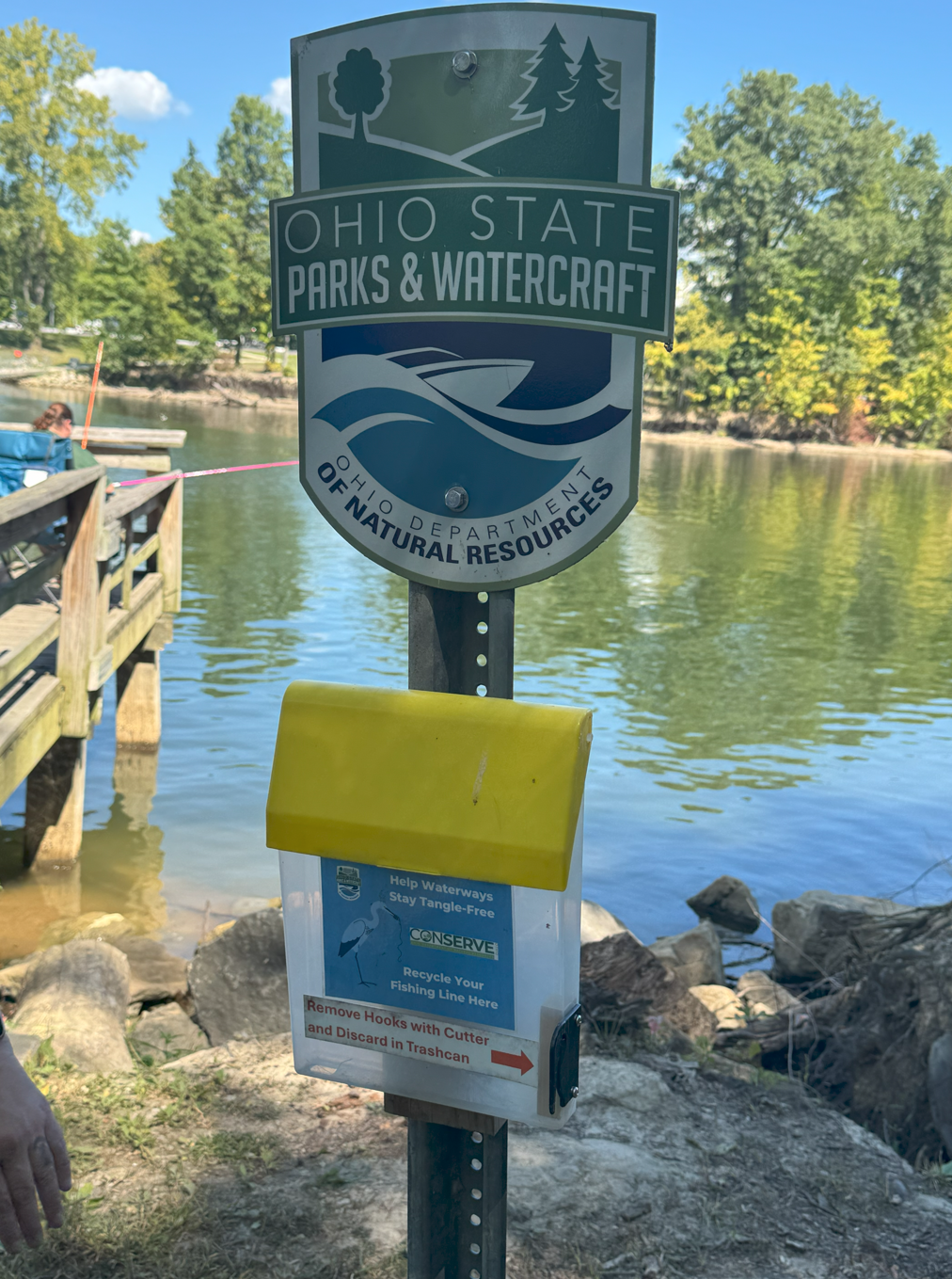
To improve usability, ODNR shifted to clear-box receptacles (pictured above). This design change produced noticeably better results. Anglers were more willing to use a transparent container where they could clearly see the purpose, and park managers found less contamination in the collected material. The shift illustrates how small design interventions, such as transparency, can meaningfully influence behavior.
Yet, even with improved receptacles, a challenge remains: what happens to the collected line? At present, it enters the general waste stream and ultimately a landfill. Once deposited, the line disappears from the angler’s mind. The user no longer feels a connection to the material or its consequences. This disconnect limits the potential for deeper environmental engagement.
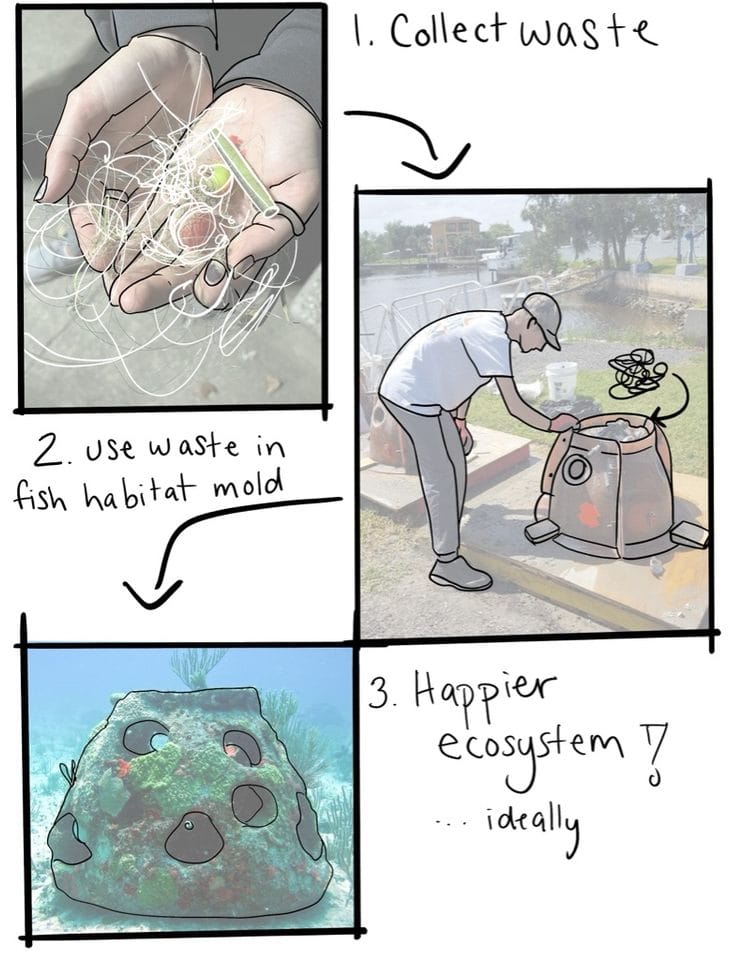
The concept above asks, "what if the story did not end at the landfill?" Imagine if the discarded fishing line, instead of symbolizing waste, became part of the solution. One possibility is to repurpose collected line as a binder in the molding of concrete fish habitats. These structures, often designed as artificial reefs or protective nooks, help restore aquatic environments by providing shelter and breeding grounds. By embedding fishing line into their construction, the waste is given a second life as part of a physical marker of reuse.
This design shift does more than reduce landfill contributions. It creates a visible feedback loop for anglers. Instead of tossing line into a receptacle and forgetting it, they would know their contribution directly supports healthier waterways. In behavioral science, this kind of feedback is critical: when people see the positive outcomes of their sustainable actions, they are more likely to continue them. In this way, waste management becomes not merely disposal, but education and engagement.
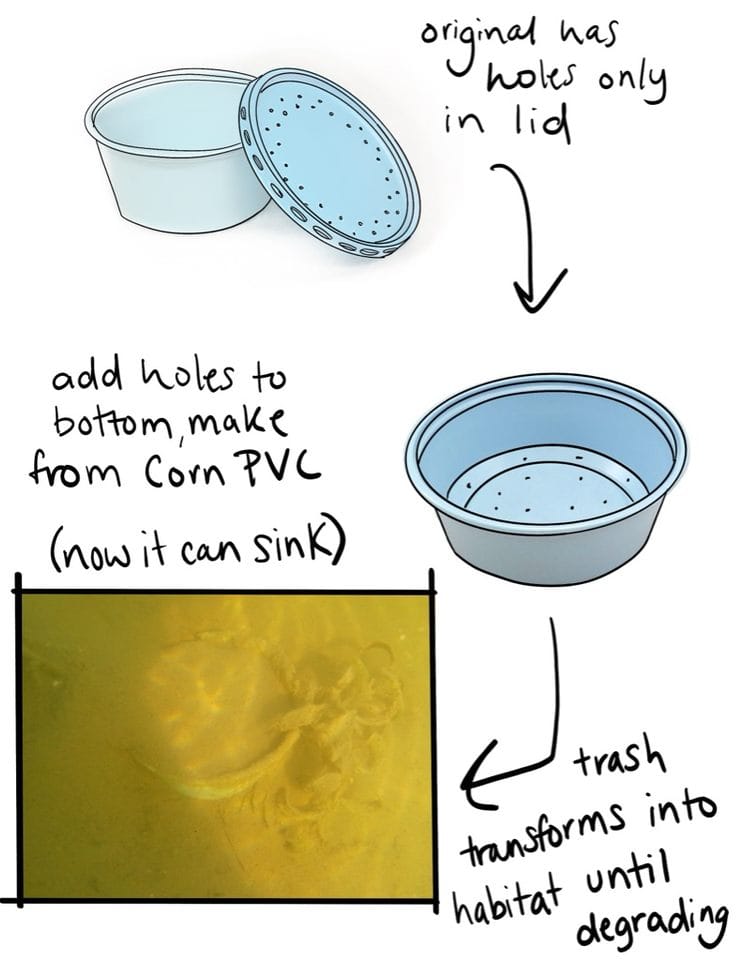
Fishing line is not the only culprit. Plastic bait containers contribute significantly to shoreline litter, and their slow degradation releases harmful microplastics. A promising alternative lies in bio-based plastics, such as corn-derived polymers. Unlike petroleum-based plastics, corn-based plastics degrade more quickly and may integrate more naturally into the environment (West, 2020).
While bioplastics are not without challenges, such as cost and durability, Clark-Kolaks suggests they could offer a transitional solution for the future of human technologies in aquatic environments. A shift toward corn-based bait cans would blur the line between waste and habitat, reducing contamination and easing the burden on both wildlife and park managers. Such innovations align with broader sustainability principles, including the circular economy, which emphasizes designing products so that their afterlife benefits rather than burdens ecosystems.
While infrastructure and materials science are essential parts of the solution, culture and experience matter equally. Recreation is not only about the activity itself, but also the mindset it fosters. ODNR has begun experimenting with programs that expand visitor engagement, such as the “homing” event series. In these guided audio tours, participants are prompted to heighten their bodily awareness within the landscapes they explore (Homing: An Audio/Movement, 2020). This model demonstrates how recreation can double as education and reflection.
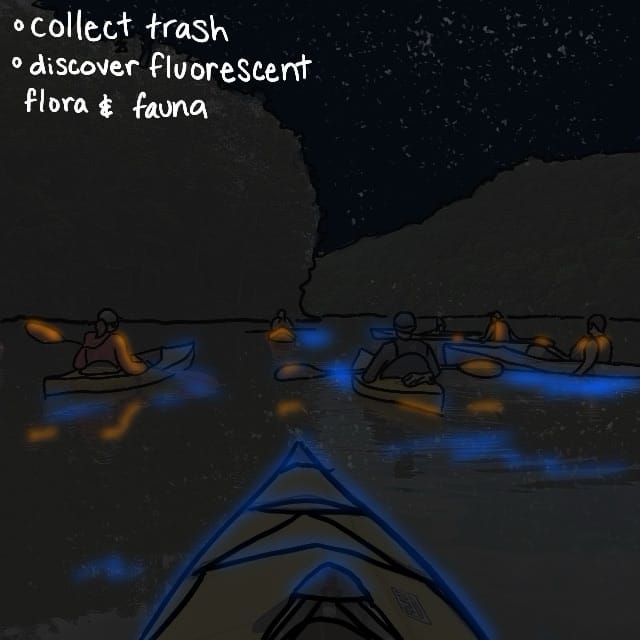
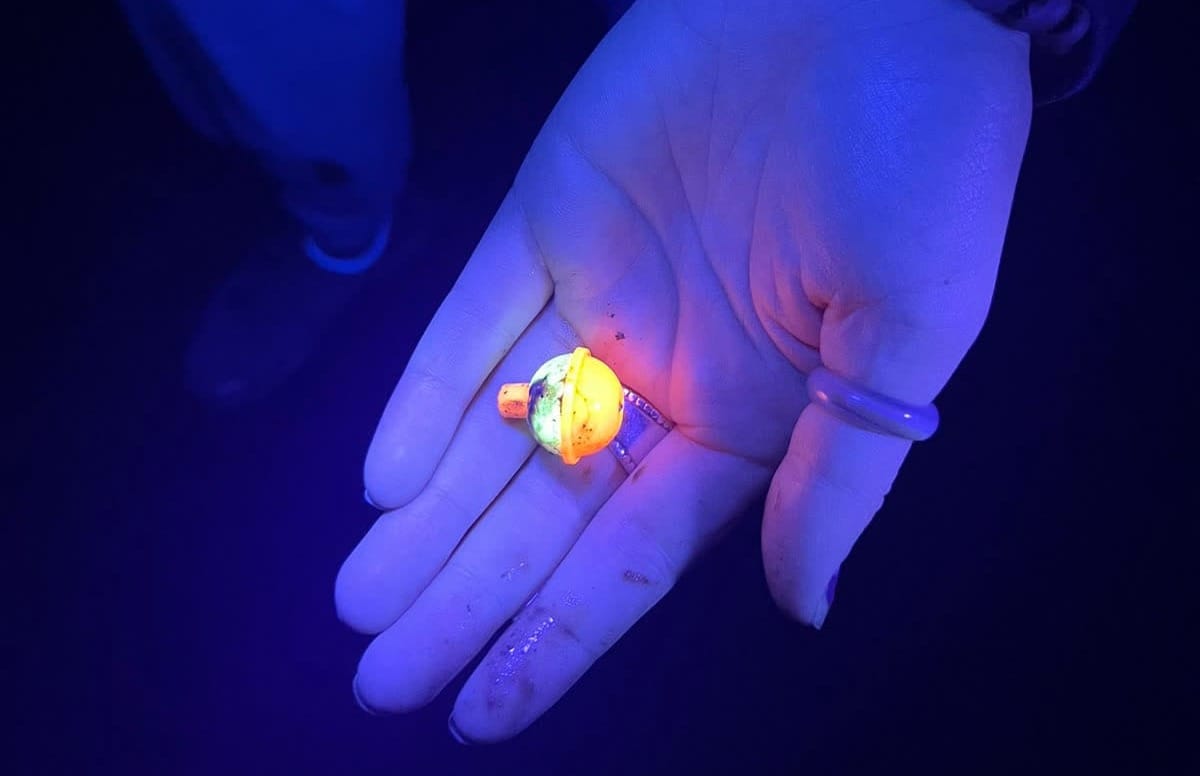
Building on this idea, we might imagine events where visitors contribute actively to conservation while they recreate. For instance, nighttime ultraviolet kayak rides could reveal fluorescent flora and fauna otherwise invisible to the human eye (shown above). On our night hike, we found that UV light could illuminate angler waste that blends into the shoreline by day (see "Glowing Angler Waste" photo). Participants would not only experience the wonder of discovery but also collect and remove hidden pollutants, leaving the environment better than they found it. In this concept, adventure and stewardship are intertwined: the thrill of recreation becomes inseparable from the satisfaction of restoration.
These strategies, improving receptacle design, transforming fishing line into habitat, shifting to bioplastics, and integrating conservation into recreational events, illustrate a new model for low-impact recreation. In this model, “low impact” is not simply the absence of harm, but the presence of positive ecological contribution. Recreation becomes a force for sustainability rather than a drain on it.
The challenge of angler waste may appear narrow, but it reflects a broader truth: human interaction with nature is rarely impact-free. Even the gentlest activities carry consequences and ignoring them only deepens the problem. Yet by acknowledging these hidden costs and designing thoughtful interventions, we can transform recreation into a partnership with the natural world.
As Heather Bokman aptly put it, "The goal is balancing conservation with recreation." Achieving that balance requires innovation not only in infrastructure and materials, but also in imagination. It means rethinking waste as habitat, reimagining containers as biodegradable, and re-envisioning events as opportunities for stewardship. By pursuing the path of accessible waste systems, design can ensure that parks remain both vibrant ecosystems and cherished recreational spaces; places where wildlife thrives, and where people, too, find joy for generations to come.
References.
Coast, U. S. (2015, July 16). Installation of Fishing Line Recycling Collectors. Port Chester, NY Patch; Patch. https://patch.com/new-york/portchester/installation-fishing-line-recycling-collectors
HOMING: An Audio/Movement Journey. (2021). Ohiodnr.gov. https://ohiodnr.gov/home/news-and-events/all-events/parks-wc-events/arts-in-the-parks/programs/homing
Monofilament - Build A Bin. (2025). BoatUS Foundation. https://www.boatus.org/reel-in
West, L. (2020, December 7). Are Corn-Based Better than Petroleum-Based Plastics? Treehugger. https://www.treehugger.com/pros-cons-corn-based-plastic-pla-1203953
This piece draws on original material from field observations, interviews, and notes on angler waste and low-impact recreation (~60%), combined with my own synthesis, framing, and thematic development (30%), and AI assistance (ChatGPT, GPT-5) in expanding, editing, and refining the draft into a structured 1,500-word essay (10%). All interpretations remain the responsibility of the author.