A World Without "Are we there yet?"
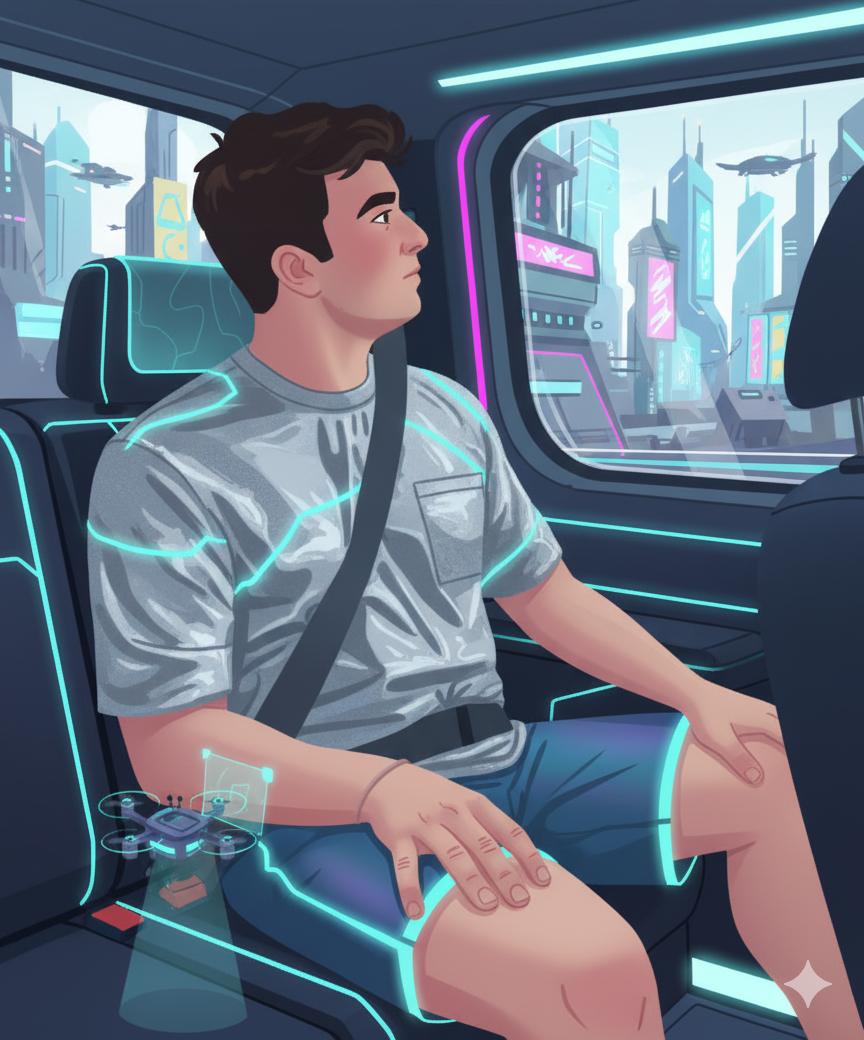
Imagine you’re on a long car ride, everything is calm, the highway has a soothing tone, and the backseat is quiet. You suddenly hit traffic, the car erupts with noise with a child blurting out, “are we there yet?!”. Then a toddler starts crying after their toy slips between the seats, and the other kids in the car erupt with kicking and screaming.
Scenes like this play out daily in millions of cars. While car designers pour resource's into sleek exteriors and luxury trim, I believe the backseat deserves a little more attention. To me this space feels like one of the most challenging and chaotic spaces within the vehicle. Interior design can affect the whole family’s safety and the driver’s focus. The backseat can and should be designed as a calm, meditative environment for children. It can be a space that nurtures comfort and regulates emotion with features like the environment, textures, sound, toys and light. To get to this point we must look and reimagine the backseat as a sanctuary.
Primary Research
Understanding Family Car Rides: Survey Findings
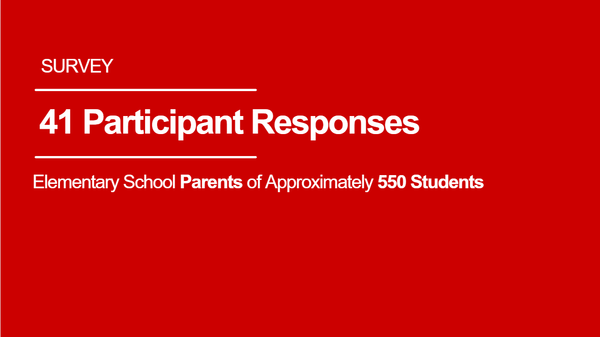
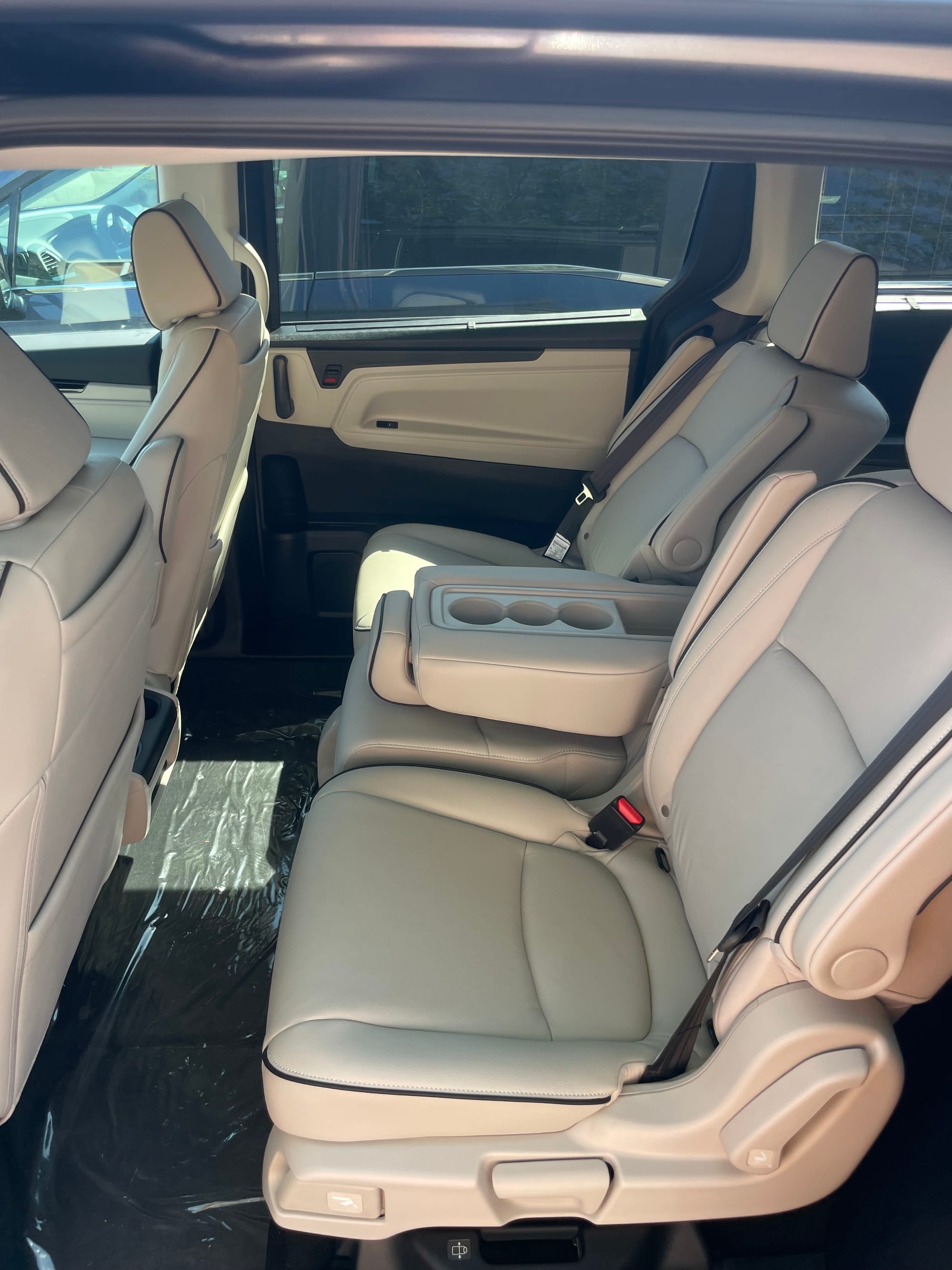
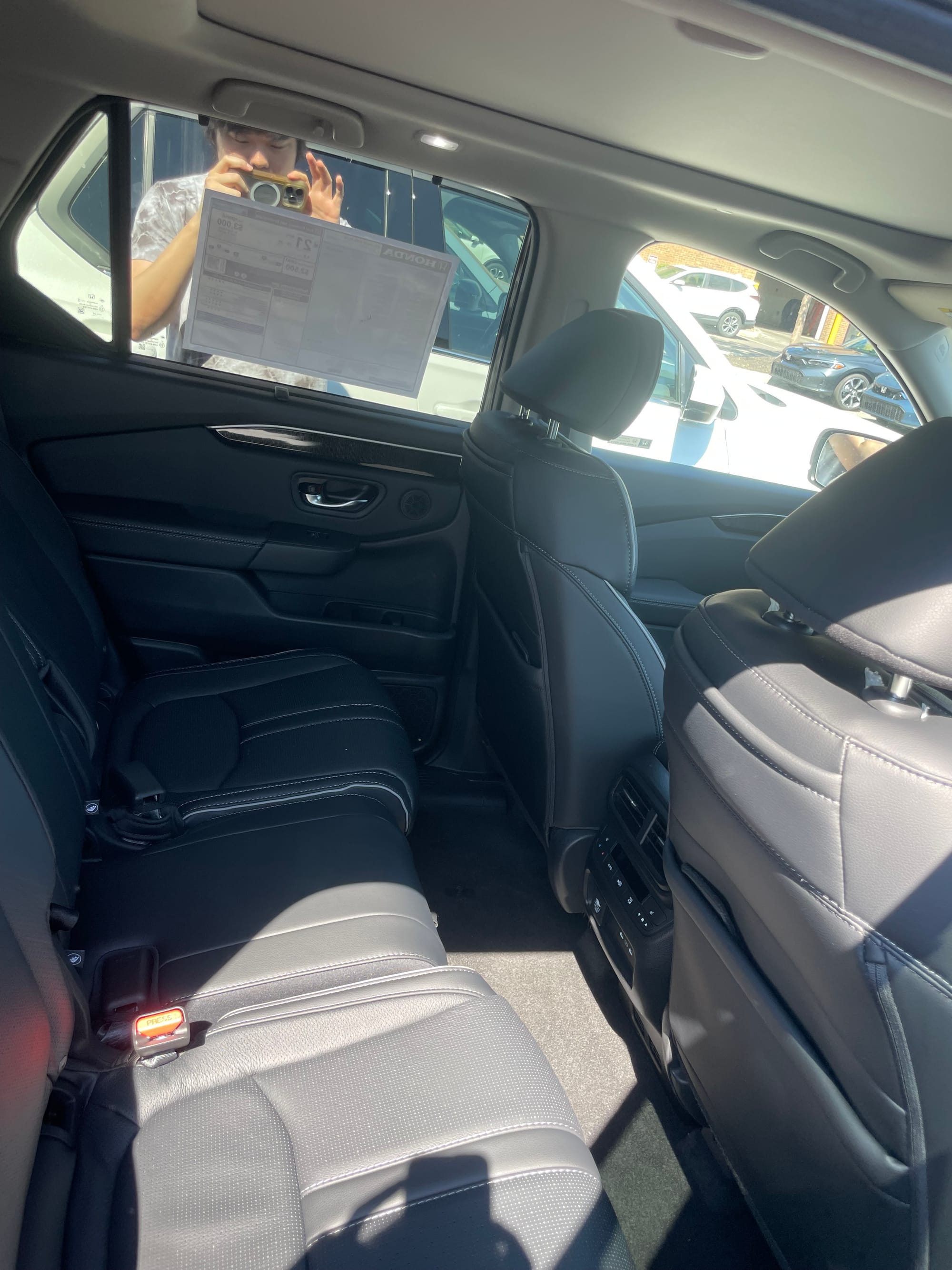
Car rides are unavoidable in family life. Children can spend hundreds of hours a year strapped into car seats or boosters. For many families this time is not peaceful and these long rides amplify feelings for families. In my Survey, parents say things like boredom, discomfort, and sibling rivalries are all things kids can let out their emotions from. A lot of parents said they often default to screens as a tool because tablets and movies can buy time. But they also raise concerns about overuse or overstimulation that leaves children wired instead of rested. The backseat chaos can distract drivers increasing the risk of accidents. Looking at cars we can see they are designed for adults(after all adults are the ones buying it) so how can I design something that can seamlessly fit into this backseat giving parents freedom and helping their child achieve this calm that parents look for on long car rides.
The backseat environment involves a variety of needs, which can affect each person differently. For instance, some parents crave peace and focus while they’re driving while others want more of an energetic and loud environment with their favorite music. I’m looking for solutions that help keep kids calm without constant parental intervention. Children need comfort, sensory engagement, and at times personal space away from siblings. In the middle of it all is this tension between technology and natural solutions. During my Survey, I got a real understanding of what parents want for their children. Parents wanted their child to be distracted and the easiest solution is putting a screen in front of them. Especially while they’re driving and when they need to be focused on the road. When we talk about calming and meditation the parents said they don't want to give them a screen. This reveals an interesting balance parents face: they want their children calm and engaged during car rides, but without relying on screens, highlighting an opportunity for solutions that are both soothing and interactive.
Looking into Business
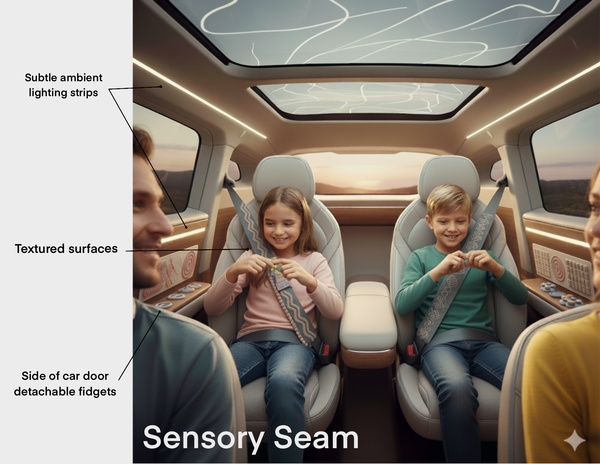
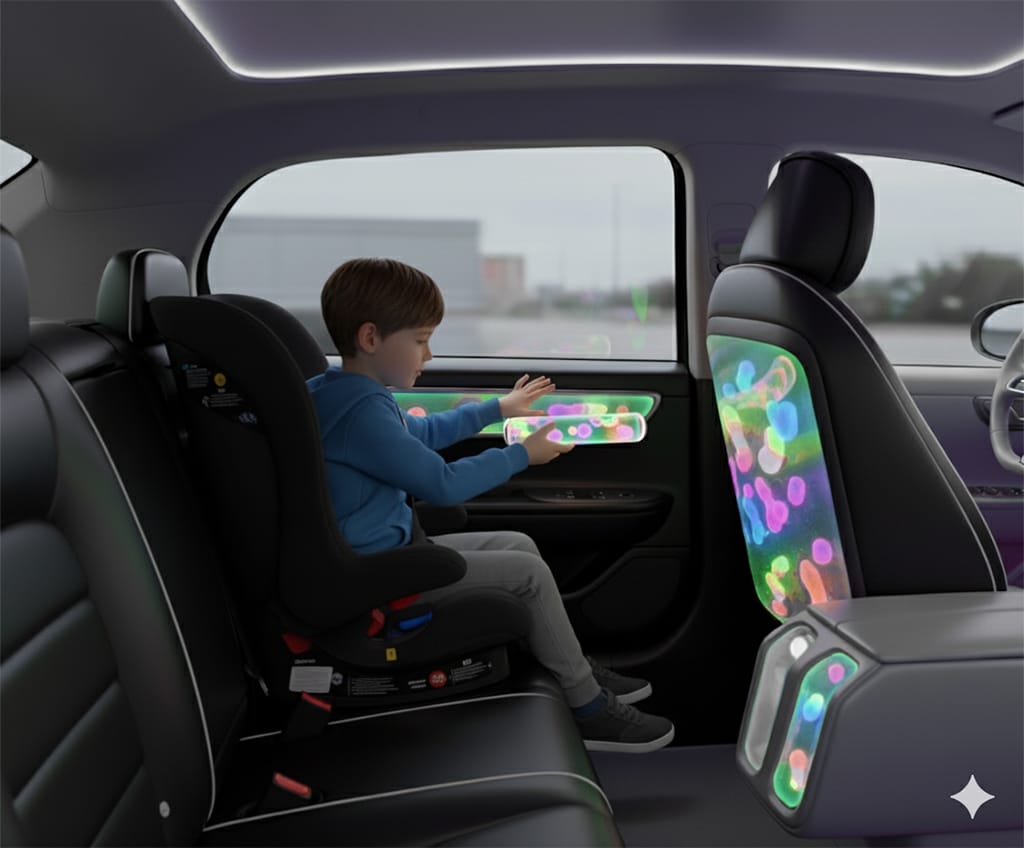
In this section of these newspaper, Parents consistently rank safety, space and convenience above all. In these sections I look at articles ranking some of these features of luxurious back seat and trends within the backseats. I was curious what made these back seats so nice that people rated them so high. Some things I notice were texture, ambient lighting and it talked about it being a sanctuary. These are all features focused towards adults so I wanted to know how these features could be adapted for kids. I also took a look at the toy industry to see what parents gravitate towards. I specifically found an article talking about top kids toys in cars and what I found is that parents wanted toys with no mess, simplicity, calming, engaging and safe toys. What I noticed is that parents don’t want to be distracted while their kid is in the back which is common throughout my findings. Car companies that focus on making kids more comfortable and calm could potentially stand out from the competition. The backseat hasn’t been used to its full potential yet and parents would gladly pay for improvements. Below is my design concept for this section. The concept is to give you a luxury feeling while also giving a kid a playful stimulation experience.
Arts and Lifestyle
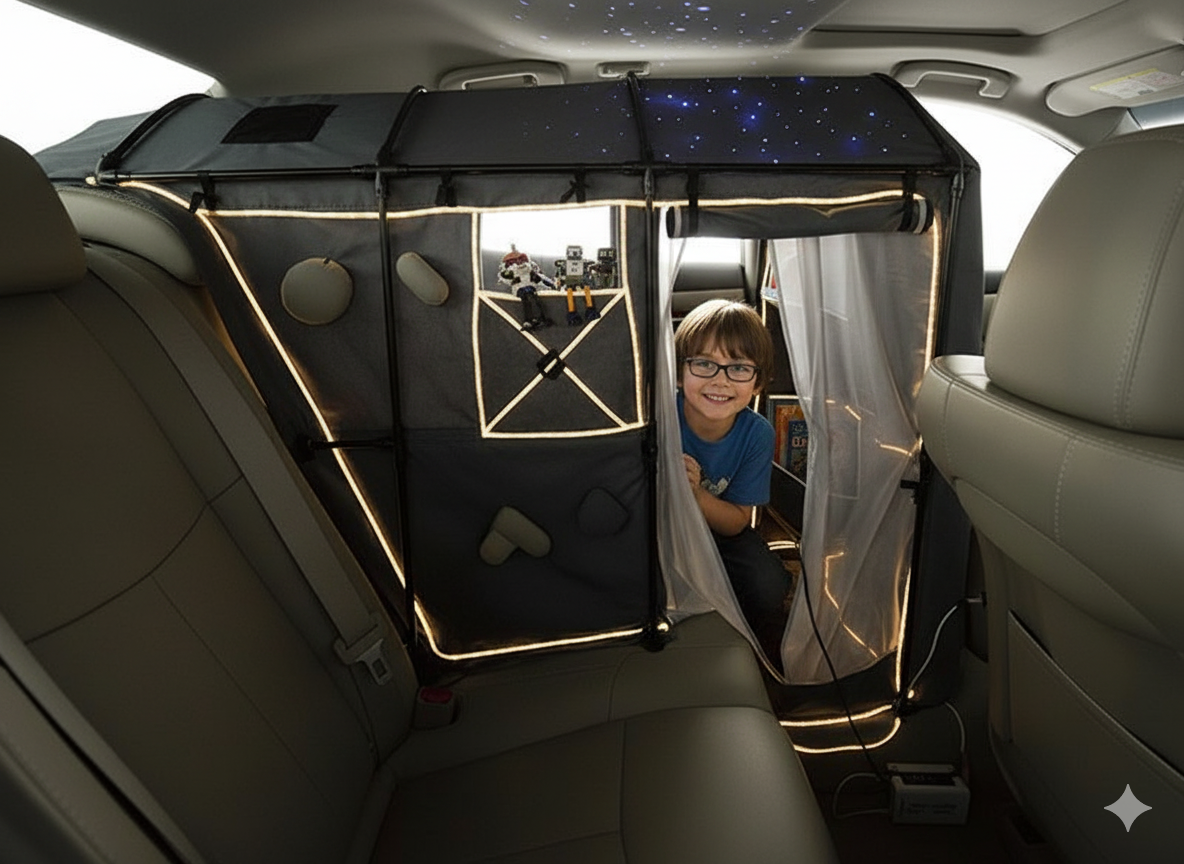
While investing my insights from this section, I found child comfort is not just about how comfortable the seats or gadgets are. It’s also about designing the full environment and things around that reduce stress and can regulate their emotions rather then stopping them from getting emotional. In a study by Harris. (2023) research shows that small interventions like mindful toys, soothing textures, or personal “fortress” spaces can significantly calm children. Especially if they are being provoked by another sibling, parents have strategies to mitigate these conflicts. A child’s “personal space” within the car can prevent conflict as well. Designing separation and not isolation but clear boundaries can reduce fighting and give each child a sense of independence. Visual design plays a big role too. The use of geometric forms like yantras from my Sacred Geometry newspaper says the incorporation of curved rather than sharp shapes can create an atmosphere of safety. This principle is supported by psychology and evolutionary biology, where curved forms are often associated with shelter and comfort while jagged edges tend to signal threat or danger. Imagine a backseat where a child can zip up a small cocoon like enclosure? Something that is soft, washable, private but still safe and connected to the family environment.
Science and Tech
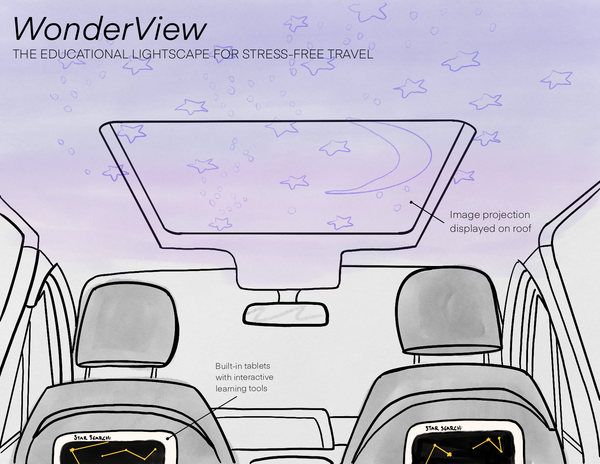
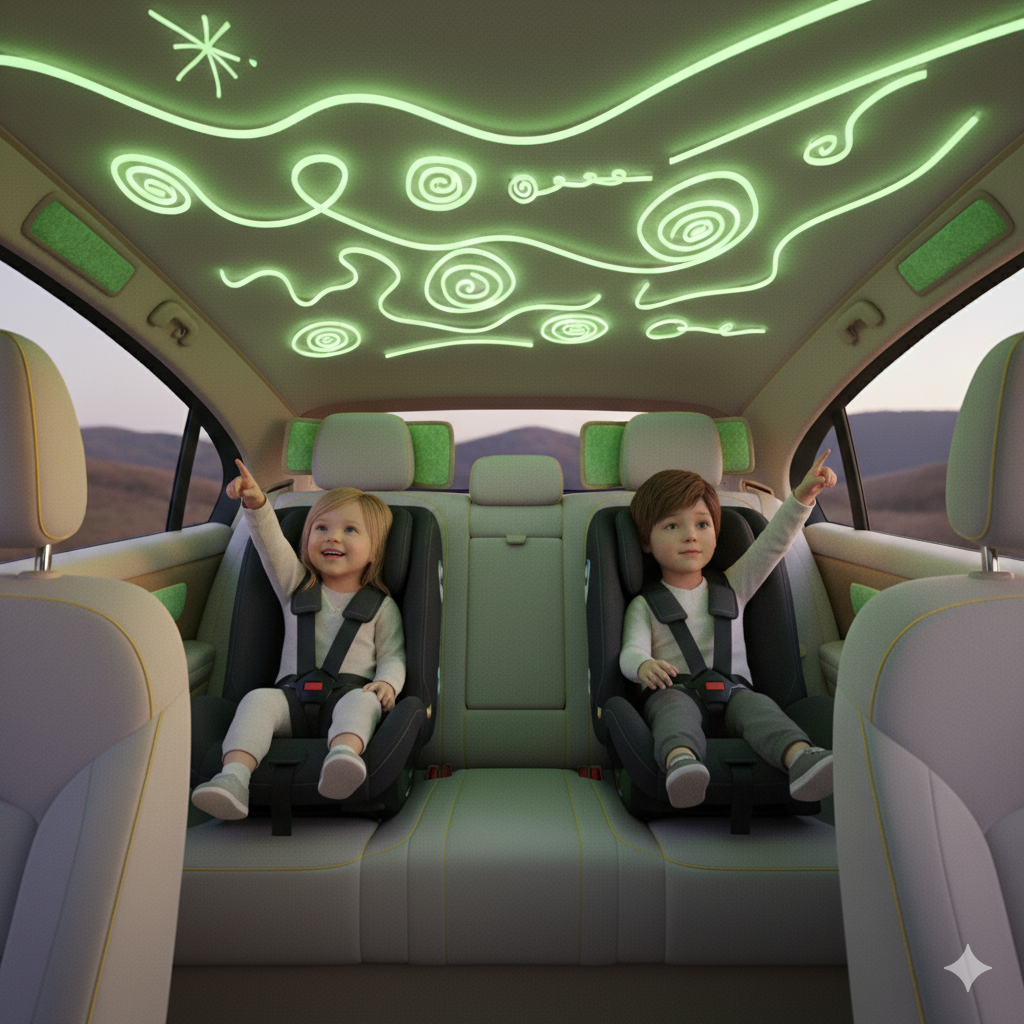
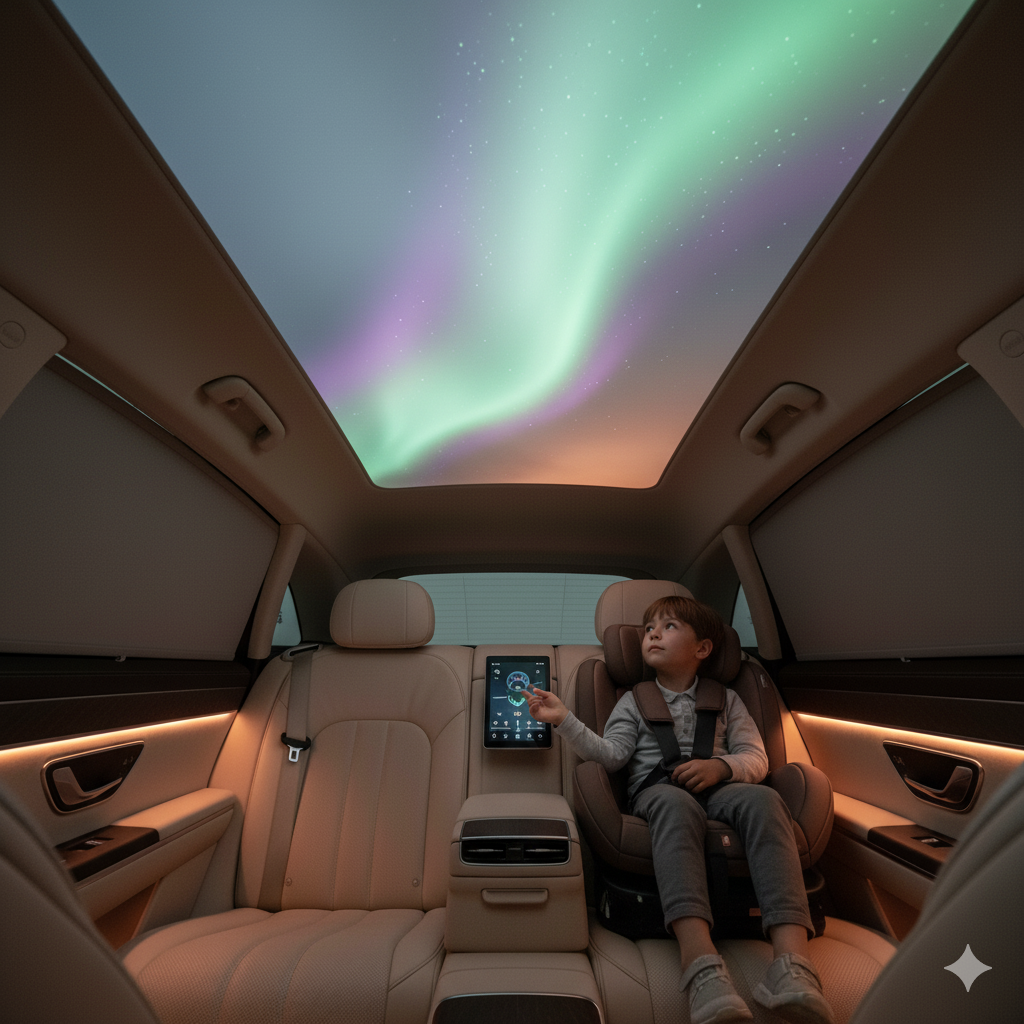
Insights from Science & Technology reveal that some of the most promising innovations come from where design meets science. According to Bergstrom, C. (2022) mindful breathing techniques activate the parasympathetic nervous system reducing heart rate and stress. Cars could integrate gentle visual or tactile cues like pulsing lights or soft vibrations to guide children into calmer breathing patterns. Designing Calm: The Role of Geometric Shapes, talks about emotional responses to shapes are rooted in human psychology and evolutionary biology; It explains that curves are often associated with feelings of safety, calmness, and comfort. This can suggest that light projections or simple animations on the car ceiling could help children drift toward calmness. Maybe something that isn’t distracting for the driver but some soothing visuals that can pair up with some audio to distract children into calming down. I also looked at PEMF(pulsed electromagnetic field) therapy. which uses electromagnetic waves to influence brainwaves. When used in conjunction with meditation, PEMF devices can encourage states of relaxation and focus by inducing specific frequencies of brainwave activity. This is a really interesting topic but parents hesitate to expose their children to this technology. Screens are everywhere in this day and age and though controversial everyone uses them. The key is balance and systems that help parents manage screen time can help without overstimulating a child. Below is an idea that can have an engaging screen across the roof that shows calming visuals and audio.
Design Conjecture: Science & Technology
Personal Interest
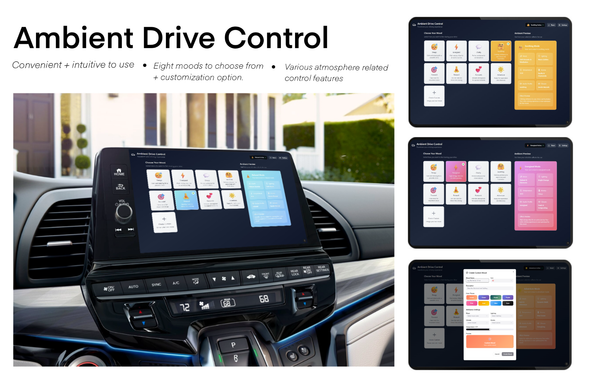
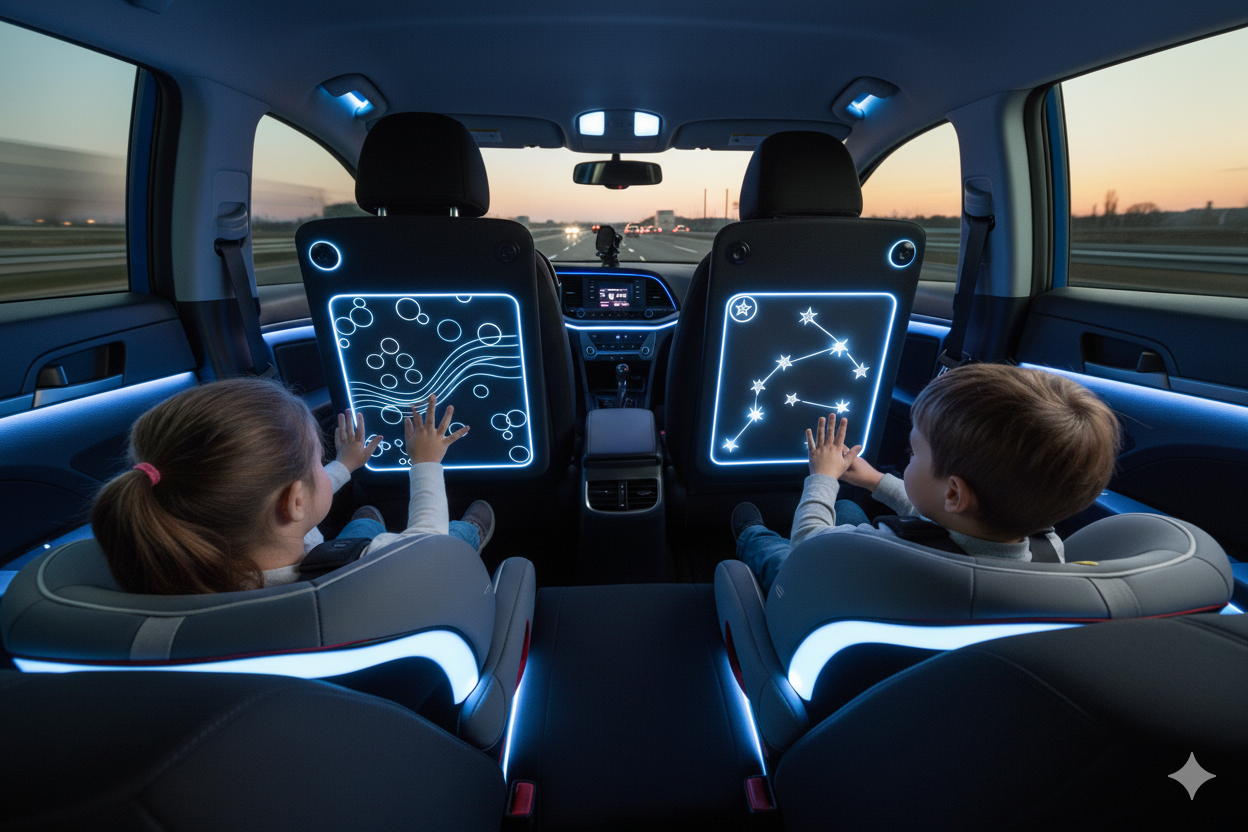
My personal interest was Lights & Audio. Lighting and sound are powerful tools for emotional regulation. It’s not about taking away children’s emotions but about helping them regulate those feelings in a natural way without them even realizing it. Integrating Smart Lighting into Backseat Design, talks about wellness spaces carefully designing light cues to guide people into calm states syncing with circadian rhythms or mimicking natural patterns like sunrise and sunset. In the car, we could borrow these strategies with soft ambient lighting in the backseat responsive to the time of day that could help prepare children for naps or simply quiet time. Miller. (2025) found that parents already use music as a tool to calm with familiar playlists, white noise or calming soundscapes. 8D audio shows that immersive spatialize sound can deepen focus and relaxation. If this was integrated into the car, audio could create soothing experiences in conjunction to an interactive screen. The key to most of this is subtlety. Children may not respond well to being told to calm down but an environment that quietly shifts its sound and lighting cues can make relaxation feel natural. Maybe parents can press a button and have a game that sinks with immersive music, lighting and visuals to subtly have a calming effect. We can use calming colors and visuals that they can follow that mimic breathing patterns.
Conclusion
Across business, arts and lifestyle, science and technology, lights and audio, and surveys the same message emerges throughout. The backseat is failing children, but why? Current designs don’t design towards the needs of children, leaving parents to manage chaos with their own fixes. The solution is not one size fits all but it lies in blending what parents already use as a solution and new tech to create calming and flexible environments. Some features can be passive like soft shapes, calming lights, quiet audio while some others can be activated like guided breathing cues, storage for toys or some sort of screen time management.
Throughout this process, I explored ideas such as car cocoons, ambient lighting, 8D audio, and subtle game integration to help calm children. My goal as a designer is not to replace parents strategies but to provide additional tools that support and enhance their efforts. I want my design to seamlessly integrate into family life. Based on my surveys and research, I found there being so many different ways parents make children stay calm. I aim to create a solution that parents can use without kids even realizing it is guiding them into a relaxed state. It should also help mitigate sibling rivalry and I would like it to subtly engage them through and audio and lighting experience. Chaos in the backseat isn’t inevitable; if we can design cars to drive themselves, we can also design them to provide immersive, calming experiences for children.
References.
Bergstrom, C. (2022, March 14). How to calm a child—A scientifically proven method. Blissful Kids. https://blissfulkids.com/how-to-calm-a-child-a-scientifically-proven-method/
Harris, R. L. (2023, March 29). Why siblings fight and what to do about it. Children’s Mercy. https://www.childrensmercy.org/parent-ish/2023/03/sibling-rivalry/
Miller (2025). The Soothing Power of 8D Audio: How It Benefits Mental Health. https://apricityexpattherapy.com/8d-audio/?utm_source=chatgpt.com
Peterson (2021). The 10 Most Luxurious Back Seats, Ranked. HotCars.https://www.hotcars.com/the-10-most-luxurious-back-seats-ranked/
Safe in the Seat. (2025, March 3). 11 Best Car Seat Toys. Safe in the Seat. https://www.safeintheseat.com/post/best-car-seat-toys
Sengled USA. (2024, March 14). Smart lighting and wellness: Improving your health with light. Sengled. https://us.sengled.com/blogs/blog/smart-lighting-and-wellness-improving-your-health-with-light
Sovik (2025). Sacred Geometry: Yantras for Meditation. Yoga International. https://yogainternational.com/article/view/sacred-geometry-yantras-for-meditation
SOGA Design Studio. (2025, May 22). The geometry of emotion: Why certain shapes make you feel calm. https://sogadesignstudio.com/the-geometry-of-emotion-why-certain-shapes-make-you-feel-calm/
Tarrant, J. (2023, April 7). Technology-assisted meditation. Psychology Today. https://www.psychologytoday.com/us/blog/choosing-your-meditation-style/202304/technology-assisted-meditation