Circling around the Future of Circularity in Central Ohio

Getting into It
Plastic products are an everyday part of life: from the to-go cup of our morning coffee and the polyester in our jackets, to its use in large scale manufacturing processes or medical treatments. Plastics, with their robustness, inexpensiveness, and versatility are certainly a staple of modern life: however, what happens when they reach their end of intended use? Sure, many are recycled, but many more find an early exit in our recycling streams, and wind up back into general waste. Why is this the case, and how do we prevent it? My team Cheyann, Chip, Sophie, and I definitely felt the weight of the problem as we started our exploration... However, it is a glass half full. The points at which plastics leave the recycling stream are numerous, and the more problem points means that there are more opportunities for design and innovation to come to the rescue. With the uncertainty around our topic space we didn’t want to waste any time and started scheduling tours, interviews, and any other experience we could think of to get a better grasp of the scope of our projects in circularity through a local voice.
We initially took a trip over to the Neighborhood Design Center as an introduction to our capstone partners. That was followed by a tour of CDME to see what Lili Hurst is doing with her project of recycling PLA filament from 3D printing waste. We completed our introductory rounds by going to Marble Plastics to see the custom work that Joseph Klatt does at his facility with recycled bread tabs and refrigerator liners. It was really interesting seeing how these two professionals are taking on two different waste streams in the hope of circularity and reduction of raw materials.
Secondary Research
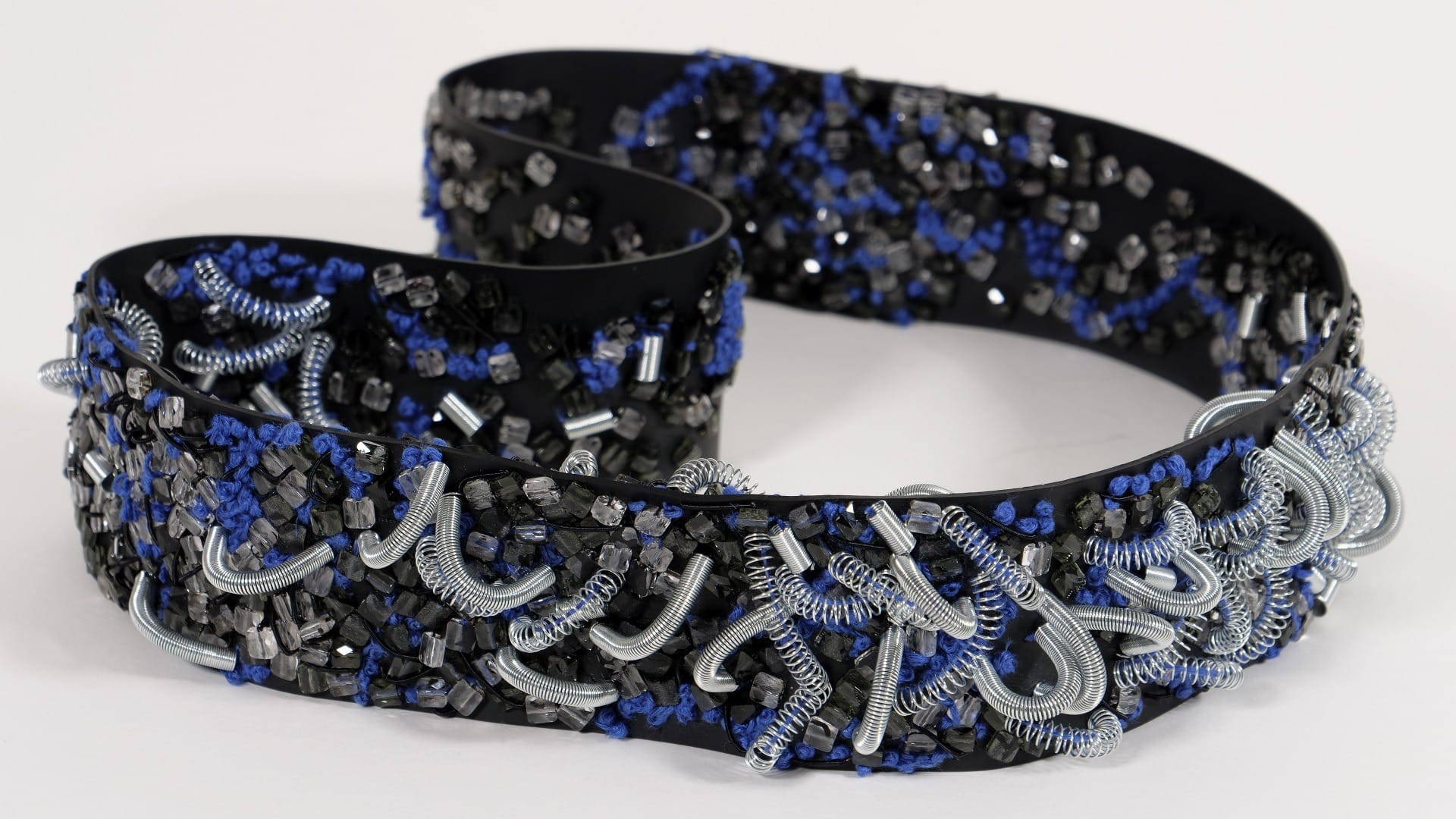
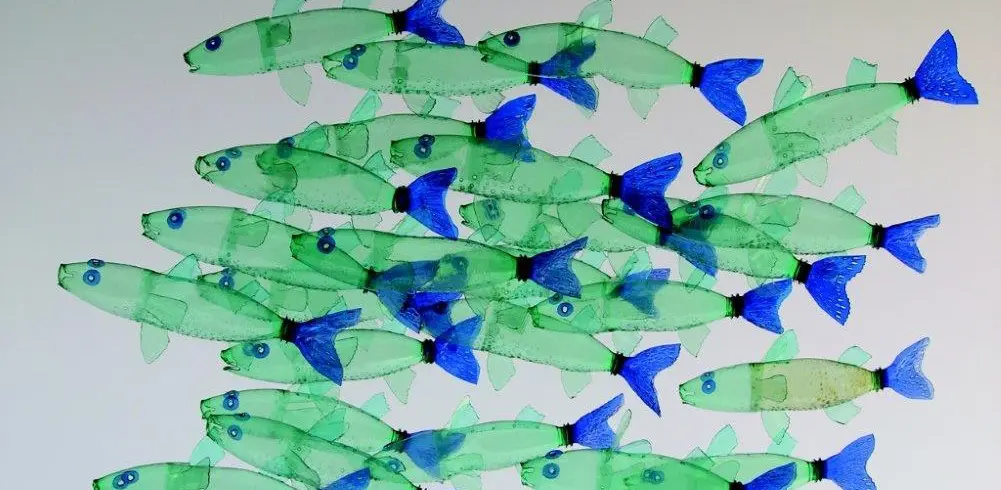
My approach when researching articles was broad, and that wide scope led me to new avenues not generally discussed with recycling. Each of these articles was categorized into one of four sectors: (Do you need to explain all of these categories here?)Arts and Lifestyle, Business, Science & Technology, and my special interest: The Future of Plastic Waste. For my Arts & Lifestyle section, there was a common theme of artists and makers using the excess plastic that they could find to give it a second life as a higher valued material. The creativity that is released when faced with a challenge brings the craft to a new level. There was one artist who made beads out of found plastics which looked fresh when incorporated into her embroidery- proving that one man's trash can be another man's treasure (Battaglia, 2024) Another artist used PET bottles and experimented with different temperatures and molding techniques to sculpt with the materials, showcasing the versatility of the materials (Anastasi, 2020).
The second common theme within the Arts & Lifestyle section focuses more on current issues with trends creating an overabundance of polyester fast fashion waste, and the waste that is hard to recycle in makeup packaging. Fashion and beauty are very relevant in today's society. The fast pace of social media creates micro trends that contribute to overproduction. The waste ends up accumulating rapidly once everyone moves on to try to keep up. I found that new efforts are starting to be made to recycle both of those material types.
My Business articles mainly focused on circularity locally (or in the state of Ohio) and their efforts to close waste loops. There were a couple that dealt with waste by supplying that material for other businesses to use as raw material like Evergreen pellets and Debrand which reallocates textile waste. The Indigo Hippo, which is a Cincinnati brick and mortar, takes second hand donations of many crafty supplies to then put them back in the hands of makers at a lower cost than new supplies. They also have a network of other businesses they work with. If they get a donation of items not suitable for their shop, they pass those items along to the business in their network (Cline, 2025). Everything still gets a second life even if it’s not at their location which I think is really cool and should be adopted more.
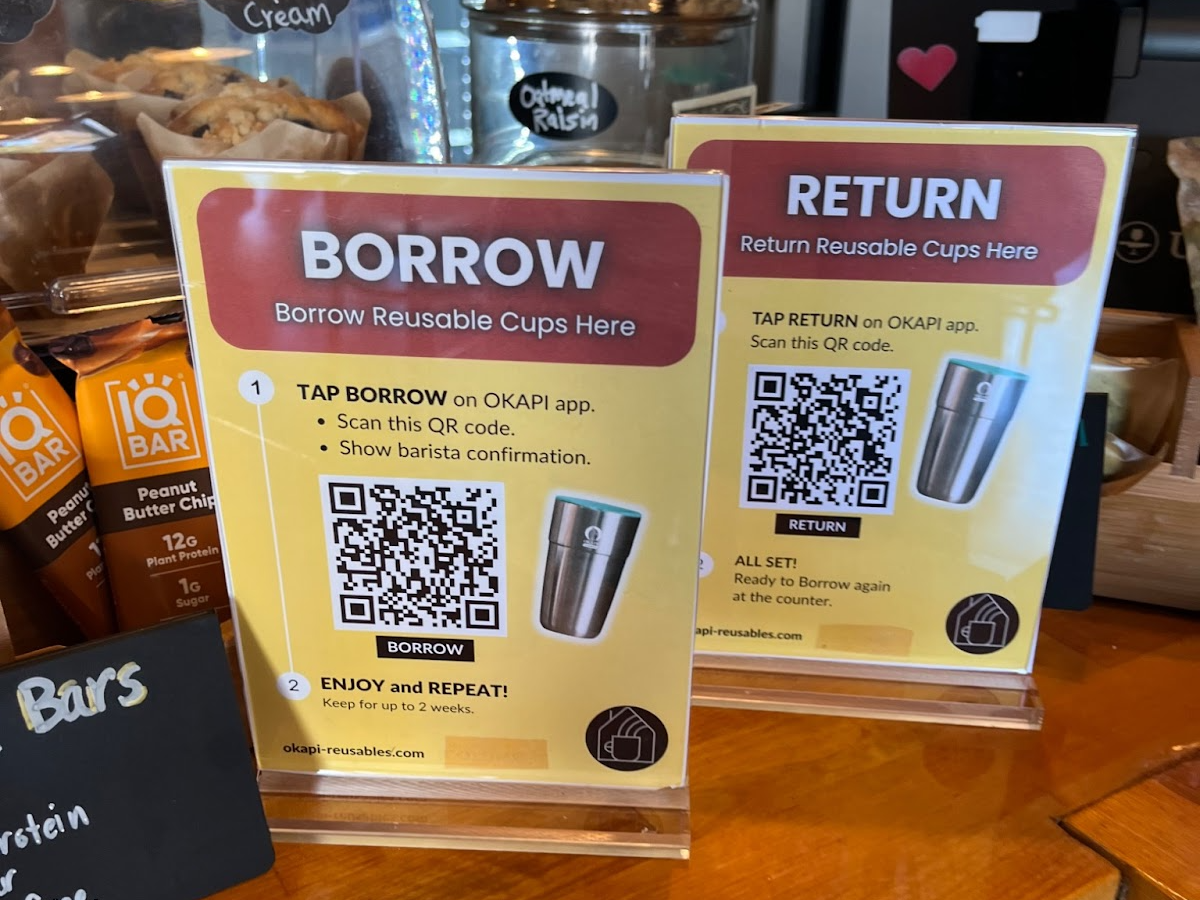
I have found a few case studies on companies trying to reduce waste, like OhioHealth with their blue surgical wrap (Gray, 2024). Another one being towards cafes in Columbus that are participating in a pilot program to reduce single use cup waste (ColumbusFreePress, 2024). I took part in the program by observing and casually interviewing two cafes to see first hand how it’s working and where potential design opportunities could present themselves. Businesses seem to adopt circular practices when it benefits everyone involved- the company saves money by not having to purchase as much supplies, the consumer feels good about contributing, and the environment is a little cleaner.
For the Science & Tech articles, my main take away is that advancements are being made towards sustainability in areas where it was previously unsuccessful. One of the researchers is using AI to try to sort plastics more efficiently and effectively, salvaging recyclables that would otherwise have been cycled back into general waste (Sutliff, 2025). Also, there is a team working with the fungi that produce enzymes which can eat away at some plastics. There is a shared passion in using advancing technology to try to tackle the issue of plastic waste. Another take away is that no one singular person or method could do it alone. The problem is so diverse that it’s all hands on deck, where everyone's insights are valuable and can cater to a specific portion of the problem.
I am interested in the future of recycling and circularity, by utilizing ethnographic-style research. Looking into advancing methods and predictions on which recycling techniques would be most beneficial, community driven initiatives came to the forefront. I looked at the future of Columbus and how the rezoning is going to affect neighborhoods and their potential waste streams. There was also an article over a Youtuber from Columbia whose whole channel is dedicated to bringing recycling education to locals in a future forward mindset (Glatsky, 2024). A large amount of people are on social media and get news and other information from there, so I see a future in spreading educational content through entertainment platforms. With the topic of circularity and its application in the future, one can feel simultaneously overwhelmed and optimistic. Overwhelming in the spiral of thought that can come with piecing and making connections, but then optimistic that the connections are there to be made.
Primary Research
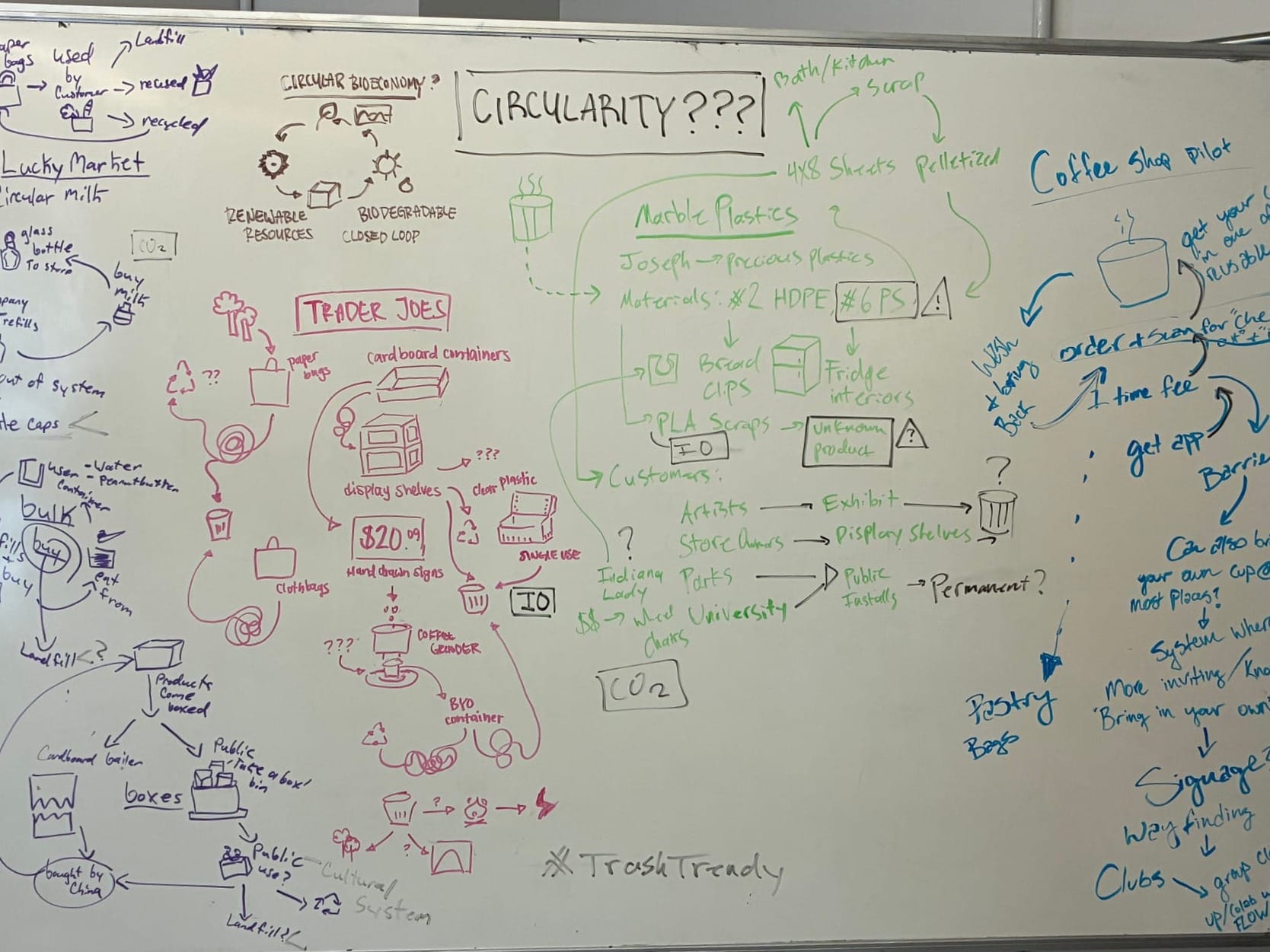
When our team approached primary research we wanted to try and get a diverse set of information from many sources. We conducted site visits, interviews, and observations across many plastic topics. A complete list of our research follows:
- CDME- Lili Hurst showed her set up for processing collected PLA from schools and libraries to then be shredded, pelletized, and extruded into filament for 3D printers. It's difficult because of tolerances, but she is having success with her panini press making sheets that can then be CNCed and laser cut.
- Marble Plastic- Joseph Klatt gave us a tour of his shop and the work he’s been doing. He uses pelletized refrigerator liners with the mix of bread tabs to create their signature marble effect. He said that recycling isn’t the answer, and that reducing is the answer, which stuck out to me. His process influenced one of my secondary research articles over the company Evergreen who processes plastic, pelletizes, and then distributes manufacturers.
- Kut City Barbershop - Our team wanted to see a site that Neighborhood Design Center has worked on, this location was closest to campus to hop over during our lunch break. We checked out their furniture and planters that were part of the project, and spoke to some of the barbers working that day. They believed that it’s been an overall positive addition to their exterior and a nice addition to their waiting space for clients.
- Goodale Park- We prepped and brought a sandbox with props over to the park to try to get participants to engage with our activity to get a sense of people's thoughts towards community, physically or in a more abstract sense. We did laps around the park every hour to get a rough sample size count, and got 9 participants during our time. Participants seemed a little unsure of the abstract side of using blocks, but we still got a wide range of information from our time.
- Amish Country- A visit to see how they address circularity on the farm and at the store. The reuse of a lot of containers as well as using glass in the store was prevalent.
- Lucky's Market- They are reducing waste by a “bring your own” container system for peanut butter, and a glass milk bottle system.
- Central Ohio Reuse Coalition, Circular Coffee- Looking into circularity locally, since January Columbus is part of a pilot program to reduce the amount of single use coffee cups from cafes. I thought it would be an interesting way to conduct participant observation. Although I didn’t see anyone using the specific tumblers, there were a few people bringing in their own. There seems to already be an unspoken level of circularity among some cafe goers, which helps towards the pilot program's goal of reducing the amount of disposable cups. How could this program reach more people, and is the initial one time paywall preventing more engagement when you could just bring your own tumbler?
- Trader Joes- Their marketing uses a lot of simpler approaches like displays using boxes that the food comes in, or writing on chalk boards which reduces the amount of printed signs that are needed with every sale or season change.
- Microplastic Researchers- Meeting with Professor Lenhart and PhD candidate Megan Jamison cast some light on the topic of micro and nano plastics for us.
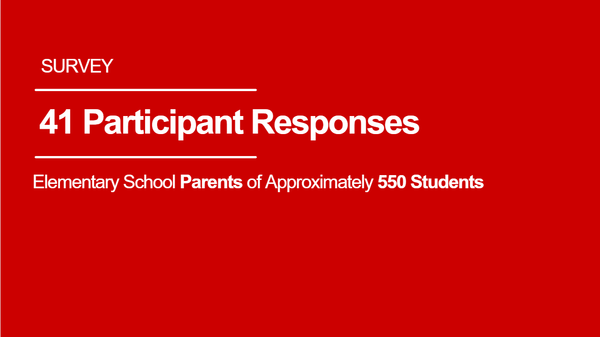
- Survey- We had a little less success than we were all hoping. Besides the low number of participants we also were having technical issues, but all that aside we were still able to get some valuable data. More businesses participated in recycling than I thought there would be, and most of them checked all of the types of recycling too.
Findings Influencing Conjectures:
Business Conjecture, Waste Watch
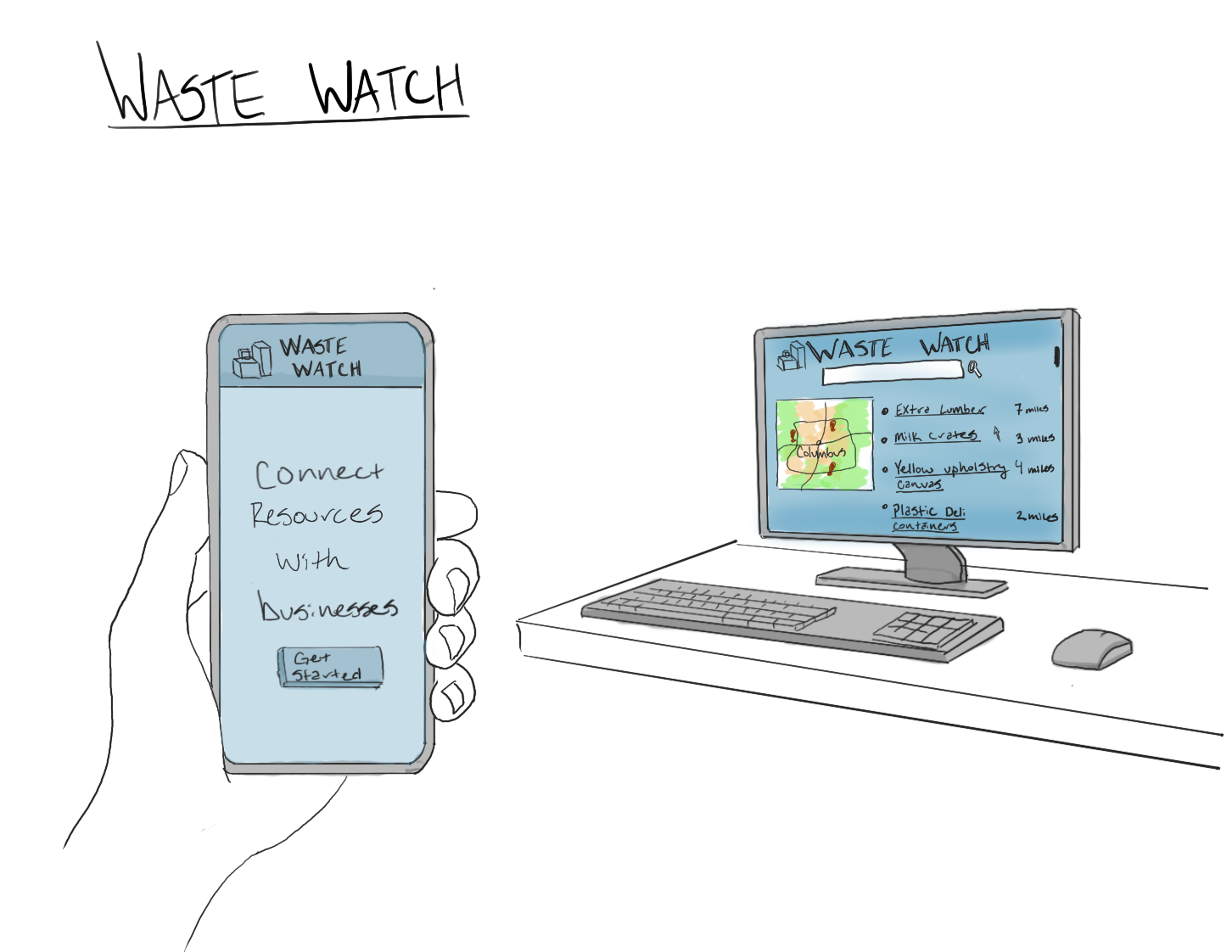
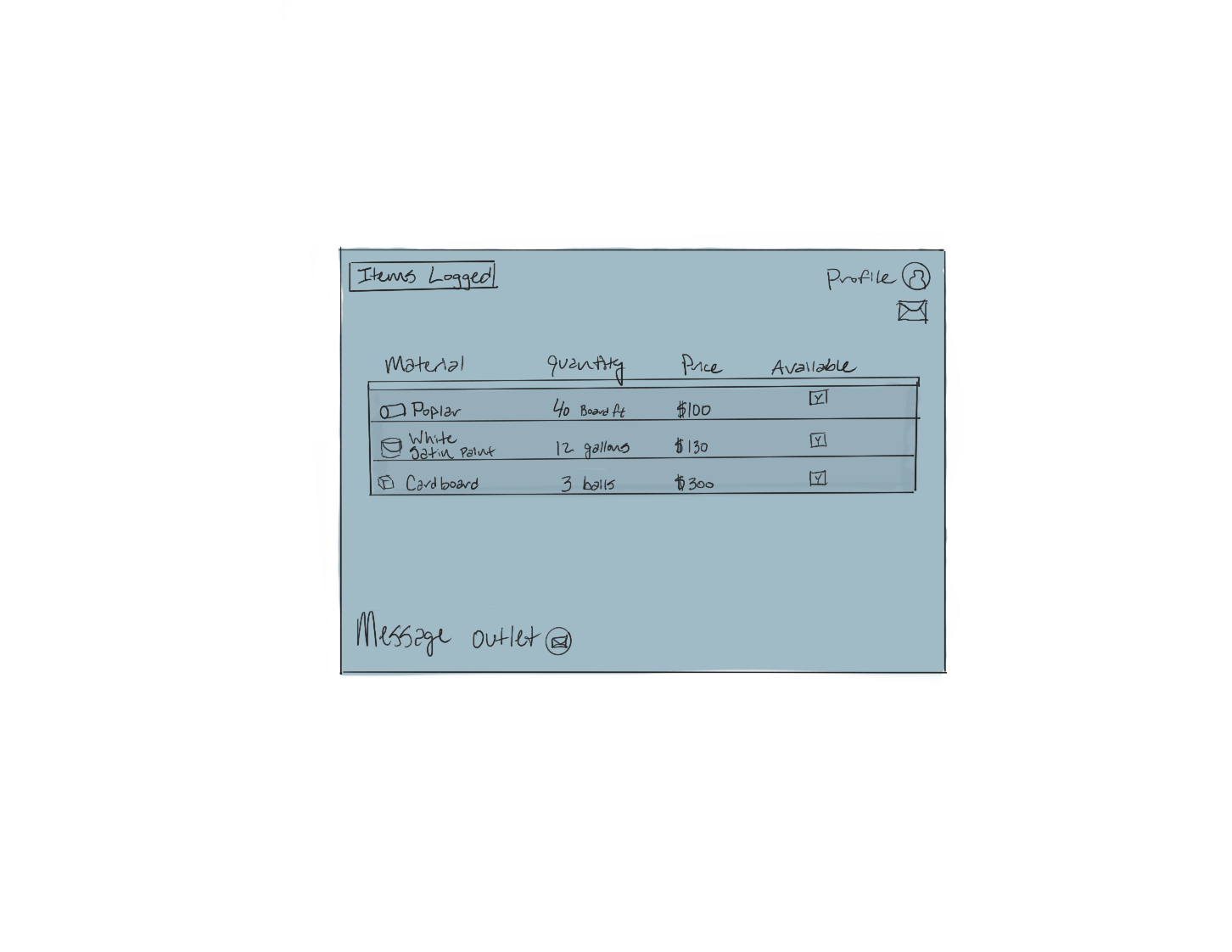
My first design conjecture as a result from my findings is Waste Watch. Informed from the article about Debrand, a textiles company that distributes textiles waste, in companion to Marble Plastics supply stream made me think about all the other byproducts that are manufactured that could be paired with suppliers to reduce the waste.
Arts & Lifestyle Conjecture, Sprouting Tomorrow
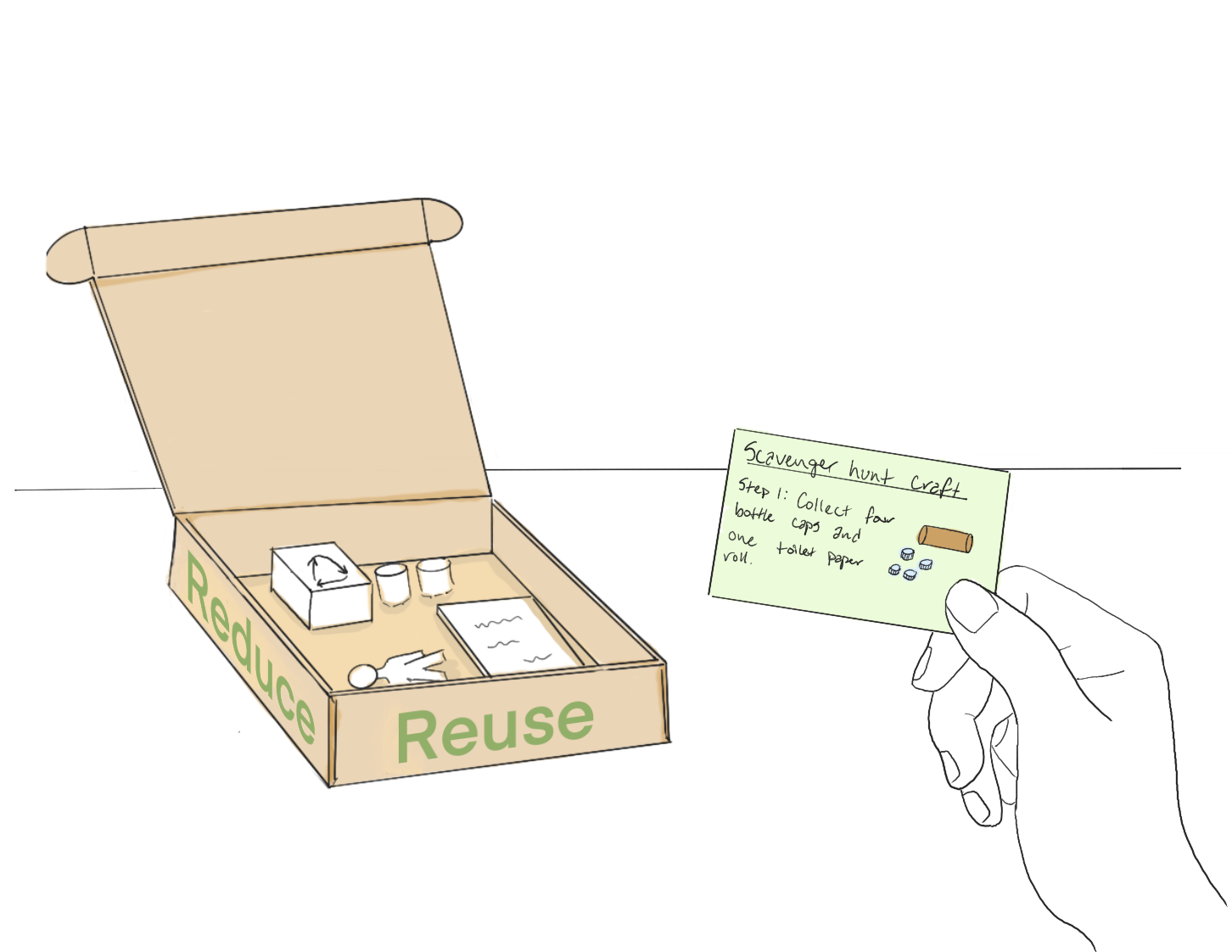
Sprouting Tomorrow is an educational box subscription geared towards kids of different ages with activities on reducing, reusing, and recycling. Hoping to spread educational awareness on what can be recycled and practices that could carry on as they grow into adulthood. There would be little wooden toys, engaging puzzles, and crafts to be fun, but also teach. Some of the crafts would incorporate picking up litter to be repurposed like using bottle caps as car wheels or the bottle as a bug's body.
Science & Tech Conjecture, The Complete Complex
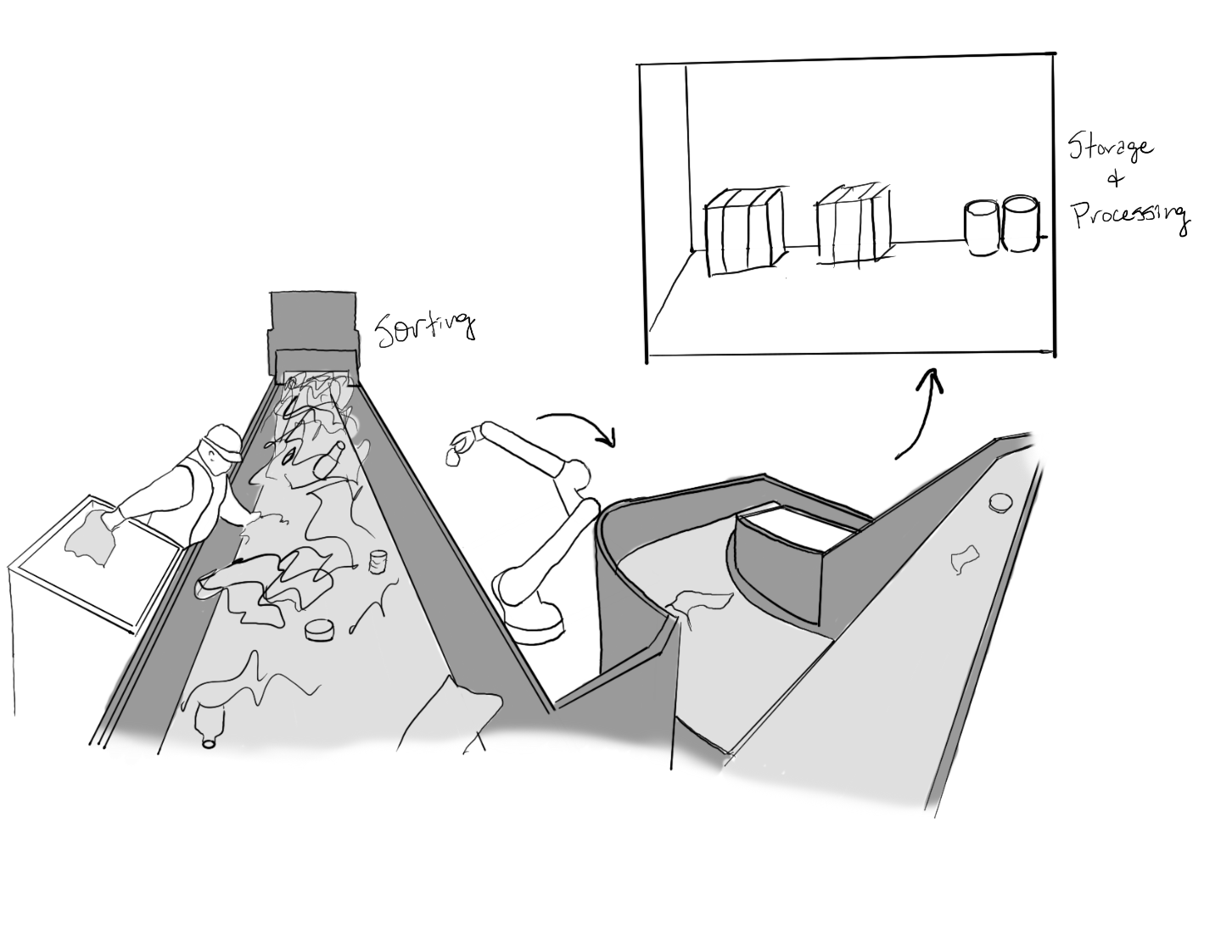
The Complete Complex is the future of recycling. Housing everything from employee sorting and AI robots to pick away those hard to distinguish plastics. Once the plastics are sorted and flow to their respective areas, they are stored and processed with the many advancing recycling techniques. To then be ready to distribute to the supply chain. The articles in my science and technology section are all diversely independent, so when thinking of the ideal future of recycling and closing loops, I'd want a facility that could manage multiple steps of the process.
Special Interest, Pocket Recycling Parks
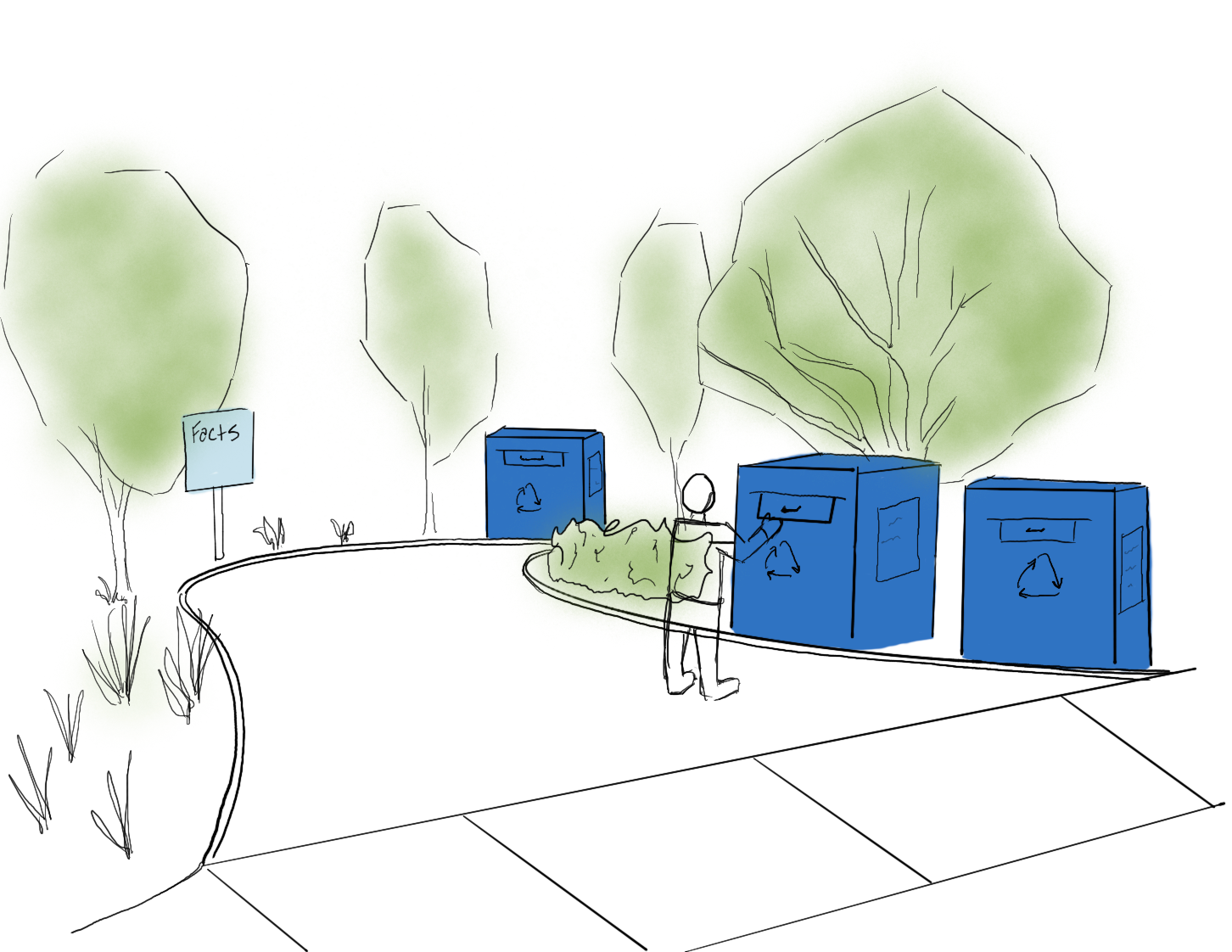
With focusing on the future of recycling, the articles that I read influenced my idea of Pocket Recycling Parks. Similarly to a regular pocket park, which is green space in a smaller urban area, it provides bins to dispose of plastic waste that people aren't quite sure how to recycle- especially on the go. Providing the resources communities would need to successfully sort recyclables, so that they can end up in the appropriate treatment/processing stream and out of our landfills.
How do we move forward from these? By creating systems that link together businesses and communities to share resources for the betterment of products, education, and spaces. There are currently steps towards improving waste streams slowly, but as a designer there are ways to help close those gaps where plastics get kicked out of the waste stream.
Individuals and businesses are interested and actively working towards efforts to tackle the plastic waste issue. Whether it is in researching new methods of processing recycling through molecular techniques, or creating new supply streams to help connect excess materials to manufacturers. There is a desire to participate in recycling programs and initiatives. However, the efforts are very individualized and there are gaps in connecting potential waste streams to a second life, as well as knowledge gaps for trickier less common items on large scales and on smaller residential scales.
Reference.
Anastasi, L. (2020, May 22). Pet-art: Turning plastic waste into art. Ecobnb. https://ecobnb.com/blog/2019/06/pet-art-plastic-bottles/
Battaglia, A. (2024, March 19). Eight resourceful artists on reducing, reusing, and recycling. ARTnews.com. https://www.artnews.com/list/art-in-america/features/recycling-art-portfolio-1234700212/tom-friedman/
Central Ohio Reuse Coalition to launch circular economy pilot in Bexley and Columbus. ColumbusFreePress.com. (2024, December 30). https://columbusfreepress.com/article/central-ohio-reuse-coalition-launch-circular-economy-pilot-bexley-and-columbus
Cline, A. (2025, April 1). Indigo hippo: Preventing waste and encouraging recycling. Indigo Hippo: Preventing Waste and Encouraging Recycling - Wright State Guardian. https://www.wsuguardian.com/article/2025/04/indigo-hippo-preventing-waste-and-encouraging-recycling
Columbus citywide zoning code update. Opticos Design. (2024, October 16). https://opticosdesign.com/work/columbus-ohio-citywide-zoning-code-update/
Glatsky, G. (2024, November 11). How a Colombian influencer made recycling cool. The New York Times. https://www.nytimes.com/2024/11/11/world/americas/colombia-recycling-sara-samaniego.html
Gray, K. L. (2024, January 17). Columbus Sustainability Guide: How Two Local Hospital Systems are going green. Columbus Monthly. https://www.columbusmonthly.com/story/lifestyle/features/2024/01/17/columbus-sustainability-guide-ohiohealth-ohio-state-university-hospitals-go-green/72249287007/
Quinn, M. (2024, July 17). Debrand aims to scale textile recycling in US amid growing brand and policy demand. Waste Dive. https://www.wastedive.com/news/debrand-expands-us-ohio-recycling-infrastructure-wm-eleiter/721608/
Sutliff, B. (2025, January 30). From trash to cash: How ai and machine learning can help make recycling less expensive for local governments. NIST. https://www.nist.gov/blogs/taking-measure/trash-cash-how-ai-and-machine-learning-can-help-make-recycling-less-expensive